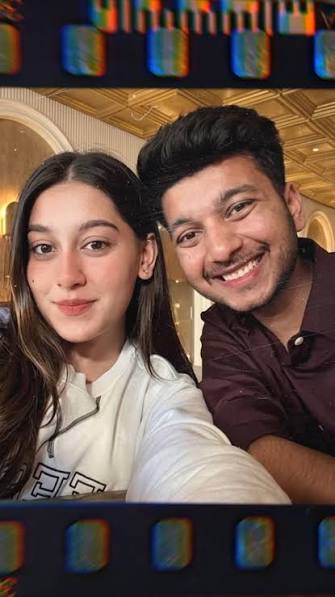
Neeshu Azad, a 15-year-old Dalit girl, and her father were attacked by a group of violent men while participating in a protest organised by the Cockroach Janta Party (CJP), a youth movement demanding the resignation of Education Minister Dharmendra Pradhan. To put things in perspective, Neeshu and her father are Ambedkarites and had earlier declared their dissociation from Hinduism, openly announcing that they no longer identify as Hindus.
This sparked severe outrage across social media. Historically, the rejection of Hindu social and religious structures has always provoked backlash, as in Ambedkar’s case when he renounced the religion, calling it a “living hell”. Neeshu was immediately perceived as someone insulting Hindu religious sentiments.
On June 23, 2026, when Neeshu and her father were peacefully protesting at Jantar Mantar, around 15 men attacked her father. He was fatally wounded, with his head split open in three places by one of the attackers. Neeshu received a barrage of online threats of violence and rape. One person using the name Gourav Hindu even dared to post an open rape threat against Neeshu on Instagram. For me, Neeshu has today become a symbol of the broader conservative political crisis—one in which any critique of Hinduism is automatically equated with being anti-Hindu. Interestingly, at the time of the attack, she was participating in the Cockroach Janta Party protest, which had called out the ruling party for democratic backsliding.
Neeshu Azad as a Dalit Political Subject
Why did some people, especially those aligned with right-wing ideology, find Neeshu Azad problematic? The answer lies in the fact that she has redefined her subjecthood by questioning Hinduism. The questioning becomes particularly problematic when it comes from a Dalit girl because the challenge becomes twofold. She is challenging caste and Brahminical patriarchy at the same time. Neeshu has turned the tables. For centuries, Dalits have been spoken for, ordered about, and silenced; she, by contrast, speaks for herself and, in doing so, has unsettled the upper castes. Hence, the violence of rape threats.
The fundamental way in which caste power operates, especially in the imagination of the upper castes, and particularly among upper-caste men, is to reduce the so-called lower castes to passive objects without agency. But Neeshu Azad and her father are not passive. They are empowered and have redefined and refashioned their stigmatised selves as active political agents who have the right to claim liberty, equality and personhood, something that the Hindu religion denied them. Neeshu then becomes an emancipatory subject who has defied mainstream Hindu culture and caste laws.
Dalit activism has always been about questioning the hegemonic mainstream Hindu culture and bringing to the fore an alternative subaltern understanding of rights, equality and inequality. Anupama Rao’s excellent book The Caste Question (2011) urges us to rethink Indian political modernity and the questions of rights, equality, and citizenship from the Dalit standpoint and through Dalit enfranchisement. This, she believes, opens the possibility of developing a more radical political philosophy from below. However, silencing Neeshu Azad exposes the limitations of Indian democracy today.
Anand Teltumbde’s essay, Thinking Equality in the Time of Neoliberal Hindutva, contextualises the rape threat received by Neeshu succinctly as he says: “…if a Dalit violated the caste code, they would be punished instantly. Today, the violence is committed in a planned manner by a collective of caste Hindus against a collective of Dalits, invariably with the motive that it would serve as a cautionary lesson to the entire community.” The open rape threat and violence against Neeshu Azad represent this kind of cautionary punishment.
Threats of Violence and Caste-Gender Nexus
In his now-famous essay, Dalit Women Talk Differently, Prof. Gopal Guru states: “…the question of rape cannot be grasped merely in terms of class, criminality, or as a psychological aberration or an illustration of male violence. The caste factor also has to be taken into account, which makes sexual violence against Dalit or tribal women much more severe in terms of intensity and magnitude.”
A woman’s social location determines her position in society. It shapes her vulnerability to rape, making it very clear how caste, class and gender converge to normalise sexual violence against Dalit women. This multiple marginalisation of Dalit women is a historically established reality. Why did Gourav Hindu issue an open rape threat against Neeshu? Upper-caste male privilege has always meant having sexual access to a Dalit woman’s body. It is a part of the material structure of domination in our caste-based society. In fact, the upper-caste man’s sexual use of the so-called lower-caste woman’s body has been normalised and naturalised over generations.
This, precisely, is the relationship between caste, gender and the hierarchical Hindu society. While Gourav Hindu issued an open rape threat against Neeshu, one is reminded of the brutal rape and murder of a 19-year-old Dalit girl by upper-caste men in Hathras in 2020. And when violent perpetrators have the tacit approval of the state, they are emboldened. In most of these cases, police action comes only after considerable delay and often only after public protests and widespread criticism.
Caste and the Digital Space
What makes caste dangerous is its fluidity: while maintaining its rigidity intact, it has joined hands with the neoliberal modern world to entrench itself. Anand Teltumbde has used the term “neoliberal Hindutva” in a similar context to analyse caste and equality. Caste-based conservative thought has been strengthened through governance, diaspora lobbying and digital surveillance. Instagram and other social media platforms have become powerful vehicles for the dissemination of conservative metanarratives. Yet digital media has also boosted Dalit activism. There are numerous groups, individuals and anti-caste activists who are vociferously speaking out against caste-based atrocities.
I personally believe that the greatest contribution of digital media has been its ability to make the caste-based socio-political landscape visible. Even as the city enacted caste, its residents sought to present themselves as caste-blind. Digital media has ruptured this illusion by revealing the caste-based conflicts embedded in urban spaces. Whereas caste was once perceived as localised and rural, digital media has rendered it visible and global. Yet cases of caste-based violence have continued to rise across India. From violence against women to the deaths of safai karmacharis, digital media has exposed it all.
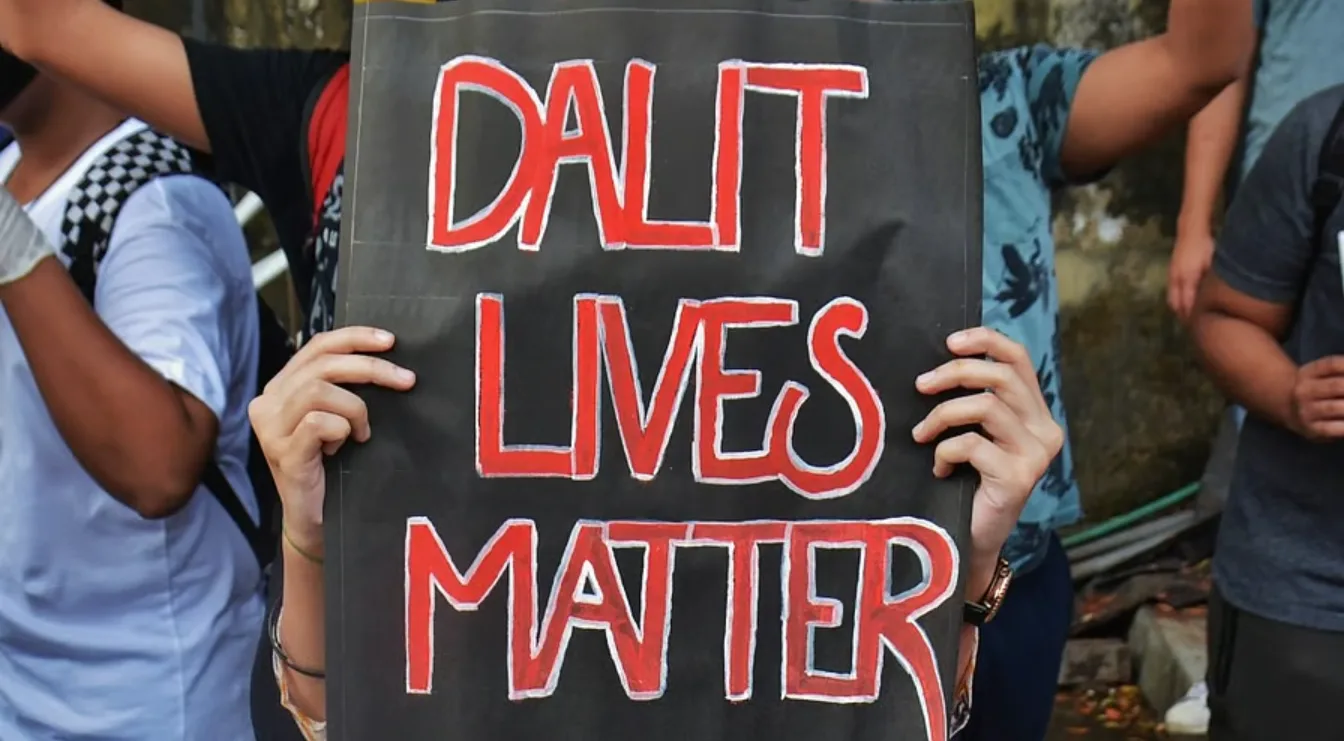
Today, if Neeshu is safe, or if many others like her feel supported, it is because of the quick mobilisation that happens overnight on digital media. With important forums such as Round Table India, #DalitLivesMatter, #DalitWomenFight, The Dalit Voice, Babasaheb Ambedkar, Dr B.R. Ambedkar’s Caravan and Dalit Camera, Dalit activism has grown and spread widely. These forums engage with the Constitution, discuss Ambedkarite philosophy, analyse caste and gender, debate the rights of Dalit people, and carry out important online campaigns.
However, with equal vengeance and hostility, parochial, narrow and dangerous forces are also spreading their discourses. It is important to understand and appreciate that a critique of caste must be taken positively by one and all, as it offers a deep and far-reaching critique of the state and civil society, as Anupama Rao argues in her book Gender and Caste (2003). Increasingly, it is Dalit women, along with women from other communities, who should assume leadership because, in addressing their own oppression, they also address the broader struggles for democracy today. It is deeply encouraging to witness Dalit women, along with women more broadly, courageously articulating their voices, taking up leadership, and critically interrogating the nation-state in contemporary India.
(Professor Arunima Ray teaches at the Department of English at Lady Shri Ram College for Women. She specialises in Caste Studies)