

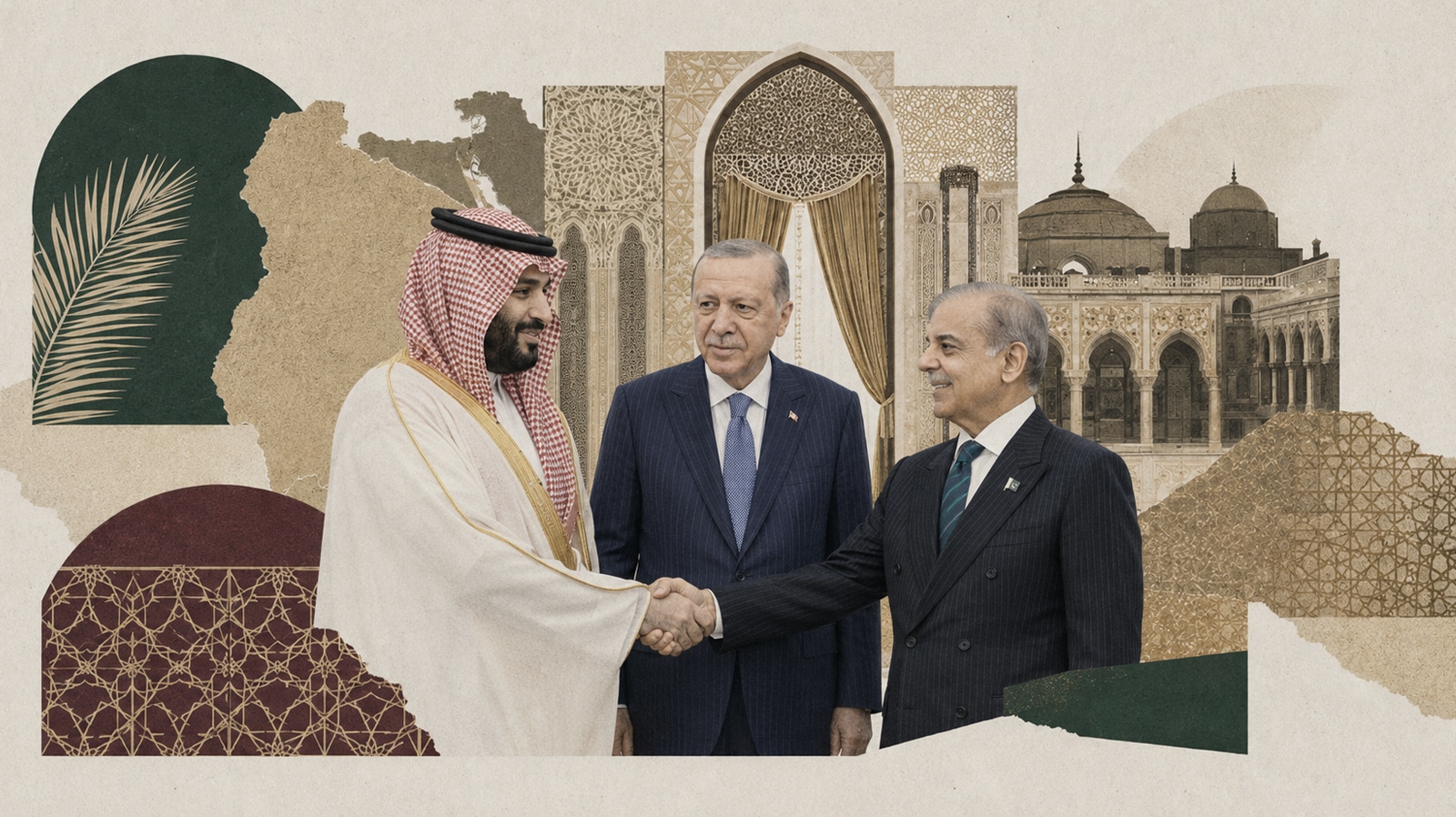
In any war, the law of unintended consequences plays a unique part. The US-Iran-Israel war is no exception in this regard. Hitherto, for the rich Gulf countries, the US security umbrella was of utmost importance, providing a security cover against the religiously hegemonic Iran and geographically hegemonic Israel.
Since 1979, with the advent of the Islamic regime of the Ayatollahs in Iran, the triad of US-Israel and Iran has suffered and been caught in a MAD (Mutually Assured Destruction) syndrome. It was witnessed more between Tehran and Tel Aviv, which indulged mostly in covert warfare against one another, with Israel and the US committed to not letting Iran acquire a nuclear weapon, which would create a strategic parity and deterrence against Israel in the region.
Obama’s indulgence in securing the JCPOA (Joint Comprehensive Plan of Action, i.e., nuclear deal) with Iran was intended to delay, if not completely deny, Iran’s nuclear capability, which was not liked either by the Sunni Gulf majors or the Jewish state. Hence, every effort was made to defeat it, which was eventually done by a gullible President Donald Trump in his first term, more due to his disdain for his predecessor than necessarily due to the inefficacy of the JCPOA itself.
Israeli PM Netanyahu used his Jewish lobby leverage and personal connection with Trump to have the JCPOA quashed. Ironically, this led to Tehran enhancing its enrichment capacity to over 60 per cent. A worrying sign indeed for everyone in the region. Trump finally wanted to start negotiations on his own terms but reneged on these several times. Iranians exploited their advantage to the maximum, knowing too well that it was a matter of time before a war with the US and Israel would become a reality, and prepared for it extensively after the 12-day war with Israel, when the USA, for the first time, abdicated its balancing and deterring role and became an active participant with Israel against the Mullah regime.
The Iranian Islamic regime and the Ayatollahs had even issued a Fatwa against nuclear weapons, which provided them some overt credibility, even if none of the strategists tended to believe in it. Hence, after the June 2025 war, the Iranians declared that if they were attacked once again, they would hit all US and Israeli assets and their hosts in the Gulf and would also close the Strait of Hormuz and, by default, even Bab el Mandab in the Red Sea, which is controlled by the Houthis — their surrogates. This is precisely what they did when the USA and Israel decided to attack Iran on February 28, when Ayatollah Khamenei and his family members, as well as nearly fifty political and military leaders, were decapitated.
Iranians were prepared for such an eventuality and developed a diffused and decentralised “Mosaic Defence” and “Scorch the Earth” strategy to counter and respond. The USA, which got pulled into this war by persuasive Netanyahu, had not factored in several of the imponderables, as the war was launched without a clear strategy and with a lot of presumptions.
One of these was the unremitting attacks on Gulf countries, and the second was the closure of the Strait of Hormuz. They also did not factor in the resilience of Iranians to stand together and fight — a lack of understanding of a people and their culture could be disastrous in any war. Just as they did with the Taliban, i.e., replacing them with the Taliban, the same outcome was sought in Iran when a Khamenei was replaced by the more conservative son Mojtaba Khamenei, which even the elder Khamenei was not keen on.
In this game of madness, Gulf countries, hosting dozens of US bases, became collateral, impacting their oil-rich economies as supply chains were disrupted. The USA’s inability to live up to its security promise hurt them badly, and seeking alternatives became natural, knowing too well that they would have to live in the region and Iran could not be wished away. Hence, the last best option was to engage with Türkiye and Pakistan.
In the wake of the Israel-Hamas war going on for three years, where other Iranian proxies Hamas and Hezbollah have been fighting Israel, the attacks on Hamas outfits in Doha by Tel Aviv were a wake-up call for the Saudis, especially as the US assured its non-NATO ally Qatar with a written agreement to defend it. But no one trusted it any more.
And as a result, Saudi Arabia signed a Strategic Mutual Defence Agreement (SMDA) with Pakistan, basking in the glory of defeat by Operation Sindoor. Pakistan and its so-called Field Marshal Asim Munir, being a rentier and ranting state, flagged its “Islamic nuclear bomb” as the cover, along with its mercenary army and non-state actors ready to be deployed. Its financial distress was alleviated by the Saudi bounty to some extent, but effectively it garnered a certain strategic advantage in the region despite being a master of terrorism.
In recent years, Türkiye, though suffering from economic and political stress, has harboured ambitions of being a neo-Ottomanic power which is also a NATO member with a powerful army and military technology and hence, through R4 meetings with Egypt, Pakistan and Saudi Arabia, worked out the Makkah Agreement, in which Egypt is supposed to join at a later stage. They are trying to create a new security architecture, mostly aimed at including Islamic countries overtly for defensive and deterrence purposes.
Apparently, after the most recent meeting of R4, they declared that six to seven more Muslim countries want to join. Kuwait has separately signed a defence agreement with Pakistan. Jordan, Syria and Bangladesh have expressed interest in joining it. Even Iran has been invited, which has not decried the formation of a new bloc.
The name Makkah Agreement tends to provide it with religious legitimacy. But then UAE and Bahrain, who have been subjected to most Iranian attacks, are part of the US-Israel-led Abraham Accords, whose expansion is Trump’s dream project, let alone turning Gaza into a real estate project. Trump has also endorsed the Makkah Agreement. So have the Chinese and Russians for their own reasons, given their zero-sum games with the Americans.
But the regional rivalries, especially between the UAE and Saudi Arabia, Saudis and Iranians, and Iran and Israel, will test the Makkah Agreement and its overt commitment to a NATO-like Article 5, i.e., an attack on one is an attack on all. A lot of clarity on various provisions is yet to be seen, but the signatories are taking it for real and are quite serious, even as the specific enemies are not identified.
The Makkah Agreement has led to the establishment of a Secretariat in Riyadh, with a Pakistani General leading it first. Türkiye, which also has several bases in Africa as well as in Qatar, will also define the parameters of engagement with the Sunni world without getting dragged into their intra-regional rivalries. Even the Spanish Prime Minister has offered to join it, given his problems and position concerning the USA and Israel.
As far as India is concerned, this new architecture across South and West Asia does not augur well, even if it may not mean much in strategic terms, as argued by many commentators. Hope is not a strategy. Given the existential nature of West Asia to India’s core interests, any and every development in the region requires Indian strategy reformulation and recalibration, since the actors, especially Pakistan and Türkiye, would not hesitate to use the platform to undermine India’s strategic interests, even if a direct war between the grouping and India may be a far-fetched affair.
But an affair it is, and the response must be deemed in accordance with the potential challenge rather than adopting an ostrich-like attitude. More engagement with regional majors and agile diplomacy in the regional format and context are essential to project India’s strengths so that they can work out their own cost-benefit Excel sheet.