


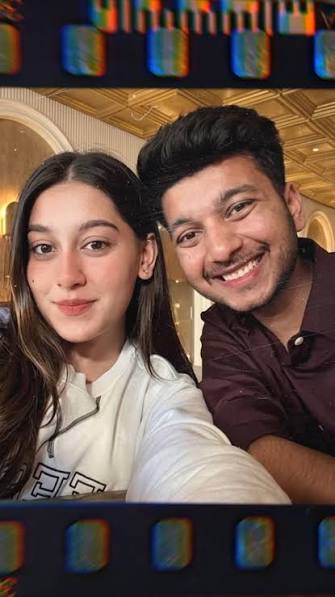
No, this is not the sequel to Love Sex Aur Dhokha, the 2010 Bollywood film. The recent incident of Ketan Agrawal-Siya Goyal is the real-life version playing out in police stations, forensic laboratories and courtrooms across the country. The production values differ, but the plot remains remarkably familiar.
A young man, Ketan is engaged with a young woman, Siya. A secret relationship lingers in the background. Families exchange sweets. Instagram gets photographic evidence. A hill station enters the story. Ketan dies. WhatsApp chats emerge. Prime-time television discovers a new definition of love. Repeat.
The murder of Ketan in Pune is merely the latest episode in a franchise that refuses to leave the box office. What makes these stories so baffling is not the crime itself. Human beings have been making poor romantic decisions since the invention of romance. What is truly baffling is the path that leads to these crimes.
At every stage, there are other choices: saying no, calling off the wedding, ending the relationship, seeking counselling, moving on, getting divorced, changing cities, or simply telling the truth. Yet every few months, somebody surveys this landscape and concludes that murder is the best solution.
Which brings us to a peculiarly Indian paradox. Many young people today enjoy unprecedented freedom in choosing partners, dating, travelling and conducting relationships. Yet when it comes to saying, “I don’t want this marriage”, freedom is shown the door while the elders decide. Breaking an engagement is deemed scandalous. Calling off a wedding invites enough family drama to keep an entire television channel occupied for weeks. Divorce attracts unsolicited advice from relatives who barely know your life.
And, as always, the final verdict rests with the Supreme Court of Indian Society: Log Kya Kahenge? But first, let us look at the script that seems to play out with disturbing regularity.
Act 1: The Approval Process
Boy reaches marriageable age. The girl reaches marriageable age. Families swing into action with the efficiency of a multinational merger.
Whether the prospective bride is twenty-two or the prospective groom twenty-five is almost beside the point. The prevailing philosophy appears to be: if the laddoos are ready, the bride and groom must be too. Photographs are exchanged. Horoscopes are consulted. Sweets are distributed. Social media is informed.
Act 2: The Complication
Reality, however, rarely follows the script. An old relationship refuses to disappear. An ex wants answers. While the family has already cast the hero, the heart insists on a different leading man.
Chaos follows. Late-night calls become more frequent. Passwords become more carefully guarded than personal values. The emotional juggling act begins.
Act 3: Main Character Syndrome
This is where matters begin to unravel. Modern life, aided by endless OTT content, seems to have convinced many people that they are the protagonist of an eight-part streaming series. The internal monologue goes something like this: “I deserve happiness.” “Nobody understands our love.” Or “Society is against us.”
At this point, the fiancé, spouse or partner ceases to be a human being and becomes the obstacle standing between the protagonist and the happy ending. Unfortunately, the imagined solution is often cinematic too.
Act 4: The Weekend Getaway
Somewhere along the way, someone concluded that every crime of passion deserves a panoramic backdrop. India’s hill stations have been paying the price ever since.
A trek is proposed. Photographs are taken. Viewpoints are admired. An unfortunate incident occurs. The nation is informed.
Act 5: The Investigation
Enter the true hero of modern crime-solving: the smartphone. No criminal in 2026 appears capable of deleting messages properly. WhatsApp chats emerge. Call records surface. Location data develops a conscience. The lovers who wanted to spend their lives together often end up doing exactly that: inside the local thana.
Act 6: Prime-Time Justice
The final act arrives. Everyone knows their lines. Neighbours reveal they always suspected something. Experts explain human psychology in thirty seconds. Anchors solve the case before the investigating officer has finished the paperwork. The nation expresses outrage.
Then the cycle begins again. This raises an uncomfortable question. Why are we seeing so many stories involving people trapped between marriage, family expectations and parallel relationships?
Part of the answer lies in what may be described as the consumerisation of relationships. Modern life encourages us to upgrade everything — phones, careers, houses, subscriptions and, occasionally, entire personalities.
Some people begin treating relationships the same way. If dissatisfied, exchange. If uncertain, upgrade. The difficulty, of course, is that marriage is not a smartphone.
Another part of the answer lies in our collective discomfort with difficult conversations. We have become remarkably sophisticated at maintaining multiple realities simultaneously — our digital lives on one side and our real lives on the other — yet strangely incapable of saying: “I don’t love you.” “I don’t want this marriage.” “This relationship is over.” These are painful conversations. But they are infinitely less painful than a homicide investigation.
Over the past two years, cases from Meghalaya, Pune, Telangana, Uttar Pradesh and Madhya Pradesh have dominated the national conversation. Each investigation has its own facts. Each accused remains entitled to the presumption of innocence until proven guilty.
Yet, taken together, they create an unsettling sense of déjà vu. Before dismissing these murders as a grotesque coincidence, it is worth asking whether this pattern exists only in our imagination or whether it reveals something deeper about the way modern relationships are lived.
The National Crime Records Bureau does not maintain a separate category called crimes of passion or relationship murders. Murder is recorded as murder. Individual motives remain buried in case records rather than national statistics.
The broader picture, meanwhile, has changed remarkably little. Men continue to account for the overwhelming majority of those arrested for murder. Violence within intimate relationships remains overwhelmingly directed against women. Year after year, the NCRB records “cruelty by husband or relatives” as the single largest category of crimes against women, while the National Family Health Survey estimates that nearly one in three ever-married women has experienced physical, sexual or emotional violence at the hands of a spouse.
Stories involving women accused of conspiring to murder husbands or fiancés dominate headlines not because they are common, but because they are exceptional. They overturn the narrative we instinctively recognise. They challenge our assumptions about who is expected to be the victim and who the perpetrator.
They also make compelling television precisely because they are unusual. These murders, in other words, distort our perception. The underlying problem does not. Because beneath the headlines lies something far more ordinary, and therefore far more troubling.
Relationships that should have ended honestly are instead prolonged through silence, fear and pretence. Conversations that should have happened months earlier never happen at all.
Perhaps what these cases ultimately reveal is not a crisis of love, but a crisis of emotional literacy. We have learnt how to begin relationships with extraordinary enthusiasm. We have not learnt how to end them with honesty, empathy and dignity.
So where does that leave us? Certainly not with the comforting conclusion that love has suddenly become more dangerous or that marriage itself is under siege. Love has always been complicated. Marriage has always required compromise. People have always fallen out of love.
None of that is new. What has changed is the performance that increasingly surrounds relationships. We document every milestone before we have lived it. We announce forever long before we understand what forever demands. We hire photographers to capture chemistry, choreographers to stage happiness and algorithms to reassure the world that everything is perfect. Somewhere between the engagement reel and the honeymoon hashtag, reality quietly slips out of frame.
This is perhaps the greatest irony of all. In a country where weddings have become productions worthy of film credits, we still struggle to give people the freedom to walk away with dignity when love has run its course. So perhaps it is finally time to draw the curtain on Log Kya Kahenge?
People will talk. They always have. They always will. Until we stop allowing that fear to dictate deeply personal decisions, Love, Sex & Dhokha 2.0 will continue its successful nationwide run — one engagement, one secret relationship and one preventable tragedy at a time.
(Sudipta Banwar Karnik is a writer, satirist and social commentator. She writes on life’s absurdities with wit and warmth)