



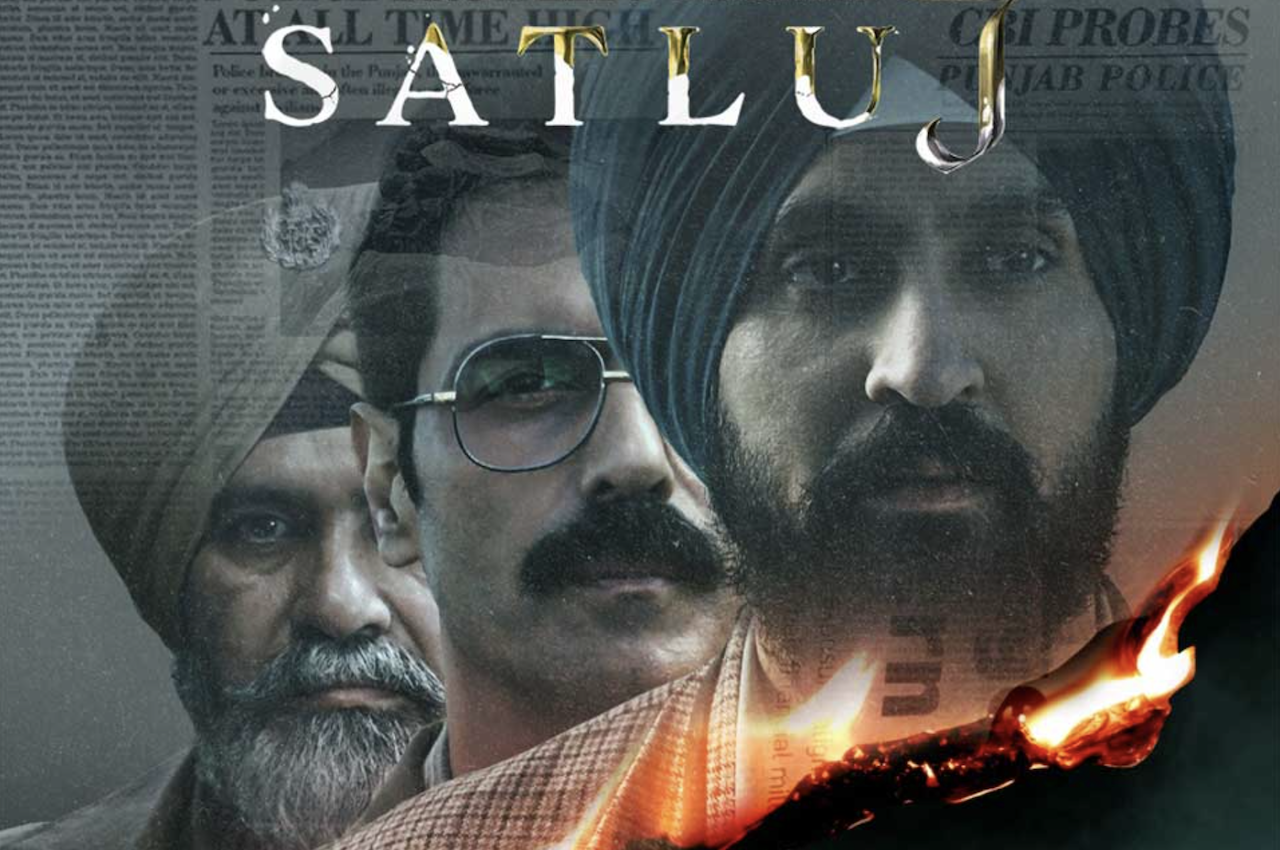
Most films are reviewed, critiqued and discussed when they premiere in cinemas or on OTT platforms. Then there are the outliers, which become newsworthy because of the extraordinary journey they undertake merely to reach an audience. Satluj belongs to this latter category.
For four years, the film remained trapped in an interminable battle with the censor board. Originally titled Punjab ’95, it reportedly attracted 127 proposed cuts before languishing in limbo. Eventually, the film resurfaced under a new title, Satluj, and quietly premiered on ZEE5 on July 3. Just when it appeared to have given audiences the chance to watch it and judge it for themselves, it disappeared from the platform just two days later, becoming the latest chapter in an already turbulent history.
Having managed to watch it before it vanished, one thing became abundantly clear: whatever one’s views on censorship, Satluj is not interested in sensationalism. It seeks instead to ask uncomfortable questions about a period many people would rather leave buried in history.
When the protector turns predator, the betrayal cuts deepest. Satluj returns to one of Punjab’s darkest chapters, when fear became a way of life, the law dissolved into lawlessness, and the rivers themselves seemed to carry the accumulated grief of an entire community.
Against this bleak backdrop stands Jaswinder Singh, an ordinary bank manager with no aspirations of becoming a folk hero and certainly no ambition to be remembered as a human rights crusader. Yet history rarely chooses extraordinary people for extraordinary moments. As the violence around him in Tarn Taran becomes impossible to ignore, Jaswinder embarks on a lonely, perilous path that steadily transforms him from a bystander into a witness and, ultimately, into a man who can no longer look away.
Diljit Dosanjh delivers what may well be the finest performance of his career. His transformation is so measured and so deeply internalised that it almost escapes notice. There is no grandstanding and no impassioned speeches to mark his crusade. Instead, Dosanjh allows Jaswinder’s transformation into a human rights champion to unfold so gradually that it is almost imperceptible. By the time the affable neighbourhood banker becomes someone prepared to shoulder other people’s suffering, he appears almost Christ-like. It is a portrait of quiet suffering rather than theatrical anguish, making the performance all the more affecting.
If Jaswinder represents compassion, Suvinder Vicky’s Sugga Singh stands at the opposite end of the moral spectrum. He is terrifying precisely because he regards violence as routine administrative procedure. Random killings are simply another day’s work. The closest cinematic parallel is Denzel Washington’s Alonzo Harris in Training Day, a policeman who has crossed every conceivable ethical frontier and no longer recognises the difference between authority and brutality. Sugga Singh belongs in that chilling company. Vicky plays him with unnerving restraint, making him all the more frightening because his cruelty is coiled and controlled, as a finger poised on a trigger, ready to squeeze or remain still at will.
Arjun Rampal, as the CBI officer painstakingly documenting testimonies and piecing together evidence, provides the film with its moral counterweight. It is a deliberately understated performance, all the more effective for its restraint, despite the character’s deep emotional investment in the case. As an investigator, he understands that justice often begins not with dramatic confrontations but with the painstaking act of recording, preserving and refusing to let inconvenient truths be buried.
Perhaps the film’s greatest achievement is its portrayal of Punjab as its most unforgettable character. This is not the postcard Punjab of mustard fields, harvest festivals and exuberant folk music. It is a wounded landscape where every village appears to conceal an unmarked grave and every midnight knock freezes the blood. Director Honey Trehan captures this atmosphere with remarkable control, allowing silence to become as oppressive as violence itself.
Scene after scene, the film descends into darkness until it becomes impossible to imagine that dawn could ever return. Yet even in its bleakest passages, Satluj offers glimmerings of hope. Eventually, the mute and the muzzled discover their voice. The cry that finally emerges is not merely for justice for individuals but for an entire land—for sons and daughters who vanished without farewell, for families condemned to endless waiting, and for lives erased so completely that memory itself survives only in faded framed photographs.
What makes Satluj especially compelling is that it asks how institutions designed to protect citizens become instruments of fear. What happens when power no longer answers to the law? How does an ordinary individual preserve his humanity amid systematic dehumanisation? These questions continue to resonate.
Whether one agrees with every creative choice the film makes is almost beside the point. Its greater achievement lies in its willingness to revisit a painful chapter with seriousness, compassion and restraint. It is emotionally bruising cinema, but never exploitative.
Perhaps that explains why Satluj continues to provoke conversation long after its brief appearance and its equally abrupt disappearance from streaming.
(Meera Krishnan is a communication and public affairs expert. She writes on society, culture, film and entertainment)