

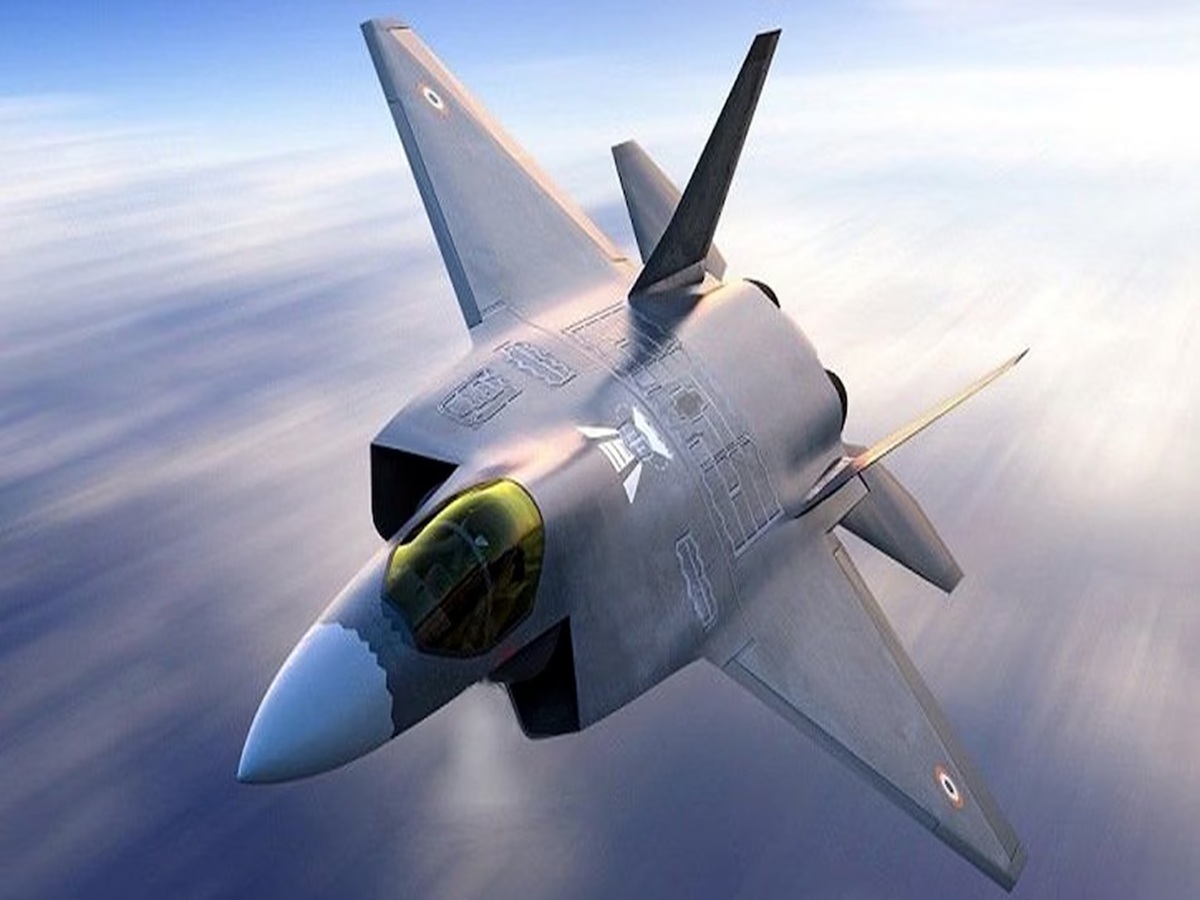
New Delhi: A Milestone for Atmanirbhar Bharat- On May 27, 2025, Defence Minister Rajnath Singh granted special approval for the Advanced Medium Combat Aircraft (AMCA) program, marking a historic step in India’s journey toward self-reliance in defense. The AMCA, India’s first 5th-generation stealth fighter jet, will be developed by the Aeronautical Development Agency (ADA) in collaboration with private and public sector companies. This initiative aims to bolster the Indian Air Force (IAF) while reducing dependency on imported aircraft like Rafale and Sukhoi, aligning with the Atmanirbhar Bharat vision.
Innovative Industry Partnership Model
The AMCA program introduces a new implementation model, fostering equal opportunities for both private and public sector firms. Companies such as HAL, Tata, and L&T can bid independently, form joint ventures, or create consortia to participate. The ADA will soon release an Expression of Interest (EoI) to kickstart the development phase, ensuring a competitive and transparent process. This model is expected to drive innovation, create jobs, and position India’s aerospace industry as a global contender by 2030.
AMCA’s Cutting-Edge Features
The AMCA will be a game-changer for the IAF, equipped with advanced technologies to counter modern threats. It will feature stealth technology to evade radar, supercruise capability to exceed the speed of sound without afterburners, and a low-observable design with a reduced radar cross-section. The jet will be armed with Astra and BrahMos-NG missiles, powered initially by GE F414 engines, with plans to transition to the indigenous AL-51 engine. Advanced AESA radar, AI-driven decision-making, and network-centric warfare capabilities will make it a versatile multi-role fighter.
Development Timeline and Strategic Impact
The AMCA will be developed in two phases: the Mk1 variant, with basic 5th-generation stealth features, is expected to have its first prototype flight by 2027, while the advanced Mk2, featuring indigenous engines and enhanced AI, will follow post-2030. The IAF aims to induct its first AMCA squadron by 2030. Strategically, the AMCA will counter China’s J-20 and Pakistan’s Project AZM, enhancing India’s aerial dominance. It also holds export potential, positioning India as a future fighter jet exporter.
Strengthening India’s Defense Ecosystem
The AMCA program is more than just a fighter jet project—it’s a catalyst for economic and technological growth. By involving private players, it will spur innovation and create thousands of skilled jobs. Defence experts estimate the program could contribute over ₹1 lakh crore to the economy over the next decade. Rajnath Singh stated, “AMCA will not only strengthen our skies but also our resolve to be self-reliant.” This move comes amid heightened regional tensions, with India also preparing to test advanced systems like the Pinaka MkIII and STAR missile, further solidifying its defense capabilities.