






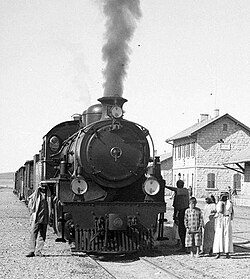
In January 1919, the Ottoman flag finally came down in Madinah. Behind it lay a broken empire, and a railway that had become one of its last lifelines. The trains had once carried soldiers, supplies and pilgrims across the desert. By the end, the railway was battered, vulnerable and increasingly cut off. The Ottoman garrison was exhausted. The empire around it had collapsed.
The flag came down. The railway’s imperial purpose was finished. And the Ottomans were gone from the Hejaz. Or so it seemed.
More than a century later, in August 2026, the leaders of Saudi Arabia, Türkiye and Pakistan sat together in Mecca and signed an agreement with a strikingly different message: an armed attack on one would be regarded as an attack on all three.
The contrast is hard to miss. The Ottoman Empire and the forces of the Sharif of Mecca had fought each other in the Hejaz. The Ottoman railway itself became a battlefield during the Arab Revolt. Today, Saudi Arabia and modern Türkiye are partners in a defence agreement.
And Pakistan makes the story even more surprising. Pakistan did not exist when the Ottoman flag came down in Madinah. But the people of the region that would later become Pakistan were part of a much larger South Asian Muslim movement that had taken the Ottoman side. To understand that journey, we need to follow the railway.
When a Railway Became a Weapon
The Hejaz Railway was built by the Ottoman Empire from Damascus towards Madinah at the beginning of the twentieth century. It was meant to make the pilgrimage easier and strengthen the Ottoman connection with the holy cities.
But it also gave Istanbul something more valuable: a way to move troops and supplies across the desert. That made the railway a strategic target. When the Arab Revolt began in 1916, railway stations, bridges and tracks came under repeated attack. The line had to be defended across enormous distances. Fortified stations and blockhouses became part of the landscape. The railway that had helped the Ottomans hold the Hejaz together was now helping expose how difficult that control had become.
Every damaged bridge was more than a railway problem. It was a crack in imperial power. And at the southern end of the line stood Madinah. General Fakhri Pasha and the Ottoman garrison refused to abandon the city even after the Ottoman Empire had collapsed elsewhere. They remained until January 1919, when Fakhri Pasha finally surrendered after receiving orders from Istanbul.
The empire had lost the war. Yet one of its commanders was still holding on in Madinah. When that resistance finally ended, the Ottoman chapter in the Hejaz was over. But the story did not end there.
Surprising Connection to Pakistan
The Ottoman collapse was being watched thousands of kilometres away in British India. For many Indian Muslims, the Ottoman Sultan was not simply a foreign ruler. He was regarded as the Caliph, and the survival of the Ottoman Caliphate had become tied to wider concerns about the Muslim holy places.
When the First World War ended and the future of the Ottoman Empire was threatened, political mobilisation spread across India. The Khilafat Movement emerged in 1919, demanding that Britain preserve the Ottoman Caliphate and protect its position regarding the holy places. This included Muslims from regions that would later form Pakistan. There is an extraordinary irony here.
A century ago, many Muslims in what is now Pakistan were emotionally and politically aligned with the Ottoman cause at a time when the Ottoman Empire was fighting to retain its position in Arabia. Today, Pakistan is sitting beside Saudi Arabia and Türkiye as a partner in a mutual-defence agreement. The political map has changed almost beyond recognition. But the old connections have not completely disappeared.
From Enemies to Partners
The Ottoman Empire eventually vanished. The Republic of Türkiye emerged from its ruins. Saudi Arabia consolidated control over the Hejaz and became the kingdom we know today. Pakistan appeared on the map in 1947. Their interests evolved.
Saudi Arabia and Pakistan developed a close strategic relationship. Türkiye and Pakistan built their own political and defence ties. And Türkiye and Saudi Arabia gradually moved from very different historical positions towards cooperation.
Then came Mecca. In August 2026, Saudi Arabia, Türkiye and Pakistan signed the Mecca Joint Defence Agreement. The agreement commits the three countries to collective deterrence and states that an armed attack against one will be regarded as an attack against all three. It would be tempting to describe this as history coming full circle.
The Ottoman Empire has not returned. Saudi Arabia is not reversing its history. Türkiye is not recreating the Ottoman state. And Pakistan is pursuing the interests of a modern nation-state. What has changed is the strategic calculation. The three countries have compelling reasons to stand together: regional insecurity, defence requirements, military cooperation and their evolving relationships with the wider Middle East and South Asia. Yet history gives the pact another layer.
Railway Still Remembers
Much of the old railway has disappeared. But its stations, forts, bridges, water installations and other remains still mark the landscape. They are silent witnesses to a remarkable transformation. They saw the Ottoman Empire arrive with its railway.
They saw the railway become a lifeline, then a battlefield. They saw the Ottoman garrison make its final stand in Madinah. They saw the empire leave. And, more than a century later, they have watched the descendants of that history come together in a very different arrangement.
The railway line has seen the enemies, the empires and the alliances come and go. Today, Saudi Arabia, Türkiye and Pakistan stand together in Makkah.
The railway cannot tell us whether history has finally come full circle. It can only wait and see which bend history takes next.
(Note on usage: Mecca and Makkah are both valid and widely used English renderings of the city’s name. Mecca is used here throughout the article for consistency; the agreement itself is referred to as the Makkah Pact, hence the connection between the two names)


