


Navigating the real tension between migration, identity, and Islam: what places, data and voices on the ground are truly telling us
In the dead of night between July 27 and 28, 2025, in Torre Pacheco, Spain, a photograph of a 68-year-old pensioner with a severely battered face began circulating online. The man claimed three young North Africans had assaulted him. Within hours, far-right groups organised street patrols, and the town remained on edge for several consecutive nights. Similar episodes have recurred across half of Europe over recent years: from Southport to Ballymena, from Amsterdam to the outer suburbs of Paris.
It is around these incidents, and the figures accompanying them, often distorted in public narratives—that one of the continent’s most heated debates is being waged today: the debate over coexistence between European societies and Muslim communities, set against a backdrop of migration flows that remain substantial yet, contrary to widespread belief, are experiencing a steady decline.
A continent on alert, not in emergency
The narrative circulating in public discourse is frequently that of a Europe overwhelmed by an unstoppable migratory wave. Eurostat and EUAA data tell a different story. Throughout 2025, European Union (EU) member states (alongside associated countries in the EU+ area) recorded approximately 822,000 asylum applications, marking a roughly one-fifth decrease compared to 2024. This downward trend continued into the first half of 2026, confirming a phase of numerical cooling within the system.
The geography of origins is shifting as well. For the first time, migratory pressure is seeing sharp diversification: significant flows are arriving from Latin American countries like Venezuela, alongside traditional flows from Afghanistan and Syria—the latter experiencing a steep drop in departures following internal political shifts. Countries such as Spain, Italy, France, and Germany continue to receive the highest number of applications, absorbing roughly 80 per cent of the European total. The overall picture is that of a system under pressure yet undergoing normalisation, rather than an invasion in progress.
On the hardline front, the most influential political voice of recent years remains that of Alice Weidel, co-leader of Germany’s AfD, which has established itself as the country’s second-largest political force. Weidel continues to champion the line of “remigration”, advocating for severe border clampdowns and large-scale deportations, while linking irregular immigration to public security issues. Similar stances emanate from Marine Le Pen’s National Rally and parties within the European Parliament’s “Identity and Democracy” group, testifying to how central the issue remains for the continent’s entire radical right.
On the opposite side of the debate, among Europe’s most prominent Muslim voices is Franco-Tunisian Imam Hassen Chalghoumi, leader of the Drancy mosque and a historic figure in interfaith dialogue. For years, he has maintained that European Muslims must actively commit themselves against extremism and toward full adherence to democratic values, a stance that has cost him death threats. Alongside individual figures exist collective structures such as the European Muslim Leaders Majlis (EULEMA), headquartered in Brussels, which brings together imams and theologians from various EU countries to promote compatibility between the Islamic faith and democratic values.
Behind the macro figures and political polemics move individual stories, mirroring a Europe that struggles to offer emotional and social stability. Jeffrey, who arrived in Spain from Ghana, now lives in Madrid where he works legally in logistics. He has integrated into the economic fabric and speaks fluent Spanish, yet confesses he constantly feels like an outsider: “I have a job and regular papers here, but no one really sees me. I feel like an indefinite guest. My dream is to save enough money to return to Accra, open a business, and see my mother again.”
Amanullah, a young Afghan refugee in Germany, lives in a reception centre on the outskirts of Frankfurt and recounts an experience of profound rootlessness: “I study German and respect the laws, but I don’t feel integrated. Outside these four walls, there is an invisible wall. Germans are polite in theory, but in practice they make you feel you don’t belong here. I have no local friends and my life is suspended.”
Maps of tension
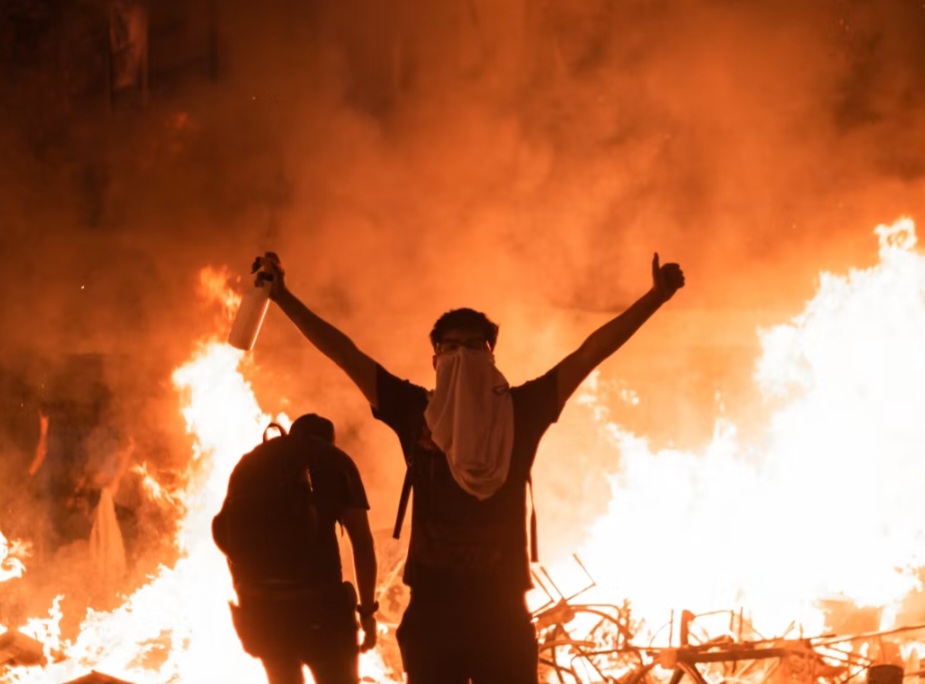
The geography of real clashes spans a large portion of the continent. In the United Kingdom, the summer of 2024 was scarred by riots following the Southport attack, where three young girls were killed by a young man falsely identified online as a Muslim asylum seeker: the violence spread to Sunderland and Belfast, featuring assaults on mosques and over 1,800 arrests within a year. In Northern Ireland, Ballymena experienced days of rioting in June 2025 following the arrest of two Romanian teenagers for suspected sexual assault, leading, according to the Committee on the Administration of Justice, to the exodus of two-thirds of the local Roma community.
In France, the most critical flashpoint remains the summer of 2023, marked by nationwide riots after the police killing of seventeen-year-old Nahel Merzouk. In Germany, dramatic news events have served as prime mobilisation moments for the radical right, fueling the growth of the AfD. Amsterdam and The Hague have witnessed clashes between police and anti-migrant protesters; in Sweden (Rosengård in Malmö) and Belgium (Molenbeek in Brussels), enduring textbook cases cited in European debates on segregation persist, though often represented disproportionately relative to actual events. Alongside violence, peaceful yet massive mobilisations occur, such as the large London demonstration in September 2025 against Channel migrant landings.
Italy remains central to Central Mediterranean migration, ranking among the EU’s top four countries for asylum applications and pressure on reception systems. With the European Pact on Migration and Asylum taking full effect in 2026, Italy faces disputes over Dublin transfers, having received more than 24,000 return requests from EU states in a year, while actual transfers remained minimal. Its strained reception system relies heavily on Extraordinary Reception Centres, while sea arrivals are dominated by nationals of Bangladesh, Egypt, Tunisia and Syria. The government favours externalisation, including facilities in Albania, while humanitarian groups cite rights concerns. Bureaucratic and housing barriers continue to hinder integration.
A distinct chapter of southern migratory pressure is represented by Spain’s enclaves of Ceuta and Melilla, the EU’s only land borders with Africa. Their borders are sharply physical: double steel barriers up to 10 metres high, reinforced by thermal cameras, separating Europe from Morocco. The enclaves are also geopolitical pressure points in Madrid-Rabat relations. This vulnerability was starkly exposed between late July and August 2026, when mass arrivals overwhelmed local reception systems. Thousands attempted to reach Ceuta by swimming around the Tarajal and Benzú breakwaters or crossing border barriers, turning the enclave into an international migration crisis.
Ceuta’s distinctiveness lies in its social fabric: people of Moroccan origin make up roughly half its population and have been rooted in the city for generations. Yet this coexistence masks deep socioeconomic divides, including Spain’s highest unemployment rate and stark disparities in peripheral neighbourhoods. Ceuta is thus a paradox—deep social integration alongside an intensely militarised border.
The integration knot
Focusing solely on clashes risks obscuring a more structural dimension: the material living conditions and real opportunities offered to immigrant communities. Across various European peripheries—from French banlieues and Swedish suburbs to Belgian industrial zones and select German neighbourhoods—concentrations of immigrant populations coincide with educational and residential segregation, pressure on the housing market, pronounced employment disparities particularly for second-generation youth, and chronic backlogs in asylum procedures.
Added to these are recurring tensions over secularism and cultural norms–headscarves, mosques, ritual slaughter–which periodically return to the forefront of debate in France, Belgium, and Germany. The knot of assimilation remains open and legitimately controversial: to what extent Muslim communities are expected to adopt majority social norms, and how compatible this is with religious freedom. This is the terrain where the political right and European Islamic associations remain furthest apart.
The demographic knot
It is on the demographic front that the debate risks slipping most easily from facts to propaganda. The most frequently cited figure, estimating Muslims rising from the current 5 per cent to 14 per cent by 2050 under a high-migration scenario, stems from a 2017 Pew report based on 2016 reference data. Pew has not updated that projection for Europe since: it is an estimate nearly a decade old that continues to circulate as if current. The same study shows that even with zero immigration, the share would still rise to 7.4 per cent by 2050 due to internal demographic age structures. There is no credible evidence of a coordinated plan to “replace” Europeans: this is the “Great Replacement” theory, traceable to French writer Renaud Camus and adopted by the far-right, explicitly cited by authors of racist mass shootings from Christchurch to Buffalo.
A possible coexistence, not a given
The Union’s institutional architecture has fully come into force: the European Pact on Migration and Asylum, approved in 2024, is now fully applicable following the conclusion of its two-year transitional phase. While organisations like Human Rights Watch continue to criticise the pact for expanded detention possibilities and accelerated procedures, European institutions present it as the first structural mechanism for solidarity among member states, flanked by the Commission’s new policy guidelines for the 2026–2031 legislative term.
What remains is a Europe neither submerged by an invasion nor immune to genuine tensions: a continent where demographic growth is now almost entirely dependent on migratory balances and where asylum applications show a trend toward stabilisation and decline. Yet it is also a continent where the clashes of recent years are not isolated incidents, but symptoms of real integration problems that the radical right and Muslim communities narrate in opposite ways while both acknowledging as unresolved.
The question is therefore not whether a conflict exists—it does, documented city by city—but which framing to use in recounting it. Treating it as a clash of civilisations or a planned occupation means choosing the framework of a specific political theory, with a known history and predictable consequences. Treating it as an issue of integration, housing, schools, labour, and shared rules means leaving it in the realm of public policy, where—unlike conspiracy theories—workable solutions exist, however difficult they may be to build.
MAP GFX 1
HOTBED OF TENSION
Southport (UK)
Misinformation triggered anti-Muslim violence in 2024
Sunderland (UK)
anti-immigration spillover
Belfast and Ballymena (Ireland)
immigration meets communal tensions
Amsterdam & The Hague (Netherlands)
anti-migrant protests and clashes
Malmo (Sweden)
segregation and integration tensions
Molenbeek (Belgium)
immigrant concentration and integration tensions
Ceuta
Europe’s fortified African border
GFX 2
EUROPE’S ASYLUM TREND
822,000 applications in 2025 — down 20% from 2024, with the decline continuing in H1 2026
Spain, Italy, France and Germany account for 80% of applications