



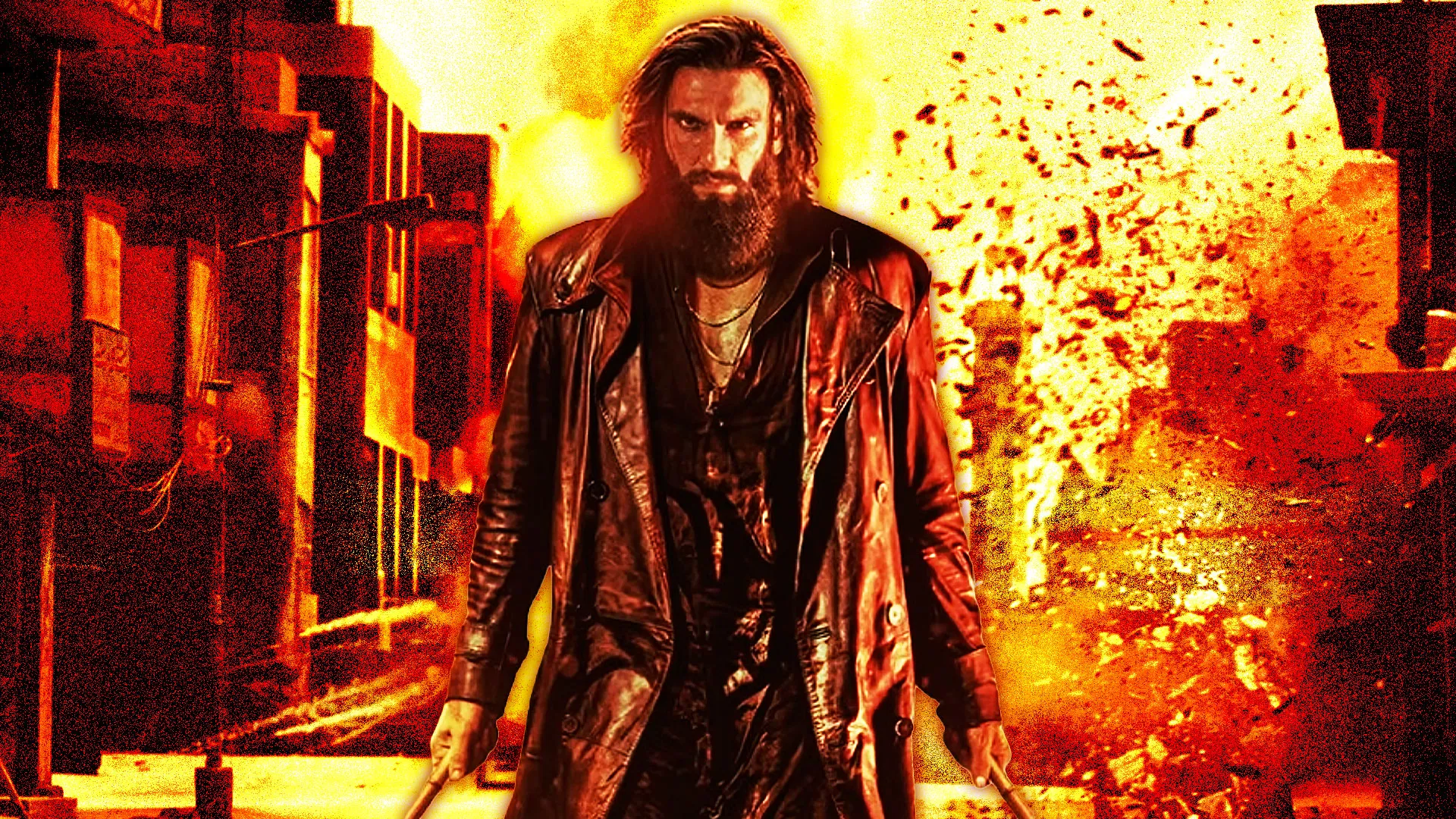
Dhurandhar 2: The Revenge, directed by Aditya Dhar, is a high-octane Bollywood spy thriller that arguably features one of Ranveer Singh’s most compelling performances to date. As Jaskirat Singh, a man torn between duty and family, Ranveer commands the screen with remarkable control and effortlessly shifts between the subdued vulnerability of Jaskirat and the ruthless intensity of his alter ego, Hamza.
Serving as the concluding chapter of the Dhurandhar series, the film delivers on scale and ambition. It layers action with political undertones, building effectively on the foundation laid by its predecessor.
At the centre of the narrative is Jaskirat Singh Rangi (Ranveer Singh), an Indian operative living undercover as Hamza Ali Mazari in Karachi. The volatile locality of Lyari is depicted as a nexus of crime and politics, where shadow networks influence power structures in Pakistan. As Jaskirat immerses himself deeper into this world, he is drawn into a labyrinth of deception, betrayal and calculated vengeance.
Arjun Rampal plays the principal antagonist, Major Iqbal of the ISI, a pivotal figure in the cross-border intelligence apparatus. He brings a chilling restraint to the role, most notably in a disturbing sequence where his character murders his own father, an act that underscores his moral detachment.
Sanjay Dutt appears as SP Choudhary Aslam, a hardened and morally ambiguous police officer who operates without hesitation or remorse, even at the cost of his own men. However, the film does feel the absence of Akshaye Khanna, whose distinctive screen presence and sharp delivery added gravitas to the earlier instalment.
Spanning nearly four hours, Dhurandhar 2: The Revenge juggles multiple subplots—ranging from covert intelligence operations to deeply personal backstories. The narrative fuses individual vendetta with national stakes, culminating in high-voltage confrontations. Several unexpected twists sustain audience engagement, often drawing applause and whistles in cinemas.
The film opens with a visceral sequence that establishes Jaskirat’s rage. He procures weapons from a gangster in Uttar Pradesh involved in narcotics and illegal arms, driven by a desire to avenge the brutal gang rape of his sister by relatives of a gangster-turned-politician. This sets the tone for the relentless violence that follows.
As Jaskirat, under the identity of Hamza, dismantles gang networks in Lyari and eventually asserts control over Baloch factions, he earns the title Sher-e-Baloch from local power brokers. These groups later align with him to thwart high-stakes operations linked to the ISI.
The narrative also introduces Bade Saab, an apparent nod to underworld figure Dawood Ibrahim, and depicts a series of targeted killings of terrorists responsible for attacks in India and believed to be hiding in Pakistan. At points, the film deliberately blurs the line between fiction and reality, suggesting that major developments of the past decade, including demonetisation, may have been part of a larger covert strategy executed in the national interest. It also underscores the strong resonance that anti-Pakistan themes continue to have with Indian audiences.
However, unlike its predecessor, this instalment refrains from overt criticism of previous governments. In its closing moments, it reveals that politician Jameel Jamali (Rakesh Bedi) is, in fact, an Indian agent planted 35 years ago, subtly hinting at the long-term strategic groundwork laid by earlier regimes.
(Praveen Nagda is festival director, KidzCINEMA and Culture Cinema Film Festivals)