
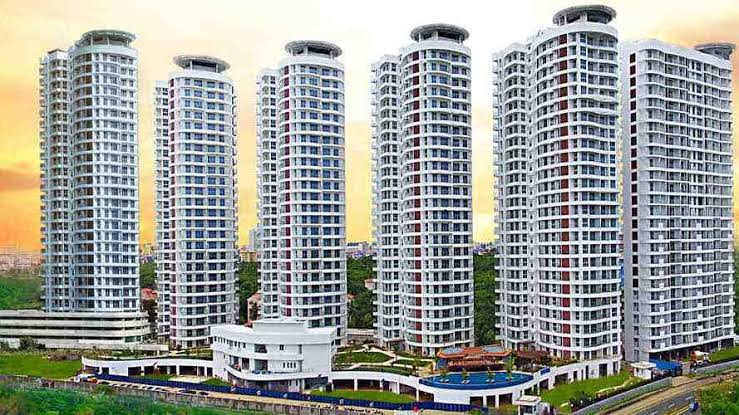
Marble lobbies and prestigious addresses no longer drive India’s luxury housing market. A new generation of wealthy buyers is demanding better design, stronger engineering, sustainability and long-term value, forcing developers to rethink what luxury truly means
For most of India’s post-liberalisation history, luxury real estate was defined by a simple formula. A prestigious address, generous square footage and imported finishes were enough to command a premium. A marble lobby and a well-known pin code did the rest. That era is drawing to a close, not because demand has weakened but because the Indian luxury buyer has fundamentally changed, and the numbers now prove it.
Consider what happened to the market in 2025. Housing sales across the top seven cities declined by roughly 14 per cent in volume, falling to about 3.96 lakh units. Yet total transaction value rose by 6 per cent and crossed six lakh crore rupees for the first time. Fewer homes were sold, but far more valuable ones. Homes priced above four crore rupees, which contributed barely 1-2 per cent of sales before the pandemic, now account for 18-20 per cent of the market, according to research by ANAROCK and the Indian Chamber of Commerce. At the very top, sales of homes priced above 40 crore rupees jumped by 66 per cent in a single year, with the Mumbai Metropolitan Region alone accounting for over 70 per cent of such transactions. CBRE recorded an 85 per cent surge in luxury sales in the first half of 2025, with Delhi-NCR contributing more than half of all luxury units sold in the country.
The wealth behind this demand is not speculative froth. Knight Frank’s Wealth Report 2026 counts 19,877 Indians with net assets above US$30 million, a 63 per cent increase over five years, giving India the world’s sixth-largest ultra-wealthy population. That figure is forecast to reach 25,217 by 2031. These individuals allocate, by Knight Frank’s estimate, between 22 and 25 per cent of their wealth to prime residential property, and they hold most of it within India. On the firm’s Prime International Residential Index 2025, Bengaluru ranked eighth globally, with luxury prices rising by 9.4 per cent; Mumbai ranked tenth at 8.7 per cent; and Delhi recorded 6.9 per cent growth. Indian cities are no longer catching up with global prime markets. In terms of price momentum, they are leading several of them.
But the more interesting story is not how much buyers are spending. It is what they are now buying. The new generation of wealthy Indians—first-generation entrepreneurs, senior professionals with global careers and families returning from London, Dubai and Singapore—has lived in the world’s best-built cities. They have experienced what genuinely good design, engineering and estate management feel like. They can no longer be impressed by chandeliers. They notice ceiling heights, air quality, acoustic insulation, the width of a corridor and the logic of a floor plan. They ask about structural quality, fire safety and the credentials of the consultants who planned the development. Luxury, for this buyer, is not decoration. It is competence.
This shift will reward a different kind of developer. For decades, Indian real estate treated master planning and architecture as costs to be minimised rather than the very product being sold. Land was carved into saleable units first and thought about later. The results are visible across our cities in the form of prestigious addresses with poor light, badly oriented towers, afterthought landscaping and common areas that age gracelessly. The luxury market of the future will be unforgiving of this approach because the buyer can now tell the difference, and because resale values have begun to reflect it.
Several forces will define the coming decade. The first is the rise of branded and serviced living. India already ranks sixth in the world for branded residential projects, contributing 4 per cent of global supply, with Mumbai, Delhi-NCR, Bengaluru and Pune leading the way. Globally, branded schemes have grown from 169 in 2011 to over 600 today, and total units are projected to cross 160,000 by 2030. The brand is a proxy for what buyers actually want, which is assured standards of design, maintenance and service long after the developer has exited. Expect this model to extend beyond hotels into wellness residences, design labels and private clubs.
The second is the return of the lowrise. As cities densify, scarcity is shifting from the apartment to the ground itself. Farmhouse estates, plotted developments and gated, low density communities on the peripheries of Delhi, in the Aravalli belt and around Alwar are attracting serious capital because land with privacy, greenery and clean air is the one luxury that cannot be manufactured on the 20th floor. Second homes in the hills and heritage-led destination estates, from Shimla to Rajasthan, belong to the same impulse. The wealthy are increasingly buying landscapes, not merely structures. The land market confirms this appetite. Nearly 12,700 acres were transacted by developers over the past five years, with about 60 per cent earmarked for residential use.
The third is sustainability, understood correctly. In luxury, sustainability will not be a certificate on a wall. It will be experienced as comfort and permanence through passive cooling, water security, waste management and buildings engineered to remain excellent for 50 years rather than presentable for 10. Climate resilience will quietly become a price driver, a truth that buyers in flood-prone and water-stressed micro-markets are already learning.
The fourth is the professionalisation of the sector itself. RERA began the work of accountability, and institutional capital is finishing it. Listed and Grade A developers now account for roughly 45 per cent of residential supply, up from 28 per cent five years ago. Foreign private equity investment in Indian real estate rose to about US$3.1 billion in the last financial year. As global funds, family offices and REITs deepen their exposure, they bring due diligence standards that reward developers who invest in planning, documentation and execution discipline. Capital will grow expensive for the careless and abundant for the professional.
None of this means the market is without risk. Luxury real estate is cyclical, and prices in some corridors of Delhi-NCR and Mumbai have run ahead of the infrastructure that must ultimately justify them. The developments that endure corrections are, without exception, the ones with sound fundamentals: clear titles, honest planning, quality construction and locations backed by real connectivity rather than promised connectivity.
Having spent more than three and a half decades master planning townships, institutional campuses and urban projects across India, I have watched this industry mature from an unorganised trade into a serious profession. The next decade will complete that transformation at the top of the market. The winners will not be those who sell the most marble. They will be those who understand that, in luxury real estate, the true product is foresight: the ability to imagine how a family will live in a space not next year but 25 years from now.
India’s luxury buyer has arrived at that understanding. The industry that serves them now has to catch up.