





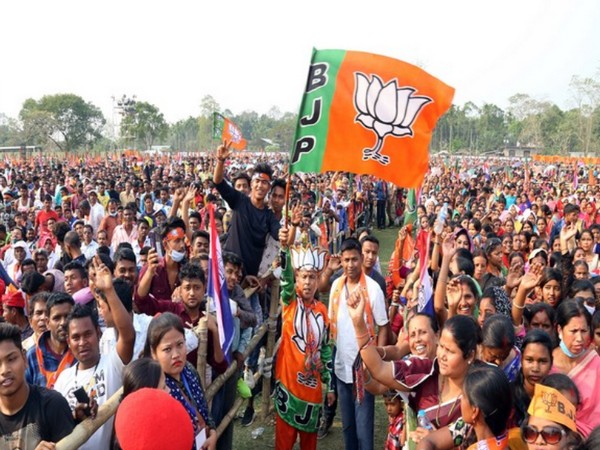
Bihar’s 2025 Assembly election, slated for November 6 and 11, is no ordinary contest. It’s a test of whether India’s politically combustible heartland will continue to reward continuity under Nitish Kumar’s National Democratic Alliance (NDA) or gamble on change through Tejashwi Yadav’s Mahagathbandhan.
With over 7.4 crore voters and multiple crosscurrents—from youth job angst to voter-roll controversies—the outcome may hinge less on caste arithmetic and more on who best channels a new kind of Bihar fatigue: a state tired of slogans, hungry for results.
Youth and Jobs: The Defining Fault Line
If any single issue can upend Bihar’s entrenched caste equations, it’s unemployment. The state’s jobless rate of around 7-8% conceals a deeper malaise: mass youth migration. Each year, over 20 lakh Biharis leave in search of work, draining local talent and hollowing families. For the 18-35 age group, nearly a third of the electorate, “Viksit Bihar” has become a bitter punchline.
Tejashwi Yadav has tapped into this discontent with promises of “one government job per family”, new skill centres, and industrial corridors. The NDA counters with its “one crore jobs” pledge through industrial incentives. But after two decades in power, the alliance’s credibility on employment is wearing thin.
If youth turnout crosses 65%—up from 57% in 2020—the Mahagathbandhan could gain 10-15 seats, particularly in urban belts like Patna and Muzaffarpur, where the hashtag #BiharMigrationCrisis dominates social media. But if apathy wins and turnout stays low, the NDA’s disciplined rural base could hold firm.
Voter Roll Controversies: The Battle for Inclusion
The most combustible issue this time is administrative, not ideological. The Election Commission’s Special Intensive Revision (SIR) exercise deleted nearly 80 lakh names—about 7% of Bihar’s electorate. Officially, it was a “cleanup” of duplicates and fake entries. But the demographic skew—heavy deletions among Muslims and women—has triggered allegations of bias.
In Seemanchal, where deletion rates reached 7.7%, the backlash has been fierce. The Supreme Court’s intervention to halt mass deletions restored some confidence, but the trust deficit persists.
If reinstatement efforts succeed before polling, the Mahagathbandhan could reclaim 8-12 minority-heavy seats. But if confusion and distrust linger, turnout suppression could help the NDA, whose upper-caste and EBC bases remain largely intact. On X, the hashtag #BiharVoterListScam continues to trend, an indication that procedural fairness itself has become a political battleground.
Caste and the Shape of Alliances
Caste remains Bihar’s invisible scaffolding even as voters profess fatigue with it. The 2023 caste census, showing OBCs and EBCs at 63%, has reignited demands to expand reservations beyond the 50% cap.
The RJD has doubled down on social justice, courting Yadavs, EBCs, and Pasmanda Muslims. The NDA is trying to retain its upper-caste core while broadening its EBC outreach. Yet subtle shifts, such as sections of Vaishyas drifting toward the RJD, signal volatility.
Adding unpredictability is Prashant Kishor’s Jan Suraaj Party (JSP), pitching a “caste-neutral” narrative centred on corruption-free governance. Even with a modest 5-10% vote share, the JSP could spoil close contests in 3040 constituencies, particularly in north Bihar, potentially hurting the opposition more than the NDA.
If the RJD manages to consolidate EBCs and minorities, it could tilt 15–20 seats its way. But a fragmented anti-NDA vote—split between the Mahagathbandhan and JSP—could hand Nitish Kumar an unintended advantage.
Nitish’s Long Shadow and Anti-Incumbency
After two decades in power and multiple political somersaults, Nitish Kumar faces the paradox of over-familiarity. His once-celebrated image as “Sushasan Babu” (Mr Good Governance) now risks turning into a liability.
Infrastructure gaps, from crumbling roads and erratic power to chaotic urban planning, reinforce the sense of a state stuck in neutral.Inflation hovering around 6% adds to voter fatigue. Yet Nitish’s welfare record, particularly Har Ghar Nal-Jal (tap water for every home), still resonates in rural Bihar, where tangible benefits outweigh rhetoric.
A key variable is rural turnout. If it dips below 60% amid disillusionment, the NDA could lose 10-15 seats. But if it climbs toward 70%, the ruling coalition’s organisational muscle and the BJP’s national machinery could cushion the anti-incumbency hit.
Floods, Farmers and Forgotten Promises
For Bihar’s largely agrarian electorate, floods are not just natural disasters—they are annual betrayals. The Kosi’s recurring overflow devastates millions, wiping out crops and livelihoods. Yet, flood management remains reactive.
The NDA cites embankment projects and crop insurance; the RJD promises river-linking, loan waivers, and MSP guarantees. With 40% of rural voters in flood-prone districts ranking relief and irrigation as their top concerns, even timely announcements or emergency relief could swing 5-10 seats either way.
In districts like Darbhanga and Supaul, the contest could turn on who displays immediate empathy rather than long-term engineering.
Money Power Equation
The Election Commission’s pre-poll crackdown on liquor smuggling, drug trade, and cash seizures reflects both genuine enforcement and political theatre. Bihar’s voters are jaded by corruption, yet enforcement optics still matter, especially among women voters (49% of the electorate), seen as more responsive to law-and-order messaging.
Scandals such as the teacher recruitment scam have eroded the NDA’s moral edge, while Tejashwi’s camp struggles to shed Lalu-era baggage. If the ECI’s enforcement curbs money power effectively, it could level the playing field for the opposition. If not, established patronage networks could help the NDA retain its ground advantage.
Silent Swing Voters
Post-COVID, healthcare, education, and women’s safety have emerged as second-tier but emotionally potent issues. Hospitals remain understaffed, schools underfunded, and crimes against women persist at worrying levels.
Both sides flaunt welfare schemes such as free bicycles, helplines and scholarships, but execution lags. The NDA banks on its welfare continuity; the opposition urges a generational reset. Women voters, nearly half the electorate, could become silent swing agents: disillusioned but decisive.
Numbers That Could Swing the State
| Factor | Potential Seat Impact | Favours | Risk For |
| High Youth Turnout | 10–15 | Mahagathbandhan | NDA |
| Voter Roll Restoration | 8–12 | Mahagathbandhan | NDA |
| Caste/Alliance Shifts | 15–20 | RJD / JSP | NDA |
| Anti-Incumbency Wave | 10–15 | Mahagathbandhan | NDA |
| JSP Vote Split | 10–15 | NDA | Mahagathbandhan |
| Money Power Enforcement | 5–10 | NDA | Opposition |
| Flood Relief Factor | 5–10 | Mahagathbandhan | NDA |
With 243 seats in play and 122 needed to win, the 2020 verdict (NDA 125, Mahagathbandhan 110) shows how marginal swings can decide the outcome. Analysts now identify 40–50 constituencies as genuine toss-ups.
The Broader Picture: Continuity vs Change
At its core, the Bihar election is a referendum on faith in governance, opportunity and fairness. The NDA banks on stability and welfare continuity; the Mahagathbandhan bets on youthful impatience and social justice. The JSP injects a reformist but disruptive wildcard.
If turnout surpasses 70%, voter deletions are rectified, and youth mobilise around jobs and migration, momentum could swing toward Tejashwi’s camp. But if rural loyalty, caste arithmetic, and administrative control prevail, Nitish may yet survive another anti-incumbency wave.
As one X post quipped: “Bihar isn’t voting left or right—it’s voting between disappointment and disbelief.”
On November 14, the state will decide whether it still trusts the old order, or is finally ready to flip the switch on change.


