

S. Krishnan, Mayur Mahajan and Avneet Sandhu
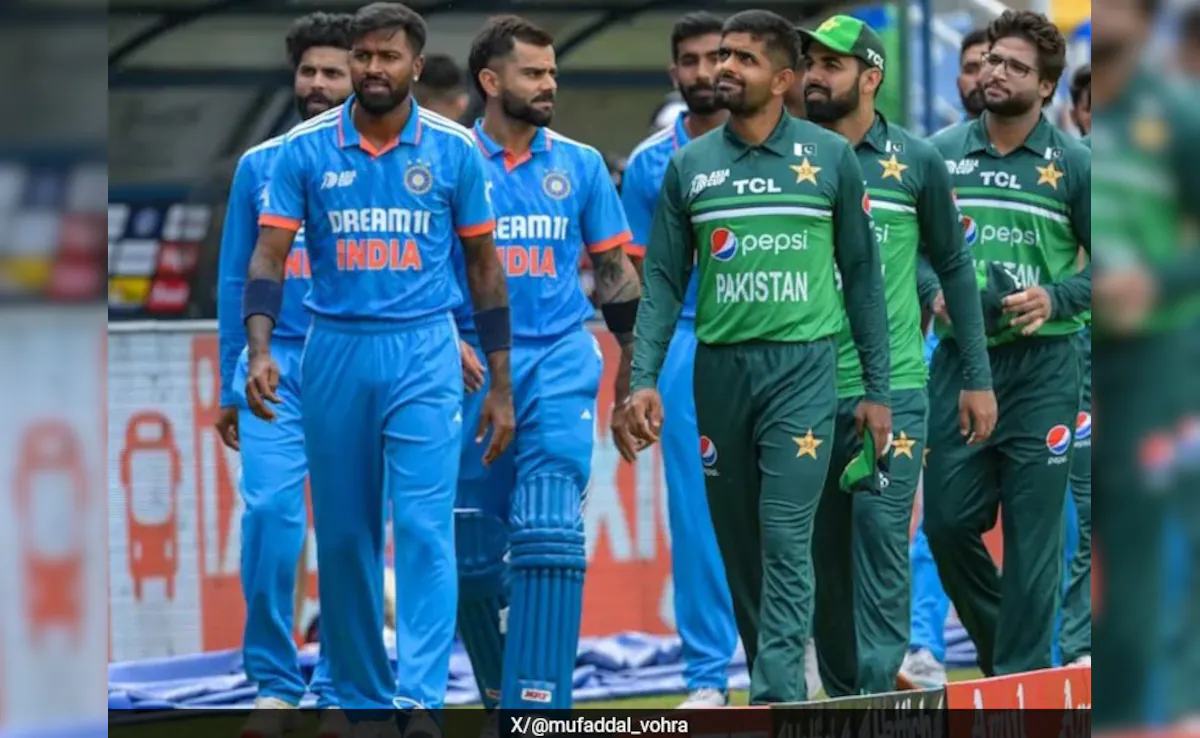
Cricket diplomacy between India and Pakistan uses matches as a tool to ease political tensions, acting as an icebreaker during diplomatic standoffs or as a bridge for dialogue. The problem began when a noted cricketer was dropped from an IPL franchise team. It escalated to the point where a prime minister made a phone call and two countries released diplomatic statements. In between, about $250 million was at stake, and a nation was removed from the World Cup. Yes, we are talking about the ongoing Cricket World Cup co-hosted by India and Sri Lanka.
The Background
Things did not start between the two governments or cricket boards. They began when the Board of Control for Cricket in India (BCCI) told the Indian Premier League (IPL) franchise Kolkata Knight Riders (KKR) last September to release Bangladeshi bowler Mustafizur Rahman from its squad. The BCCI gave no official reason, but context is everything. Relations between India and Bangladesh had steadily deteriorated since Sheikh Hasina’s overthrow in Dhaka in June 2024 and Muhammad Yunus’s rise as interim premier.
Dropping Mustafizur, whom KKR picked at auction for just under a million dollars, was viewed in Dhaka as less of an IPL decision and more of an intentional slight. Bangladesh’s response was emotional and knee-jerk. The Bangladesh Cricket Board (BCB) called India’s security guarantee for its World Cup group-stage matches ‘insufficient’ and announced that it would not travel to India for those games.
The International Cricket Council (ICC) disagreed with Bangladesh’s security assessment, finding no specific threat; consequently, Bangladesh was removed from the tournament entirely and replaced by Scotland. At this stage of the dispute, Pakistan intervened.
Intense Rivalry Between India and Pakistan
India and Pakistan are two cricket-crazy nations, and whenever these two teams clash, it creates a unique atmosphere both inside and outside the stadium where the match is played. Cricket competitions between the two countries are loaded with deeper political and diplomatic meaning.
The rivalry between these two South Asian neighbours dates back to 1947, when Pakistan was carved out of India on religious lines by the British, who were then the colonial masters of the Indian subcontinent. Partition led to horrific incidents of mass killings, rapes, genocide and rioting in different parts of India as well as Pakistan. This left cruel memories imprinted on the minds of people on both sides. Since then, cricket lovers in both countries have often treated losing to the other side as unforgivable, particularly a loss on home soil.
The first India-Pakistan cricket series was played in 1954, when the Pakistani team toured India. Later, thousands of Indian fans were granted visas to travel to Lahore when the Indian team toured Pakistan for the first time to play a Test series. The Pakistanis did the same when their team toured India again in 1961.
But still, the concept of “cricket diplomacy” had not yet been born. At that time, hockey was a much more popular sport in both countries, since undivided India was an Olympic champion in the sport. From 1947 to 1965, only three Test series were played between India and Pakistan. The wars of 1965 and 1971 led to a complete stoppage of cricket exchanges between the two nations.
Cricket diplomacy between India and Pakistan has a chequered history. Former Pakistani President General Zia-ul-Haq is widely credited with initiating the “cricket for peace” initiative. When he came to India to watch a Test match between the two sides in February 1987, tensions were running high. India had launched a huge military exercise on its border during the winter, and a rattled Pakistan had bolstered troops on its border in response.
Cricket continued to be played at neutral venues such as Sharjah, while only one bilateral series was played between the two countries until nearly the end of the millennium. Tensions grew after India toured Pakistan in 1989 for a full-fledged one-day and Test series. The reason: Kashmir.
Cricket was especially popular among the Indian Border Security Force and the Pakistan Rangers. Politicians and diplomats on both sides also liked the game. This is what made cricket diplomacy between the two countries distinctive. Many of those directly or indirectly involved in India-Pakistan foreign policy shared a passion for cricket.
However, cricket also coincided with horrific incidents in Kashmir during this period. India toured Pakistan for a three-match ODI series, made possible by the resumption of high-level talks between the two countries. Yet cricket between the two nations continued to become increasingly tense. In three World Cups in which India defeated Pakistan (1992, 1996 and 1999), political statements made by both sides using cricketing terminology created controversies.
When Indian Prime Minister Atal Bihari Vajpayee met Pakistani Prime Minister Nawaz Sharif in New York in September 1998, it was decided that foreign secretary-level talks would be held between the two countries, and a direct bus service between Lahore and Delhi was proposed. These talks led to the Pakistan cricket team touring India for a two-match Test series in January and February 1999. The two teams were meeting in a Test series after a gap of 10 years.
The Pakistani team played the Pepsi Cup one-day series in April 1999, but by then, relations were turning sour. Radical Islamist groups were gaining strength in Pakistan and Sharif’s power was fading. Both bus and cricket diplomacy failed after just three months, and Indian and Pakistani forces were once again facing each other in the mountains of Kargil. The ensuing Kargil War was followed by a military coup in Pakistan led by General Pervez Musharraf.
Cricket Diplomacy After 2000
Cricket between the two countries continued despite the Samjhauta Express train blast in February 2007. However, after the 26/11 attacks in Mumbai, India called off a proposed series in Pakistan in February 2009. India’s cricket team has not visited Pakistan since then. Pakistani players were also barred from playing in the Indian Premier League organised by the BCCI.
Cricket diplomacy re-emerged when the Indian Prime Minister Manmohan Singh and his Pakistani counterpart, Yousuf Raza Gilani, met during the 2011 World Cup semi-final between the two sides. Gilani invited Singh to visit Pakistan. Peace talks resumed, and Pakistan toured India in December 2012 for a T20 series and three ODIs.
More recently, Prime Minister Narendra Modi was said to be engaging in cricket diplomacy when he called Prime Minister Nawaz Sharif before the India-Pakistan clash at the 2015 World Cup. This move by the Indian prime minister sparked a broader debate in the Indian media about the Modi government’s underlying intentions.
From Political Grandstanding to Backroom Bargaining
The sequence began in early February, when Pakistan’s government publicly confirmed that it would travel for the T20 World Cup but refuse to take the field against India, framing the move as solidarity with Bangladesh after the ICC removed it from the tournament. PCB chairman Mohsin Naqvi echoed this line, insisting that Pakistan was standing up for Bangladesh rather than acting in self-interest. It was a maximalist position: participate in the tournament but boycott the marquee match. The moment that announcement was made public, however, alarm bells rang across the cricket economy.
ICC’s Financial Stick
Refusing to play a scheduled World Cup match carries consequences and the ICC made that clear. Officials warned Pakistan that a boycott would trigger a points forfeiture and open the door to financial penalties, including the loss of ICC-generated revenues. Beyond formal sanctions, there was also the reputational hit: walking away from the biggest fixture in global cricket would have isolated the PCB commercially.
Broadcast partners also weighed in. The India-Pakistan game underpins the tournament’s entire business model. A late cancellation threatened to punch a massive hole in World Cup revenues.
Reports indicate that Pakistan’s reversal saved the ICC an estimated Rs 1,470 crore. That figure alone explains how quickly the tone shifted.
Will Normalcy Ever Return?
Whether all this is fair to the players is a question few in positions of authority have attempted to answer. What message are we sending to a 14-year-old Vaibhav Suryavanshi? Is it acceptable to snarl and growl, to disregard sporting tenets because that is what political masters demand? Then again, how should this impasse be resolved? Should the two countries simply stop playing each other in any sport, anywhere?
Pakistan’s latest curveball is particularly surprising because it has chosen to occupy a moral high ground that arguably does not exist. The ICC was well within its rights to deny Bangladesh’s last-minute demand to shift its T20 World Cup matches from India to Sri Lanka on security grounds, especially when there was no indication of any specific or even generic threat. Imagine the chaos if the ICC had acceded to that request. Once such a precedent is set, how does one refuse the next unreasonable demand?
(Dr S. Krishnan is an Associate Professor at the Seedling School of Law and Governance, Jaipur National University, Jaipur. Mayur Mahajan and Avneet Sandhu are law students at the same university)