



By S Krishnan, Rimjhim Jain and Shubhradeep Shukla
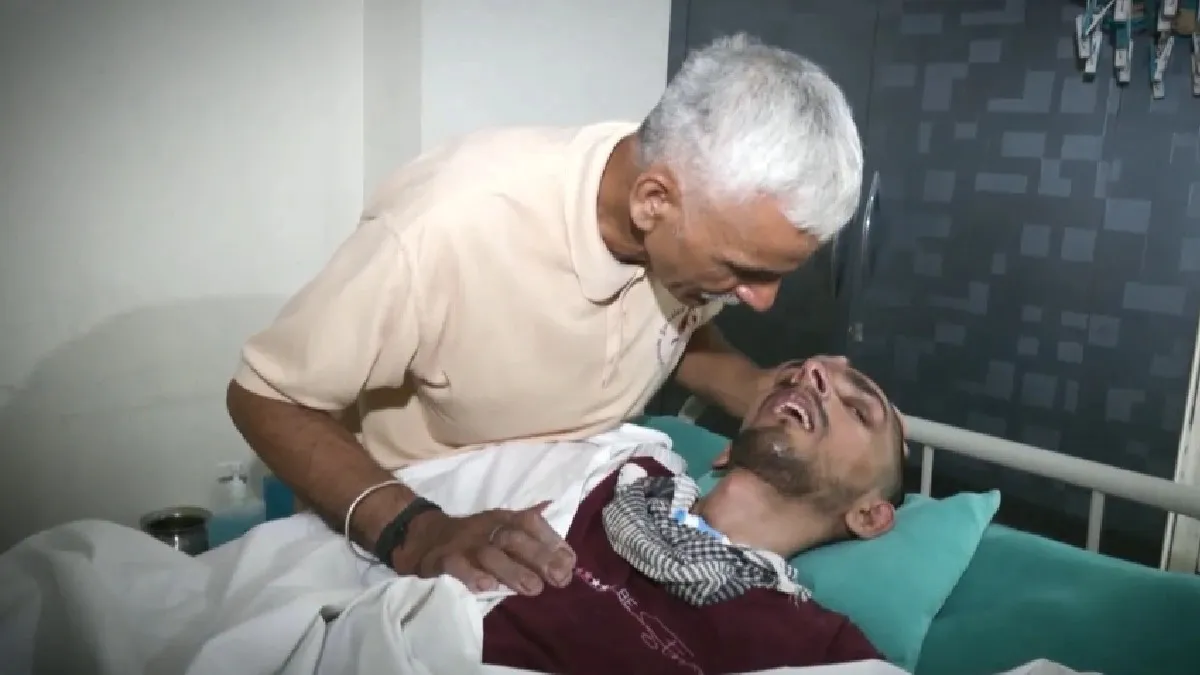
For 13 years, life had remained in suspension for Harish Rana, a Ghaziabad resident who slipped into a coma at the age of 31. Entirely dependent on others for even the most basic functions, his existence had been defined by medical intervention rather than conscious living. Now, after more than a decade in a vegetative state, the Supreme Court had, for the first time, set in motion the process permitting passive euthanasia in an individual case, offering a measure of relief to his family and igniting a wider legal and ethical debate. Harish Rana died on March 24 at AIIMS, Delhi.
Euthanasia sits at the uneasy intersection of law, medicine and morality. On one side lies the question of prolonged suffering in the absence of any realistic hope of recovery; on the other, the profound ethical dilemma of whether an individual has the right to end their life, and how such a right, if recognised, ought to be regulated by the State. At its core is the evolving jurisprudence around the “right to die with dignity”.
A Case That Tests the System
Harish Rana’s case may well become a litmus test for the operational viability of India’s passive euthanasia framework. The proceedings before the Supreme Court have highlighted not just legal principles, but also the absence of adequate medical and administrative infrastructure on the ground. Experts note that only a handful of states have established the mandated Secondary Medical Boards required for such cases.
The tragedy dates back to 20 August 2013, when Harish, then a civil engineering student at Panjab University, fell from the fourth-floor balcony of his paying guest accommodation. The injuries were catastrophic; he lost all motor and cognitive responsiveness. Over the years, his parents approached the Court seeking permission to withdraw life-sustaining treatment.
On his final working day, November 26, 2024, Chief Justice D Y Chandrachud directed the Uttar Pradesh government to provide comprehensive home-care support, including medicines and essential consumables, free of cost. However, as Harish’s condition deteriorated further, the family returned to the Court in November 2025.
A Bench comprising Justices J B Pardiwala and K V Viswanathan allowed the process to assess his eligibility for passive euthanasia to proceed. This marks the first practical invocation of the Court’s 2018 guidelines in a specific case.
Both the Primary and Secondary Medical Boards concluded that continuing treatment would not serve Harish’s best interests, recommending that nature be allowed to take its course.
Expanding the Definition
The case may also broaden the legal understanding of passive euthanasia in India. It is no longer confined merely to withdrawing ventilator support but may extend to discontinuing clinically assisted nutrition and hydration, including feeding tubes, an expansion that raises further ethical and procedural questions.
The Legal Trajectory
India’s euthanasia jurisprudence has evolved incrementally. In the Aruna Shanbaug Case, the Supreme Court recognised passive euthanasia in principle but denied relief in that specific instance. Subsequently, in Common Cause v. Union of India, a Constitution Bench declared the “right to die with dignity” as intrinsic to Article 21, while also legalising living wills or advance medical directives.
The 2023 clarification further simplified the process by removing the requirement of a Judicial Magistrate’s attestation, thereby reducing procedural rigidity.
Yet, significant ambiguities remain. Active euthanasia continues to be illegal, and even passive euthanasia operates within a cautious, court-driven framework. Earlier, courts exercised a parens patriae jurisdiction, acting as guardians for those unable to decide for themselves, particularly in cases involving patients in a permanent vegetative state.
Global Comparisons
Internationally, the legal status of euthanasia varies widely. Countries such as Belgium, Luxembourg and the Netherlands, along with jurisdictions like Oregon and Washington in the United States, have legalised certain forms of voluntary euthanasia under strict safeguards.
The Netherlands, notably, developed its framework through judicial precedents, including the Postma case (1973), which laid down conditions such as incurable illness, unbearable suffering, voluntary consent, and physician oversight.
In the United Kingdom, passive euthanasia has been permitted under judicial scrutiny. In Airedale NHS Trust v. Bland, the House of Lords allowed withdrawal of life-sustaining treatment for a patient in a persistent vegetative state, holding that prolonging life without prospect of recovery may not always serve the patient’s best interests.
Ethical Faultlines
The debate over euthanasia remains deeply polarised. Proponents emphasise autonomy and dignity, while opponents invoke the sanctity of life and the Hippocratic principle of “do no harm”. Concerns around coercion, misdiagnosis, and the reliability of consent, particularly in a country where psychiatric evaluation mechanisms remain uneven, add further complexity.
Legal risks also persist. Under the Bharatiya Nyaya framework, actions related to euthanasia may intersect with provisions on culpable homicide, murder, or abetment of suicide, exposing practitioners to potential prosecution in the absence of clear statutory protection.
Moreover, the current system dependent on multiple medical boards and judicial oversight remains slow, inaccessible, and burdensome.
The Road Ahead
The Harish Rana case underscores an urgent legislative gap. While judicial guidelines provide a framework, they are no substitute for a comprehensive statute that clearly defines procedures, safeguards, and accountability mechanisms.
Balancing patient autonomy with protection against misuse will require a multi-layered approach: robust palliative care systems, clearer consent protocols, institutional readiness, and legal clarity.
At a deeper level, the debate forces society to confront an uncomfortable question: when medical technology can indefinitely prolong biological existence, what constitutes a life worth sustaining?
Perhaps, as has often been observed, the true measure of a civilisation lies in how it treats its most vulnerable, not merely by preserving life at all costs, but by recognising dignity even in death.
(Dr S Krishnan is an associate professor in Seedling School of Law and Governance, Jaipur National University. Rimjhim Jain and Shubhradeep Shukla are students of law at the same university)