



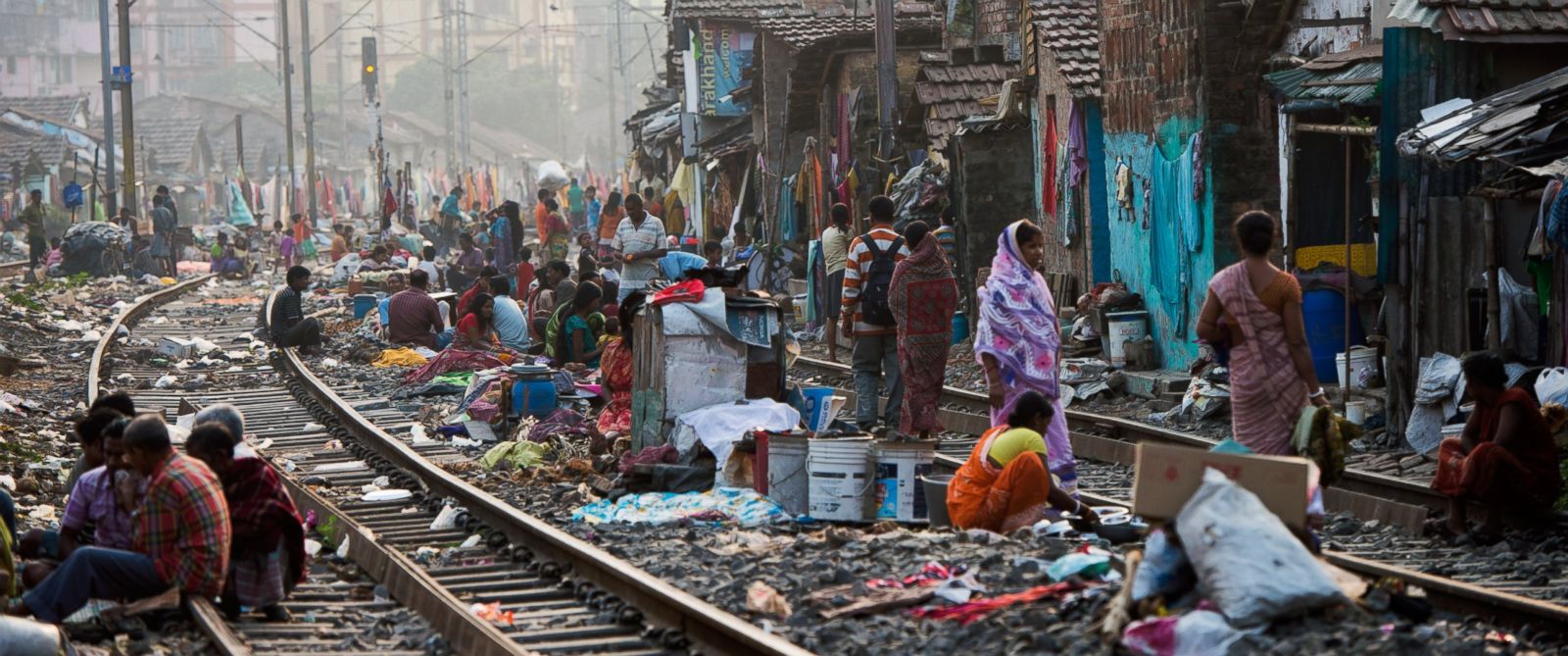
For the last one year, on almost every foreign visit by Prime Minister Narendra Modi, the government has been pro active to project that poverty in India is at an all time low and PM Modi has lifted 25 crore people in India, above poverty line. This was based on a report of the Niti Ayog named ‘Multidimensional Poverty Index’. But actually, if the Agrarian Study researchers are to be believed, the on-ground findings are far from truth. So, was the Niti Ayog report fudged? On what basis the government claim was made? Perhaps, this issue too will be buried like many others in the recent past, due to a weak opposition.
In the first week of February 2024, the Multidimensional Poverty Index figures were released by Niti Ayog. Through that data, it was claimed that in the last ten years of Modi government, poverty has reduced significantly and about 25 crore people have come out of the poverty line. Prime Minister Modi had also mentioned these figures in America and said that in ten years, his government has worked to eliminate poverty of 25 crore people of India and bring them above the poverty line.
On what basis these figures of Niti Ayog report were derived from, only the Ayog officials are privy to. But now the research-based figures presented by the review report of Agrarian Studies raise questions on the figures furnished by Niti Ayog. Agrarian Studies has claimed that the figures released by Niti Ayog on poverty are misleading and can be refuted. According to the facts given in the review report of Agricultural Studies, even today the poverty rate in India is 26.4 percent and the truth is that more than a quarter of the Indian population is below the poverty line.
The interesting fact of this report is that the findings cannot be ignored neither by the government nor the people who often take a pro government stand in television debates. Neither any government body can fully discard the findings due to the fact that country’s renowned professors, subject experts and scholars associated with this Agricultural Studies Review have made these findings and the journal of this institution is also included in the list of journals approved by the University Grants Commission (UGC). It is also recognized and ranked by the National Academy of Agricultural Sciences. Apart from this, support for this journal comes also from the Indian Council of Social Science Research. Rosa Luxemburg Stiftung Foundation for Agrarian Studies too supports researches for this publication.
“The history of the term Subaltern Studies is a bit long. This term was first used in England in the Middle Ages for agricultural slaves and farmers. Later, from 1700, it started being used for small posts in the army. Italian Marxist and Communist Party leader Antonio Gramsci (1891-1937) used it in a broad context in his works and after this it started being used rapidly in scholarship. Gramsci generally used this term in the broad context of class. He was in prison at that time and used this word to escape the jail administration because every word of his writing was scrutinized. Gramsci used this word for the subaltern group of the society. According to him, the history of subaltern groups is always connected to the ruling group. Apart from this, this history is usually divided into parts.”
Although Ranjit Guha, founder of India Subaltern Study, has not cited Gramsci in the context of the use of this word in the introduction to the subaltern context, he has definitely considered Gramsci as a source of inspiration. He has defined it according to the meaning given in the Concise Oxford Dictionary:
The meaning of the word ‘subaltern’ is taken from the Concise Oxford Dictionary which means ‘low position’. We are using it for the subordinate class of South Asian society where it appears in the form of class, caste, age, gender and position or in other forms.
Later, at the end of the introductory article of this section, he has again clarified this term. ‘In this article, ‘masses’ and ‘lower class’ have been used as synonyms for each other. The groups and elements included in this category are completely different from the elite society and groups.’
Subaltern historians have used this term in a completely different sense from Gramsci. While accepting the subordination of the people from the lowest strata of the society, they also emphasize that their history was separate and autonomous from the dominant class. In such a situation, the data that has come from Agrarian Studies has not been done by any loose people. And at least the government will not challenge these data.
“This report has refuted many claims of poverty reduction in India. On December 18, 2024, the Foundation for Agrarian Studies i.e. FAS, Bengaluru organized an online panel discussion on the topic “Measuring Poverty in India”. The event was organized in the backdrop of the release of the Household Consumption and Expenditure Survey (HCES) 2022-23 by the Government of India. This discussion has started a debate on poverty in India yet again.”
Earlier, it was reported that the poverty level has fallen to about 10% but in a recent review of the Agricultural Studies report, it has been found that more than a quarter of India’s population is below the poverty line. It is worth mentioning that the program, chaired by Professor Madhura Swaminathan of the Indian Statistical Institute, was attended by P.C. Mohanan, Chairman, Kerala State Statistics Commission; and R. Ramkumar, Professor, Tata Institute of Social Sciences. During the discussion, the background of poverty estimation in India was briefly outlined, focusing on the methodology proposed by the expert group (Rangarajan).
Using the Rangarajan expert group, the poverty line in 2022-23 was estimated to be Rs 2,515 for rural areas and Rs 3,639 for urban areas. This resulted in an overall poverty rate of 26.4%. According to the report that came out after this, more than one in four Indians still live in poverty. That is, the population of such people is about 26.4 percent. “The three authors have taken unit data from the Household Consumer Expenditure Survey 2022-23 and recalculated the Rangarajan poverty line for each state and rural-urban sector. Their claim is in stark contrast to what Niti Aayog CEO B.V.R. Subramanian had claimed in 2024 that the poverty ratio in India had fallen below 5%.
The editorial written by the Review of Agrarian Studies has noted that for over a decade, the Indian government has been silent on the extent of poverty measured by consumption expenditure, a proxy for income. This highlights two issues – one is the lack of availability of quality data, and second, the shift by the government from measuring and reporting poverty in terms of consumer expenditure to measuring it in terms of various aspects of living standards.
“Poverty estimation in India is now carried out by NITI Aayog’s task force through the calculation of poverty line based on the data captured by the National Sample Survey Office under the Ministry of Statistics and Programme Implementation (MOSPI). NITI Aayog as a policy think tank has replaced Planning Commission, which was earlier responsible for calculating the poverty line in India. Poverty line estimation in India is based on the consumption expenditure and not on the income levels.”
The online panel discussion by the Foundation for Agrarian Studies recognized the problem of not having an official estimate of poverty in India. Madhura Swaminathan, professor at the Indian Statistical Institute, said, “Those of us who are concerned with the real problem of not only measuring poverty but also eliminating it need to bring back the metric of money [in estimating poverty] in some way, even if we do not base all our understanding on it alone.” The last official estimate of poverty was given by the Planning Commission in 2013 and was based on the poverty line recommended by an expert group headed by Professor Suresh Tendulkar and data from the Consumer Expenditure Survey of 2011-12.
The report says the proportion of poor population is estimated to be 25.7% in rural India and 13.7% in urban India. The report also discusses how the United Progressive Alliance (UPA) government set up another expert group headed by C. Rangarajan, which recommended a poverty line slightly higher than the Tendulkar poverty line, as it included expenditure on some essential non-food items in addition to expenditure on food necessary for survival. The report further says, “The expert group estimated that 30.9% of the rural population and 26.4% of the urban population were below the poverty line in 2011-12. These estimates have never been officially endorsed.”
“But since 2011-12, no official data on consumer expenditure has been released until 2024, when the Consumer Expenditure Survey conducted in August 2022-July 2023 is due to be completed. How can poverty be measured when this data has never been released?”
The problem does not end there. Scholars have noted that for a number of reasons – including changes in sample design, changes in items in the questionnaire and changes in data collection methods – data from the latest round of the Household Consumer Expenditure Survey are not strictly comparable with data from earlier rounds.
While the Niti Aayog’s revamped Multidimensional Poverty Index is very welcome, and reflects changes in many areas, “it is not a substitute for measuring income poverty,” the report says.
The Review of Agricultural Studies emphasizes that the numbers presented in the study it has published are “shameful” at best. “Applying the estimated poverty ratio of 27.4% in rural areas and 23.7% in urban areas to the population, there were 246.7 million poor persons in rural India and 114.4 million in urban India. In all, there are 361 million persons who cannot afford even the minimum expenditure criteria set by the expert group led by Rangarajan. India has more poor people than the entire population of the United States. In terms of GDP or national income, India ranks fifth globally.
In terms of the absolute number of people living in poverty, India ranks first in the world. A shameful record.”
The authors of this research paper focused on the methodology proposed by Rangarajan’s expert group, and used it to calculate the poverty line in 2022-23 for rural areas (Rs 2,515) and for urban areas (Rs 3,63). This results in an overall poverty rate of 26.4%.
In her remarks, Chairperson Madhura Swaminathan has said that India has a major problem of having no official estimate of poverty. She said there needs to be an income or expenditure metric as part of any poverty estimation method. She clarified that measures such as the Multidimensional Poverty Index (MDPI) do not have any income or expenditure measure, unlike the Human Development Index. “The MDPI is entirely based on other indicators of housing, health, education, etc. Those of us who are interested not just in measuring poverty but in the real problem of ending it need to bring back the wealth metric in some way, even if we base all our understanding on it.”
“A common method used to estimate poverty in India is based on the income or consumption levels and if the income or consumption falls below a given minimum level, then the household is said to be Below the Poverty Line (BPL).”