


Abhinav Mehrotra and Amit Upadhyay
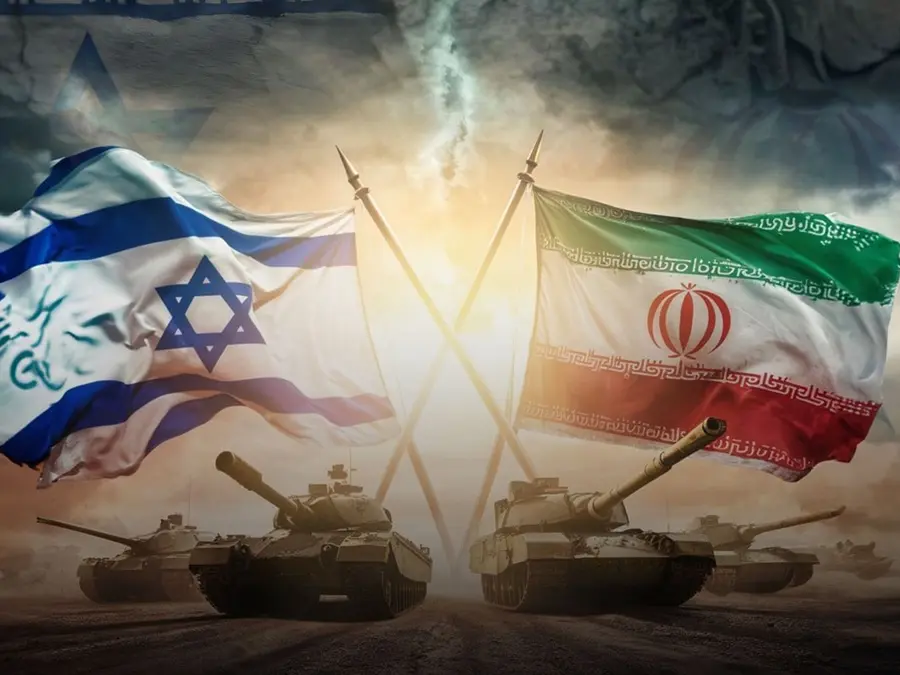
The historical tensions between Israel and Iran have once again ignited global concerns, pushing the United States deeper into a regional war that has destabilized West Asia. As Israel and Iran trade threats and retaliatory strikes, the USA’s recent direct military action against Iranian assets has turned an already dangerous conflict into a confrontation. Despite claims of a ceasefire brokered by US President Donald Trump, hostilities between Israel and Iran persist. Following the US precision strikes on Iran’s nuclear facilities in Fordow, Natanz, and Isfahan, using bunker-busting bombs and cruise missiles, Iran retaliated with a symbolic attack on a US air base in Qatar. Amidst these developments, India is drawn into a complex geopolitical dilemma as it must delicately balance its strategic interests, strategic autonomy, energy security, and commitment to non-alignment.
The roots of the Israel-Iran conflict trace back to the 1979 Iranian Revolution, which replaced the pro-Western monarchy with an Islamic Republic that made opposition to Israel a fundamental pillar of its foreign policy. Iran’s support for Hezbollah in Lebanon, Hamas in Gaza, and its pursuit of nuclear technology have long received opposition from Israel.
In this light, the recent events have escalated the tensions to unprecedented levels. Israel’s alleged covert operations, ranging from assassinations of Iranian nuclear scientists to cyberattacks, have provoked Iranian retaliation. This new phase of hostilities threatens to drag the entire region into a broader conflict, especially as Iran’s regional proxies, from Yemen’s Houthis to Iraq’s Shia militias.
From Deterrence to Direct Engagement: For decades, the United States has maintained its strategic partnership with Israel and its rivalry with Iran. However, the recent developments mark a shift following an alleged Iranian-orchestrated attack on a US military facility in northern Iraq that killed several American personnel. The United States conducted a series of direct airstrikes inside Iranian territory. Nonetheless, Iran has vowed to retaliate, raising fears of larger regional conflicts. Additionally, domestic pressure is mounting in the US Congress, with calls for either stronger retaliation or urgent de-escalation, reflecting Washington’s dilemma.
Broader Geopolitical Context: In this context, the Israel-Iran conflict and the US escalation must be understood within a shifting geopolitical landscape. Russia, distracted by its war in Ukraine but still influential in Syria and allied with Iran, views the US strikes with concern, China, on the other hand, pursuing energy and infrastructure security through its Belt and Road Initiative, continues its diplomatic overtures by recently offering to mediate between Iran and the Gulf states.
Despite the Abraham Accords having brought Israel and some Arab nations closer, the war in Gaza and the US-Iran escalation have complicated this new regional architecture.
India’s Balancing Act: Amid these volatile developments, India’s position is unique as New Delhi enjoys robust strategic ties with Israel, maintains historic and economic connections with Iran, and shares a deepening global partnership with the United States. Israel is a key defence partner for India, from advanced missile systems to joint counterterrorism training.
Meanwhile, Iran remains a strategic gateway to Afghanistan and Central Asia, primarily through the Chabahar Port project, crucial for circumventing Pakistan and expanding regional connectivity. However, India’s ties with the United States are broader and more profound–from the Quad to climate cooperation to trade. The challenge, therefore, lies in ensuring these relationships do not conflict.
While India has not directly condemned the US strike, it has conveyed concern about the potential humanitarian fallout and disruption to global oil supplies, especially those related to energy security. Importantly, India has avoided entanglement in West Asia’s sectarian and geopolitical rivalries by avoiding condemning Israel or Iran. Instead, India issued a statement urging both sides to avoid escalation and pursue diplomacy. Further, following its policy of “issue-based alignment” and “strategic autonomy” along with “non-alignment”, India opted out of an SCO communique that condemned Israel. An illustration of its policy of strategic autonomy, which allows it to engage with all parties without being categorised as close to any single bloc. At the same time, India engaged in humanitarian action by launching Operation Sindhu to evacuate students and nationals from Iran and Israel, airlifting over 3,000 people home safely. As India has strategic ties with all three countries, it delicately balances its diplomatic efforts by neither endorsing military action nor anti-Israel condemnations, emphasizing peace and trade continuity. India perceives that the risk of a prolonged conflict may disrupt oil flows because of the potential closure of the Strait of Hormuz. This would result in economic losses for India, and the possibility of being forced to take sides under geopolitical pressure.
Similar to its recent policy of carefully balancing ties with Israel and Palestine, India continued to follow its policy of de‑hyphenation by treating its strategic relations with Israel and Iran independently, by not allowing their tensions to curtail its ties, at the same time, proactively engaging with both nations under a policy of strategic autonomy. India’s policy underscores its careful balancing of diplomatic efforts due to the risks to its energy security and diaspora safety, amidst the rising tensions and geopolitical pressures, highlighting the need for diversification, autonomy, peace, and economic stability.
Conclusion: As West Asia heads towards further instability, India’s measured diplomacy and calculated neutrality offer a silver lining through restraint in its approach. While global great powers engage in strategic posturing by projecting military might, influence, or diplomatic leverage, regional actors often respond with escalatory actions, intensifying local conflicts or shifting alliances. In this light, India’s focus on dialogue, non-interventionism, and strategic partnerships may serve as a model for multipolar engagement. At the same time, India must reaffirm its commitment to a balanced foreign policy that prioritises peace over partisanship and pragmatism over polarization. In a fragmented global order, India’s voice could prove vital in steering one of the world’s most volatile regions away from the brink of collapse.
(Abhinav Mehrotra and Amit Upadhyay are Associate Professors at O.P. Jindal Global University)
