


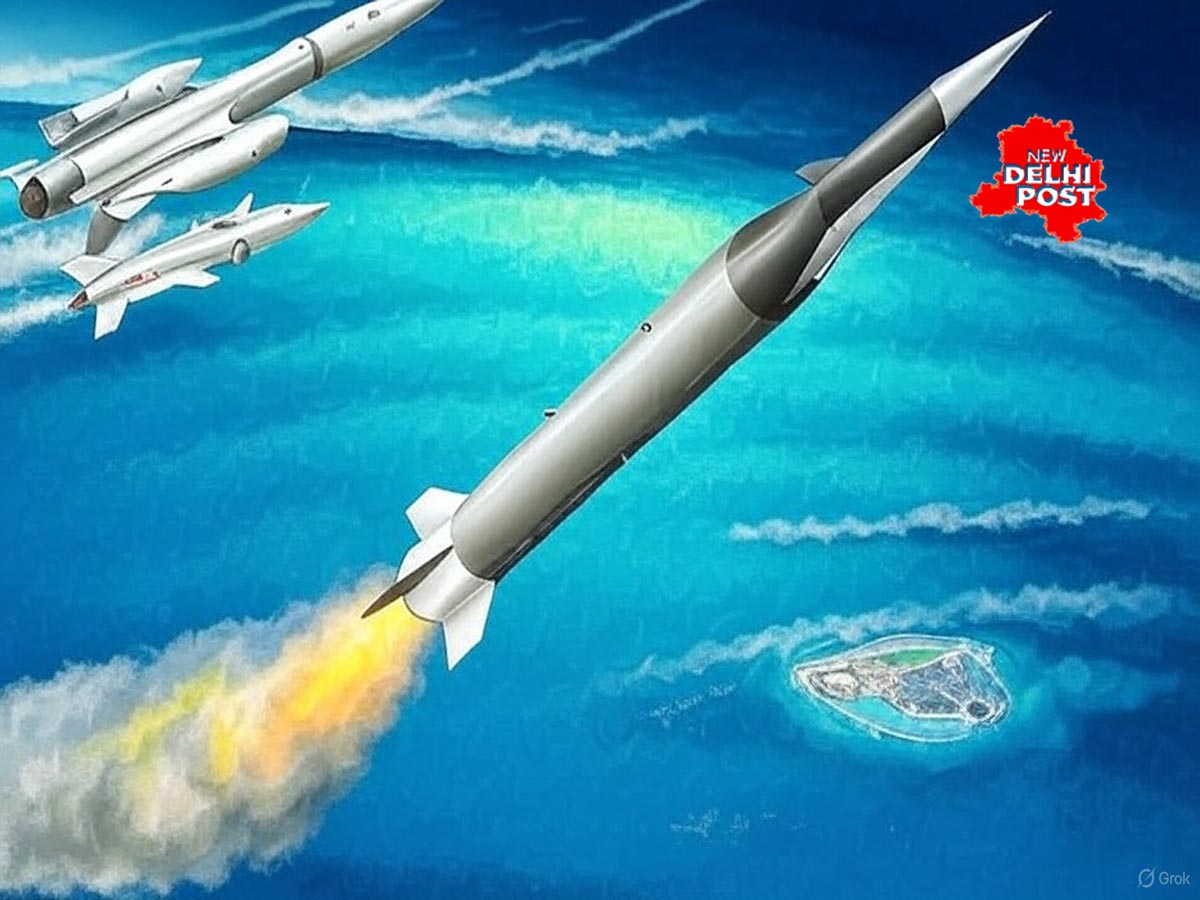
Amid escalating tensions with Israel and ongoing nuclear talks with the US, Iran is bolstering its military capabilities with a significant missile deal with China, raising fears of a new conflict in the Middle East.
New Delhi: Iran has reportedly struck a massive deal with China to acquire materials for producing up to 800 ballistic missiles, according to a Wall Street Journal report. This move comes as Iran seeks to rebuild its military strength while navigating nuclear negotiations with the Trump administration, potentially setting the stage for another confrontation with Israel.
China Deal Fuels Iran’s Missile Ambitions
The Wall Street Journal report reveals that Iran has ordered thousands of tons of ammonium perchlorate, a key component in solid-fuel ballistic missiles, from Hong Kong-based Lion Commodities Holdings Limited through an Iranian entity, Pishgaman Tejarat Rafi Novin. If delivered, these materials could enable Iran to manufacture approximately 800 missiles. This follows earlier shipments in 2025, where two Iranian ships, Jairan and Golbon, delivered over 1,100 tons of sodium perchlorate from China, enough to fuel around 260 short-range missiles. The US Treasury Department sanctioned six individuals and entities from Iran and China on April 29, 2025, for their role in these transactions, highlighting growing concerns over Iran’s missile program.
Support for Regional Militias
Sources indicate that some of the missile materials may be supplied to Iran-aligned militias, including the Houthi rebels in Yemen. This aligns with Iran’s strategy to strengthen its regional influence through proxy groups. Iran has already transferred ballistic missiles to Shia militias in Iraq in April 2025, despite earlier reports of disarmament, with some missiles capable of reaching Europe. The US Strategic Command’s 2025 Posture Statement notes that Iran possesses the Middle East’s largest ballistic missile arsenal, with over 3,000 missiles, posing a significant threat to regional stability.
Nuclear Talks and Rising Tensions
Iran’s missile buildup coincides with strained nuclear talks with the US. President Donald Trump has threatened military action if Iran does not curb its uranium enrichment, which Tehran has enriched to 60%—close to weapons-grade levels. On June 4, 2025, Iran rejected a US proposal to limit its enrichment, with Supreme Leader Ayatollah Ali Khamenei insisting that its missile program is non-negotiable. The Foundation for Defense of Democracies (FDD) warns that China’s support, including oil imports and military cooperation under a 2021 25-year strategic agreement, continues to bolster Iran’s capabilities, potentially undermining US diplomatic efforts.
History of Iran-Israel Clashes
Tensions between Iran and Israel have been simmering since April 2024, when Israel bombed the Iranian consulate in Damascus, killing senior Iranian officials. Iran retaliated on April 13, 2024, with Operation True Promise, launching over 300 drones and missiles on Israel. A second attack on October 1, 2024, saw Iran fire 180 ballistic missiles, most of which were intercepted by Israeli and US defenses. Israel’s subsequent strikes on Iranian missile production sites, including Parchin and Shahroud, have delayed Iran’s missile production by a year, according to US officials, prompting Tehran to accelerate its efforts to replenish its arsenal.
Potential for Regional Escalation
Experts fear that Iran’s latest moves could open a new front of conflict in the Middle East. “Iran’s missile program, combined with its proxy network, is a destabilizing force,” said Behnam Ben Taleblu, a senior fellow at FDD. A 2024 report by the Center for Strategic and International Studies highlights that Iran’s missiles, with improved accuracy (some within tens of meters), pose a growing threat to Israel and US bases in the region. Meanwhile, Israel has reassured the US that it will not strike Iranian nuclear facilities unless nuclear talks fail, as reported by Axios on June 6, 2025.
Global Implications
The Iran-China deal has broader implications, especially as the US and its allies monitor the situation closely. The Pentagon has bolstered its presence in the region, with additional forces deployed to counter potential Iranian aggression. Analyst Malcolm Davis from the Australian Strategic Policy Institute warns that China’s advanced missile capabilities, far superior to Iran’s, could inspire Tehran to coordinate missile strikes with cyberwarfare, complicating regional defenses. As Iran strengthens its arsenal, the risk of a wider conflict looms large, potentially drawing in global powers.
