


Patriotism is the feeling of love, devotion, and a sense of attachment to one’s country or state. This attachment can be a combination of different feelings for things such as the language of one’s homeland and its ethnic, cultural, political, or historical aspects. It may encompass a set of concepts closely related to nationalism, mostly civic nationalism and sometimes cultural nationalism. But this is an evolving word which changes with time, space, culture, geography, history and people. Patriotism cannot be poured into a bottle and stored in the refrigerator or boiled on your stove. It is an abstract, emotional value that develops with the child as he grows into an adult, shaped by his filial, circumstantial and social environment.
Some believe that Indian cinema has intertwined war, patriotism and a distorted sense of entertainment for the mass audience. Love stories, song-and-dance routines, family melodrama and highly romanticised deaths soften the brutal realities of war, making it appear more palatable than it truly is. Look at how films like Border and Sarfarosh have drawn the masses to the theatres. Yet, Rang De Basanti is patriotic in a strikingly unusual way. It focuses on the angst of the young in Delhi whose laidback, casual indifference to life evolves into deep involvement when they discover themselves while making a film about Bhagat Singh. The treatment is electric, but the message is subtle in the beginning, gathering momentum as the film moves towards its electrifying and quite a melodramatic climax.
Historical and political realities have little value at the box office. Hemen Gupta’s 1942, shot in black and white, was popular, but one is uncertain about its fate at the box office. Many years later, Vidhu Vinod Chopra made 1942: A Love Story, a period love story set against the backdrop of the freedom struggle. Then, as if through a cloudburst, a flood of films on the freedom struggle came from a generation of post-Independence filmmakers. Among them are some whose memories of freedom at midnight are a part of their boyhood days. They are travelling back in their celluloid time capsules to capture India’s past in all its gore and glory.
Are these Hindi films really meant to be a tribute to patriotism? Or are they offering lip sympathy? Or, more logically, are they designed to ride piggyback on the sudden spurt of enthusiasm in political and cultural circles to pay homage to India’s Independence on the occasion of its “post-post-Golden Jubilee”? More realistic it would be to assume that, barring exceptions like Shyam Benegal’s The Making of the Mahatma, or M. S. Sathyu’s Garm Hawa, most of our commercial filmmakers use the patriotic element as a political strategy to get the film exempted from entertainment tax and thus boost the sales of tickets at the counters.
According to Ritwik Ghatak, his “trilogy” comprised of Meghe Dhaka Tara, Komal Gandhar and Subarnarekha, which was his interpretation of the marriage of the two Bengals. “When I began making Meghe Dhaka Tara, I did not speak about the political union of the two Bengals. I do not seek to do this even today. I know that it is difficult to reverse history. It is not my responsibility either. My greatest pain sprang from the politics, the economics and other things that deter the cultural union of these two forcibly divided states. It is this cultural union I have spoken about quite clearly in Komal Gandhar. The same applies to Meghe Dhaka Tara and to Subarnarekha.”Ghatak’s Meghe Dhaka Tara is one of the most outstanding documents of the Partition that focuses on a refugee family headed by a young woman.
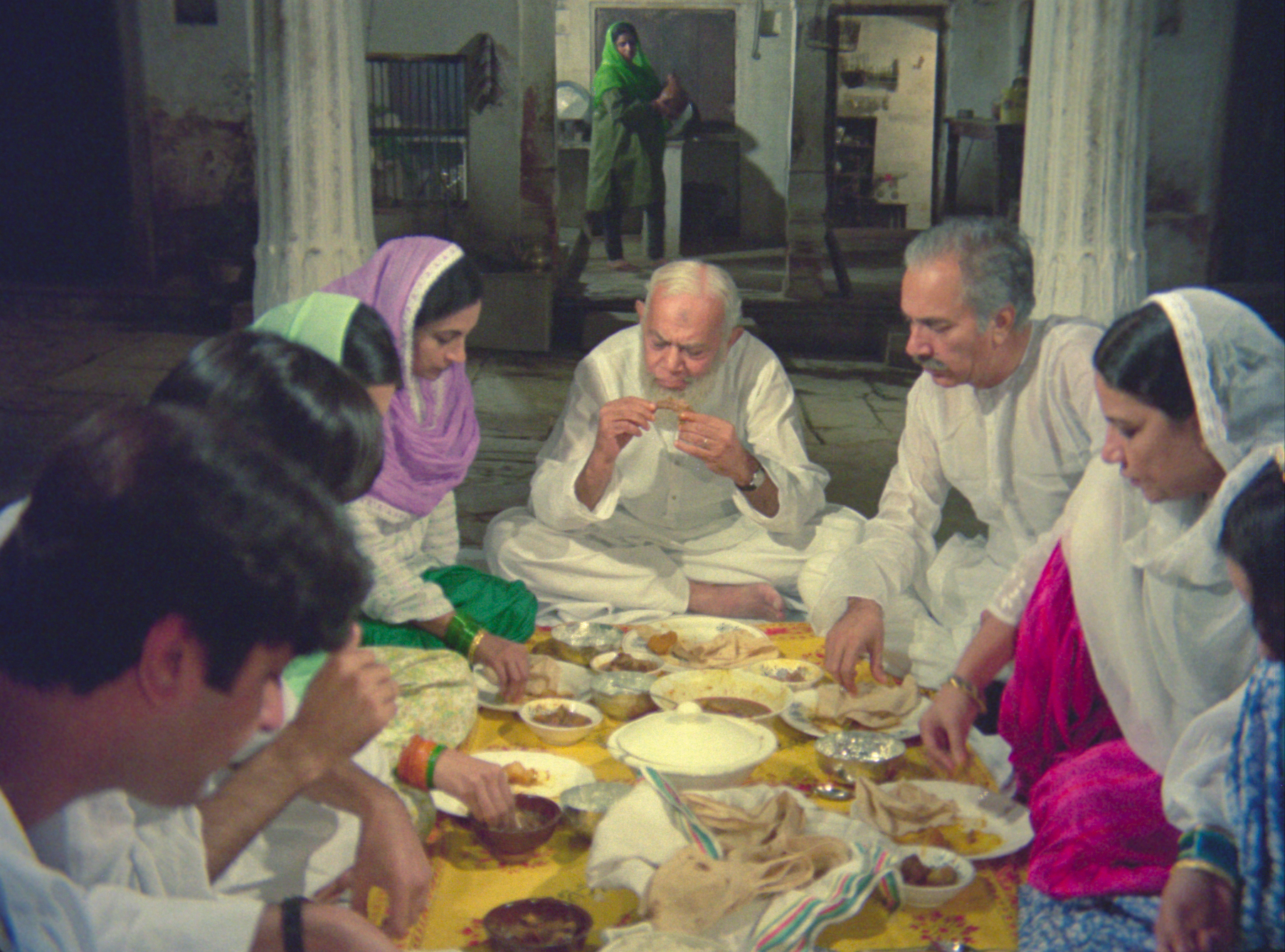
Garm Hawa may perhaps be defined as a patriotic film in its truest sense because it does not take sides. It only portrays the tragedy of the Partition through the metamorphosis in the life of a Muslim family which chose to stay back and not cross the border. Garm Hawa gently reminds us where we are going wrong: we continue to fall prey to the elements of disunity that would like to see the country fall apart. Eight to ten films in the recent past harkened back to the days before 1947, reflecting on their relevance today.
Ashoka Gupta, a leading social worker involved in the rehabilitation of refugees, visited the Punjab refugee camps in 1955 and drew attention to the stark neglect of their counterparts in Bengal. She submitted a report to the government highlighting that the doles paid to women in Bengal were significantly lower than those in Punjab. There were also no separate women’s homes and latrines, as well as no training centres to help them stand on their own. Later, six homes for women, six women’s camps, four mixed Permanent Liability (PL, one of the various types of camps) camps and five women training centres were established in West Bengal. She goes on to add: “Women were subjected to various kinds of violence by different agents during the partition. Thousands of women, estimates range from 25,000 to 29,000 Hindu and Sikh women and 12,000 to 15,000 Muslim women, were abducted, raped, forced into marriage, forced to convert and killed, on both sides of the border.”
Chandraprakash Dwivedi’s Pinjar offers a humane portrayal of Partition without demonising any religion or region. Based on Amrita Pritam’s novel of the same name, the film lays bare the suffering of women who became victims of violence and patriarchal control across religious communities during Partition. Anchored by Dwivedi’s screenplay and enriched by Gulzar’s poignant dialogues, the film retains the hallmarks of mainstream cinema while emerging as a deeply moving cinematic experience. Its mournful soundtrack lingers long after the credits roll. While rooted in the trauma of Partition, the film’s portrayal of women’s suffering and resilience gives it a timeless human resonance.
The India-Pakistan partition has been repeatedly interpreted, adapted and documented by artists across different domains in India and abroad. We have had plays, art exhibitions, novels and poetry recalling the dark past. Hindi cinema has also traversed into it by narrating the tragic stories embedded with assorted political undertones. From Pamela Rooks’ Train to Pakistan and Govind Nihalani’s Tamas to Srijit Mukherjee’s Begum Jaan, Hindi cinema has given us some gut-wrenching tales of partition that seldom focus on both sides of the border.
In her well-researched articleThe Partition Of Punjab: A Tale Of Violation Of Women’s Rights, FII, July 27, 2017), Himanshi Nagpal writes: “For a long time while studying Partition the emphasis was on analysing or documenting the role of political figures, the events that led to the partition and during the partition. It was after the 1984 anti-Sikh riots that scholars and women activists started looking into the human suffering during the partition, and the harrowing experiences of women came to light.”
Mani Ratnam’s Roja is an example of how the tools of the craft of filmmaking can be cleverly and diabolically manoeuvred to make a film not only an aesthetic and political success but also a commercial hit. Ratnam’s command over the language of cinema in Roja illustrates the power and infinite possibilities of cinema as a medium, metaphor and language to spread the message of patriotism. But this trend of paying lip-sympathy and riding piggyback on the supposedly emotional posturingto celebrate 60 years of freedom continues to hold sway. In this ambience of opportunistic commerce, can one really expect a truly patriotic film like Garm Hawa?
