


A man who refuses food for a public cause creates a spectacle that no civilised society can watch without unease. With each passing day, his frailty becomes an accusation. The government is portrayed as callous, the public as indifferent, and anyone questioning his demands risks being seen as morally suspect. This is the power of a hunger strike. It is also its peril.
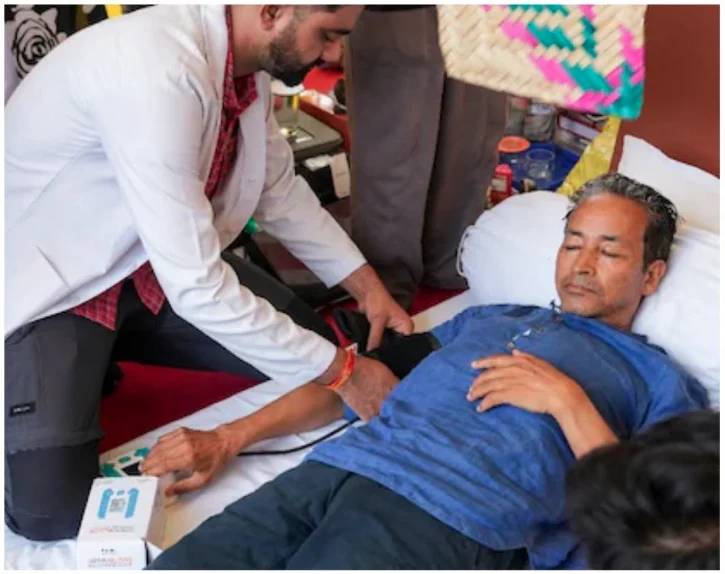
Sonam Wangchuk began his indefinite fast at Delhi’s Jantar Mantar on June 28, 2026, in support of the youth-led Cockroach Janta Party’s agitation over examination irregularities and paper leaks. Among other demands, the protesters are seeking the resignation of Union Education Minister Dharmendra Pradhan and far-reaching reforms to the examination system. As the fast entered its twentieth day on July 17, Wangchuk said he was weak but medically stable and remained determined to continue. Instead of ending his protest, he urged supporters to join the proposed march to Parliament on 20 July and called on Rahul Gandhi to lead it.
The cause deserves serious attention. Examination leaks are not mere administrative lapses. They destroy years of effort, erode faith in merit and reward organised corruption while punishing honest students. A government that wants India to be recognised as a global knowledge power cannot appear indifferent when young people believe examination papers, recruitment opportunities and even public institutions are vulnerable to manipulation. Nothing illustrated the gravity of the problem more starkly than the government’s decision, after lives had been lost and public confidence shaken, to rely on the Army to conduct an examination without a leak.
Yet a just cause does not automatically justify every method adopted in its pursuit. India instinctively associates political fasting with Mahatma Gandhi. But Gandhi’s fasts drew their moral authority from extraordinary personal discipline, an established relationship with the people he sought to influence and a willingness to demand as much of his own followers as of his opponents. For him, fasting was an expression of satyagraha, not a political shortcut to secure resignations or concessions.
Acharya Vinoba Bhave offered a different model. Unlike many contemporary activists, he seldom used fasting as a political ultimatum. When he did, it was intended as an appeal to conscience rather than an instrument of pressure. His Bhoodan movement sought to persuade, not compel. Bhave believed lasting social change grew from inner conviction, not coercion.
History also offers darker examples. British suffragettes resorted to hunger strikes in prison and were subjected to brutal force-feeding. In Northern Ireland, Bobby Sands died in 1981 after 66 days without food, becoming a martyr while leaving behind an even more polarised political landscape. Hunger strikes can expose injustice. They can also reduce difficult constitutional questions to an emotional contest over who is willing to suffer the most.
That is the question raised by Wangchuk’s fast. At what point does moral protest become moral blackmail?
An elected government cannot be expected to dismiss a minister simply because a respected activist refuses to eat. If that principle is accepted, it will not remain confined to this protest. Any determined individual or organisation could place the state under a similar ultimatum. One group may fast to demand a resignation, another to reverse a court-backed policy, and yet another to press communal, separatist or economically untenable demands.
That would replace government by constitutional process with government by threatened martyrdom. The Union government is therefore right not to yield automatically. Its duty is to investigate wrongdoing, fix responsibility and reform the examination system through evidence and due process. Public policy cannot be dictated from a protest site, however worthy the cause.
Reports suggest the government has so far avoided any meaningful engagement with Wangchuk and the protesters. The Delhi High Court has also been approached over his health, while his supporters have urged the authorities to open a dialogue. A government confident of its position should have nothing to fear from talking. It can listen without surrendering, investigate without accepting every allegation and protect Wangchuk’s life without allowing a hunger strike to become a veto over public policy.
The Cockroach Janta Party is an unusual political experiment, and not only because of its unforgettable name. Born of youthful anger and amplified by social media, it reportedly commands a vast online following. Yet its presence on the streets has remained comparatively modest. The contrast is striking. A movement that trends effortlessly online has yet to demonstrate the ability to mobilise comparable numbers on the ground. Both the government and the Opposition would do well not to mistake digital popularity for a settled public mandate.
Opposition parties, predictably, have begun circling the protest. Leaders from the Trinamool Congress, AAP, the Samajwadi Party and the Azad Samaj Party have visited the site or expressed support. Their intervention, however, has been largely symbolic. While urging Wangchuk to protect his health, they have offered little by way of a coherent programme to prevent examination leaks, reform testing agencies or establish institutional accountability. Standing beside a fasting activist is easier than producing a credible blueprint for reform.
The mainstream media’s response has also been uneven. A protest involving a nationally known educationist, a viral youth movement and allegations affecting millions of students would ordinarily have dominated prime-time television, particularly in a country where Anna Hazare’s fast transformed Ramlila Maidan into a nightly television spectacle. This time, much of the energy has come from social media, live blogs and scattered political coverage. The absence of sustained television debate has prompted supporters to allege deliberate suppression, even though the protest has received considerable attention in Indian and international media. The contrast is revealing. A movement that might once have unfolded on television now draws much of its strength from digital platforms.
Will Wangchuk’s fast set a precedent? Almost certainly. Whether it is the right one is another matter.
If the government forces a minister’s resignation under the immediate pressure of an indefinite fast, future protesters will conclude that self-starvation is more effective than petitions, parliamentary debate or judicial scrutiny. Equally, if the government refuses even to engage and simply waits for the protest to run out of steam, it risks sending a different but equally damaging message: that peaceful dissent attracts attention only when it threatens death or disorder. Neither outcome serves a democracy well.
The government must communicate, investigate transparently and announce credible measures to restore confidence in the examination system. Wangchuk, for his part, should recognise that no reformer, however respected, can claim the moral authority to place an elected government under an open-ended ultimatum by putting his own life at risk.
Hunger can stir the public conscience. It cannot become a substitute for democratic consent.
(Dr Bina Biswas is an author, academician and translator. She writes on literature, history, education and culture)
