
“The reports are completely normal… so why do I feel sick all the time?” Amit asked this question not of his doctor, but of himself. In three months, he had consulted five different doctors. Some prescribed vitamins, others gave him medication for acidity, and some advised him to rest. Yet every time, the reports came back with the same conclusion: “Everything is normal.” Amit, however, knew that something was not right. His head felt heavy the moment he woke up. His heart would race on his way to the office. Sometimes there was tightness in his chest, sometimes cramps in his stomach, and at other times he felt as though there was no strength left in his body.
The episode that frightened him most came during a meeting when his breathing suddenly became rapid and he felt as if he were having a heart attack. He was rushed to the emergency room, where the ECG was normal and his blood tests showed nothing alarming. His heart, the doctors told him, was perfectly fine.
The doctor then asked a question Amit had not expected: “Is everything going well in your life?” His eyes filled with tears. He remained silent for a few seconds before finally speaking. “After my father passed away, the entire responsibility of the household fell on me. I live in fear of losing my job. My mother’s health is poor, too… but I’ve never spoken to anyone about these things.” The doctor replied gently, “Perhaps your body is expressing what your mind has been suppressing for so long.” It was the first time Amit had heard the word “psychosomatic”.
The term sounds complicated, but the idea is not. Psychological distress can sometimes contribute to physical symptoms or make existing symptoms worse. That does not mean the illness is imaginary, nor does it mean the person is pretending to be unwell. The pain is real. The discomfort is real. What changes is our understanding of where that pain may be coming from and what might be sustaining it.
How many of us go through the day smiling while struggling inside? How often do we say, “I’m fine,” when we know we are not? We hold back tears because we do not want to appear weak. We swallow anger because we do not want to create conflict. We hide fear because we believe we are expected to remain strong. We keep working through grief, anxiety and exhaustion because there is always something else that needs to be done. Over time, we can become so accustomed to suppressing what we feel that we stop recognising the emotional burden we are carrying.
But emotions do not simply disappear because we refuse to acknowledge them. They can influence the way we sleep, eat, breathe and respond to stress. The flutter in the stomach before an interview, the trembling hands before stepping onto a stage, the loss of appetite after receiving bad news and the racing heart when we are frightened are all familiar reminders that the mind and body are constantly communicating with each other.
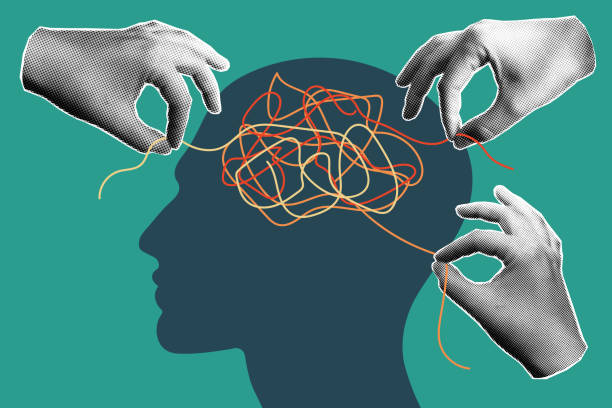
The mind and body are not two separate entities operating in isolation. When we are frightened, the body prepares itself to deal with danger. When we are relaxed, that sense of alarm begins to settle. The problem arises when the body’s stress response remains activated for too long. Imagine a pressure cooker sitting on a gas stove with the heat constantly turned on and no way for the steam to escape. Pressure will continue to build. The human body can respond similarly when stress, fear or emotional distress becomes prolonged, and there is no opportunity to process or release it.
Hormones such as cortisol and adrenaline play an important role in helping us respond to immediate threats. But when the stress response is repeatedly activated over months or years, it can affect sleep, digestion, muscle tension, energy levels and general wellbeing. The body can begin to carry the consequences of a struggle that the mind has been trying to contain.
Neha was 34 and worked as a schoolteacher. She was known for her smile and was adored by her students, but for a year and a half she had been living with persistent back pain that did not go away despite medication. During a counselling session one day, she finally spoke about something she had kept to herself for years. “For the last ten years, I’ve been in a relationship where I’m breaking down every single day… yet I can’t tell anyone about it.” She began to cry and eventually wept uncontrollably.
It was perhaps the first time she had allowed herself to acknowledge the extent of what she had been carrying. Over the following months, her back pain did not disappear completely, but it eased considerably. More importantly, she began to recognise that understanding her physical discomfort required looking at the circumstances in which she had been living. Her pain was not imaginary; her emotional suffering was part of the story.
That is an important distinction when we talk about psychosomatic conditions. To say that psychological factors can influence physical symptoms is not to say that the symptoms are “all in the mind”. A headache is still a headache. An upset stomach is still an upset stomach. A racing heart can feel frighteningly real. The experience does not become less genuine simply because stress or emotional distress may be contributing to it.
Modern medicine recognises that prolonged stress can affect several systems of the body. Sleep may become disrupted, headaches may become more frequent, digestion may be affected, muscles can remain tense and persistent fatigue can set in. At the same time, it is important not to oversimplify the relationship between mental and physical health. Not every pain is psychological, not every unexplained symptom is psychosomatic, and a normal medical report should never be taken as proof that a person’s symptoms are imaginary.
That is why the first response to persistent physical symptoms should always be appropriate medical evaluation. If the body is sending a warning signal, it should not simply be dismissed as stress or anxiety. But when medical examinations repeatedly fail to explain persistent discomfort, it may also be worth asking what is happening emotionally. Is there prolonged stress at work? Is there grief that has never been addressed? Is there a relationship causing constant distress? Is there fear, loneliness or anxiety that has been pushed aside for too long?
These questions do not replace medical treatment, but they can sometimes provide another part of the picture. A medical prescription may address a symptom, while understanding what is happening in a person’s life may help explain why that symptom keeps returning.
Perhaps that is why questions about mental health have become increasingly important. For years, many of us were taught to separate the mind from the body, as though emotional suffering belonged to one world and physical illness to another. We now understand that the relationship is far more complicated. Physical illness can affect our emotional state, while prolonged psychological distress can influence the way the body functions. The two are not competing explanations; they are often interconnected parts of the same human experience. That does not mean every illness has an emotional cause. It simply means that when we try to understand a person’s health, we should not pretend that the mind and body have nothing to do with each other.
So, when the body repeatedly tells us that something is wrong, the answer is not to ignore it. See a doctor. Get the necessary tests. Take physical symptoms seriously. But if the medical reports do not explain what you are experiencing, do not be afraid to look beyond them. Ask yourself when you last spoke honestly about what was troubling you, when you last allowed yourself to grieve, or when you last admitted that you were exhausted. Sometimes the body expresses what we have been unable or unwilling to say aloud. It may not be betraying us; it may simply be asking us to pay attention.
Because sometimes the pain we feel in the body carries a story that the mind has been trying to keep silent for far too long.