



S. Krishnan and Bhanu Pratap Singh Gaira
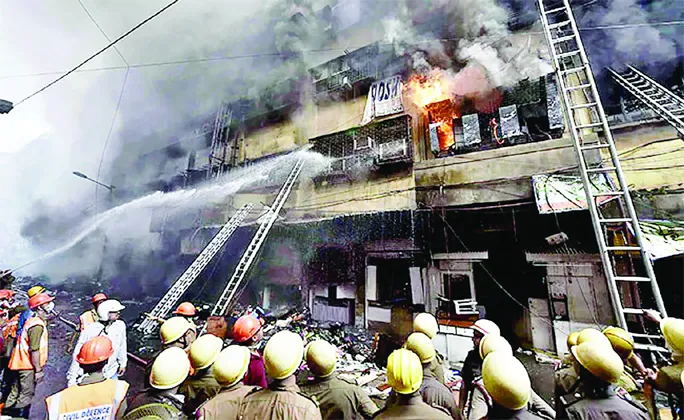
A recent fire tragedy in urban areas such as Delhi, Lucknow, Mumbai, Surat and Kolkata highlights a recurring concern in India’s development journey: while cities are expanding vertically and horizontally, urban infrastructure and safety mechanisms often fail to keep pace. Rapid urbanisation, unregulated construction, mixed land use, narrow access routes and weak enforcement of safety norms have made Indian cities increasingly vulnerable to such disasters. Fire accidents in residential complexes, commercial establishments, hospitals, coaching centres, factories, and public spaces have repeatedly exposed gaps in planning, regulation, enforcement, and emergency preparedness. Every major fire disaster raises the same questions—could the loss of lives have been prevented, and what role does urban infrastructure play in mitigating such tragedies?
According to data from the National Crime Records Bureau, thousands of fire accidents are reported annually in India, with electrical short circuits emerging as one of the leading causes. The National Disaster Management Authority (NDMA) has repeatedly highlighted that nearly 60 per cent of fire-related deaths occur in residential buildings, particularly in congested urban settlements where evacuation and emergency access remain inadequate.
Urbanisation and Growing Risk of Fire Accidents
India is witnessing rapid urbanisation. According to estimates, nearly 40 per cent of the country’s population is expected to reside in urban areas within the next decade. High-rise buildings, shopping malls, multiplexes, industrial clusters, educational institutions, and densely populated residential colonies have become defining features of modern cities.
However, urban growth has often been accompanied by inadequate infrastructure planning. Unauthorised constructions, congested roads, poor electrical systems, lack of open spaces, and weak enforcement of building regulations create conditions where fire hazards multiply. When accidents occur, the consequences become catastrophic due to the concentration of people and property in limited spaces.
Urban infrastructure is not merely about roads, bridges, and buildings. It includes safety systems, emergency response networks, water supply mechanisms, evacuation routes, communication facilities, and regulatory frameworks. A deficiency in any of these components can transform a manageable fire into a major disaster.
Common Causes of Urban Fire Accidents
Most urban fire accidents stem from preventable causes. Electrical short circuits remain one of the leading reasons. Ageing wiring systems, overloaded circuits, unauthorised electrical modifications, and poor maintenance increase the risk of ignition. Commercial establishments often prioritise profitability over safety. Emergency exits may be blocked, fire extinguishers remain non-functional, and occupancy limits are frequently ignored. Illegal storage of inflammable materials in markets and warehouses further aggravates the danger.
In residential areas, the proliferation of electrical appliances, air conditioners, charging devices, and poor-quality electrical equipment contributes to fire risks. Informal settlements and slum clusters face even greater vulnerabilities due to overcrowding, temporary construction materials, and unsafe electrical connections.
Industrial fires frequently occur because of inadequate compliance with safety protocols, negligence in handling hazardous substances, and insufficient worker training. Such incidents often result in significant casualties and economic losses.
Narrow and Congested Roads
One of the biggest challenges faced by fire departments is access. In many cities, roads leading to residential colonies and commercial hubs are narrow and encroached upon by vendors, parked vehicles, and unauthorised structures. Fire tenders struggle to reach accident sites on time, resulting in delays that can cost lives.
The golden hour response is critical in firefighting. Every minute of delay increases the likelihood of fatalities due to burns, smoke inhalation, and structural collapse. Urban congestion therefore becomes a direct contributor to casualties.
Lack of Adequate Water Supply
Many urban localities lack sufficient hydrants and water sources for firefighting operations. Fire personnel are often forced to depend on water tankers or distant supply points, reducing operational efficiency. Modern urban planning requires strategically located hydrants and dedicated emergency water reserves. Unfortunately, these facilities remain absent or poorly maintained in several cities.
Non-Compliance with Building Codes
Building regulations mandate fire exits, smoke detectors, alarm systems, sprinkler installations, and emergency evacuation plans. Yet compliance remains inconsistent. Many structures obtain approval through procedural loopholes but subsequently violate safety norms through unauthorised modifications. Additional floors, blocked exits, enclosed staircases, and altered layouts hinder evacuation during emergencies. High-rise buildings are particularly vulnerable because evacuation becomes difficult when elevators become unusable and staircases fill with smoke. In several incidents, victims have been trapped due to inadequate escape routes.
Poor Emergency Preparedness
Fire safety is often viewed as a formality rather than a necessity. Residents, employees, students, and visitors frequently lack awareness about emergency evacuation procedures.
Regular fire drills are either not conducted or conducted only on paper. In moments of panic, people rush towards familiar exits, leading to stampedes and chaos. Lack of preparedness significantly increases casualty rates.
Fire Services: Challenges and Limitations
India’s fire services face numerous structural challenges. Many fire departments suffer from shortages of personnel, equipment, and modern technology. Ageing vehicles, inadequate training facilities, and budgetary constraints affect operational readiness.
The ratio of fire stations to population remains below recommended standards in several cities. Rapid urban expansion has not always been matched by corresponding growth in firefighting infrastructure.
Modern firefighting increasingly relies on technology such as thermal imaging cameras, drones, automated alarm systems, and advanced rescue equipment. However, resource limitations prevent widespread adoption in many urban centres.
Firefighters themselves often work under hazardous conditions, risking their lives to rescue trapped individuals. Strengthening fire services must therefore be a key component of urban infrastructure development.
Governance and Regulatory Failures
Fire tragedies frequently reveal governance failures at multiple levels. Municipal authorities, development agencies, building inspectors, and regulatory bodies all share responsibility for ensuring compliance with safety standards.
Corruption, administrative inefficiency, and weak monitoring mechanisms sometimes allow unsafe structures to operate despite clear violations. Periodic inspections may be irregular or superficial.
A common pattern observed after major incidents is reactive governance. Authorities conduct inspections and initiate enforcement drives only after a tragedy occurs. Sustainable safety requires proactive and continuous monitoring rather than crisis-driven responses.
Accountability mechanisms must be strengthened to ensure that officials and property owners who neglect safety requirements face appropriate consequences.
Human Cost of Fire Accidents
Beyond statistics, fire accidents inflict profound human suffering. Victims often endure severe burns, permanent disabilities, psychological trauma, and long-term health complications. Families lose breadwinners, children lose parents, and communities experience collective grief.
Burn injuries require extensive medical treatment and rehabilitation. Survivors may face years of physical and emotional recovery. Economic hardships frequently compound the trauma, especially among low-income households.
The psychological impact extends beyond direct victims. Witnesses, rescuers, and affected communities often experience anxiety, depression, and post-traumatic stress. Thus, the consequences of fire accidents extend far beyond immediate fatalities.
Learning from Global Best Practices
Many developed cities have successfully reduced fire-related casualties through integrated urban planning and strict safety enforcement.
Key measures include:
- Mandatory installation of automated sprinkler systems.
- Regular fire safety audits.
- Comprehensive evacuation training.
- Smart fire detection technologies.
- Well-maintained hydrant networks.
- Dedicated emergency access corridors.
- Public awareness campaigns.
Cities such as Tokyo, Singapore, and London have demonstrated that effective regulation and preparedness can dramatically reduce casualties even in densely populated environments.
India can adapt these practices while considering local conditions and resource constraints.
The Way Forward
Reducing fire accident casualties requires a comprehensive approach. Urban development plans must integrate fire safety considerations from the outset. Wider roads, accessible emergency routes, open spaces, and proper zoning regulations are essential. Governments should invest in advanced firefighting equipment, specialised rescue units, training programmes, and technology-driven response systems. Strict compliance with fire safety norms must become non-negotiable.
Regular inspections, digital monitoring, and stringent penalties for violations can improve accountability. Citizens should be educated about fire prevention, emergency response, and evacuation procedures. Schools, workplaces, residential societies, and commercial establishments should conduct regular drills. Smart sensors, Internet of Things (IoT)-based fire detection systems, AI-powered monitoring, and real-time emergency communication networks can significantly improve response times and reduce casualties.
Every fire tragedy serves as a reminder that infrastructure is not just about facilitating economic growth—it is about safeguarding citizens. The true measure of a city’s progress lies not only in its skyline but also in its ability to protect human life.
(Dr S. Krishnan is an Academician and an Experienced Journalist based in Jaipur. Bhanu Pratap Singh Gairwa is law student in Seedling School of Law and Governance, Jaipur National University, Jaipur)