

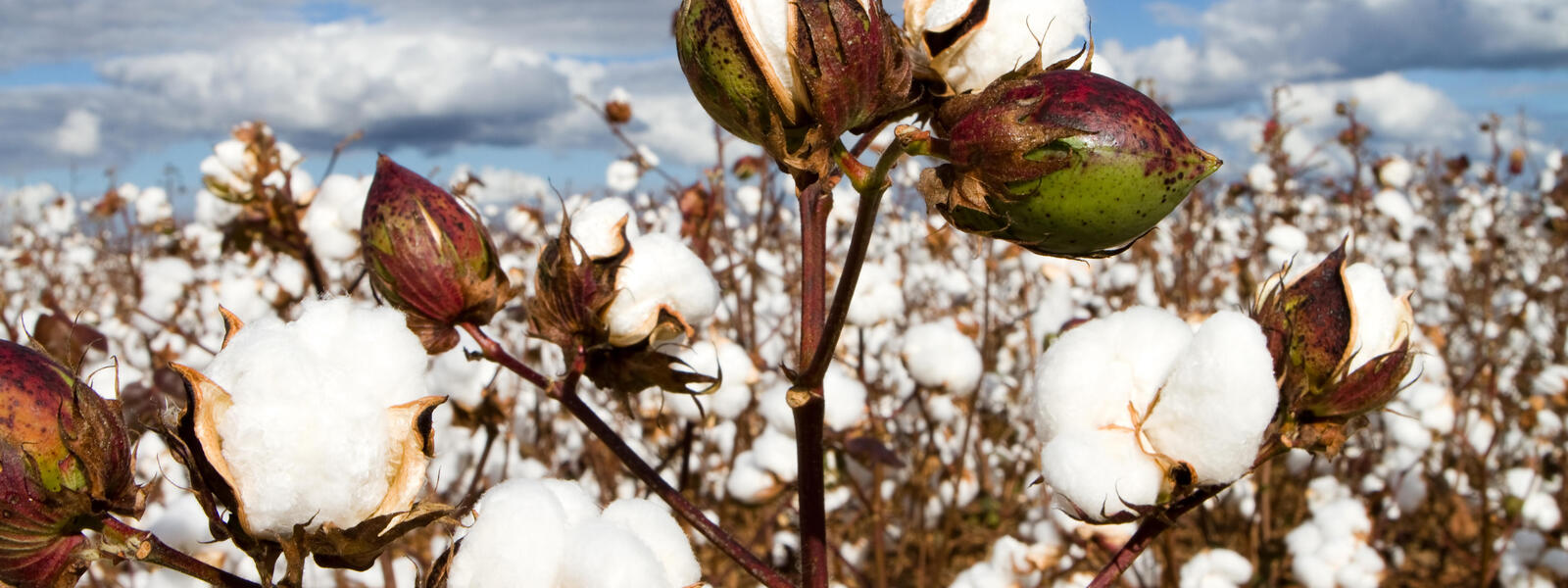
India’s surprise move to suspend import duties on cotton for 40 days is set to unsettle its cotton economy, pushing down domestic prices and squeezing farmers, while giving American exporters a valuable opening in a market where they have long struggled to expand.
On 18 August, the Finance Ministry scrapped the combined 11% levy—5% Basic Customs Duty plus 5% Agriculture Infrastructure Cess–on raw cotton imports between 19 August and 30 September. The waiver, billed as a temporary step to help textile mills cope with high raw material costs, comes just weeks before the new harvest, raising fears of a sharp market correction.
Prices Tilt Against Farmers
The biggest impact is expected on prices. Imported cotton is estimated to land at ₹50,000–51,000 per candy ($6,000–6,120), almost ₹5,000 ($600) cheaper than prevailing domestic rates of ₹56,000–57,000 ($6,720–6,840).
The Cotton Corporation of India (CCI), which is selling its stocks at those higher levels, faces potential losses of ₹700 crore ($84 million). For the upcoming procurement season, CCI’s cost is projected at around ₹61,000 per candy ($7,320). If market rates fall to import parity, the mismatch will be even wider.
For farmers, the timing could not be worse. New crop arrivals are due in September, but the waiver has effectively lowered the floor under prices. Cotton, grown on nearly 12.5 million hectares, is a lifeline for more than 6 million farmers across Maharashtra, Gujarat, Telangana and Madhya Pradesh. “The waiver may cool yarn costs, but it directly destabilises farm incomes,” said a Mumbai-based commodity analyst.
Private stockists are also exposed, with unsold cotton likely to generate losses of about ₹100 crore ($12 million). The central exchequer will forgo an additional ₹170 crore ($20 million) in revenues over the 40-day window.
CCI’s Balancing Act
The CCI, as the buyer of last resort under the Minimum Support Price (MSP) regime, is caught in the middle. For 2024–25, the MSP was fixed at ₹6,620 per quintal ($79.4) for medium staple and ₹7,020 per quintal ($84.2) for long staple. Converted to trade terms, that means CCI’s procurement cost is about ₹61,000 per candy ($7,320).
The corporation already holds around 2 million bales (340,000 tonnes) of unsold cotton. At current international parity, these stocks could fetch ₹10,000 ($1,200) less per candy than CCI’s cost. The fiscal stress may force the government to recapitalise the agency, compounding budgetary pressures.
Winners: Mills and Exporters
Spinning mills and apparel exporters are the clear winners. India’s cotton prices have consistently traded 10–15% above global levels due to the duty structure, eroding competitiveness in yarn and garments.
India exported $4.8 billion (₹40,000 crore) worth of apparel to the United States in FY25, down from $5.2 billion (₹43,000 crore) in FY24, as buyers shifted orders to Bangladesh and Vietnam, which enjoy cheaper cotton and preferential tariff treatment.
The Confederation of Indian Textile Industry (CITI) welcomed the waiver. “We were operating at a 10–15% disadvantage compared with competitors. This measure provides essential relief ahead of the festival season,” said CITI secretary-general Chandrima Chatterjee.
The US Angle
While Australia was India’s top cotton supplier last year with $258 million (₹2,150 crore) of shipments, it already enjoys duty-free quotas under the India–Australia ECTA trade pact. The real gainer from the waiver will be the United States.