

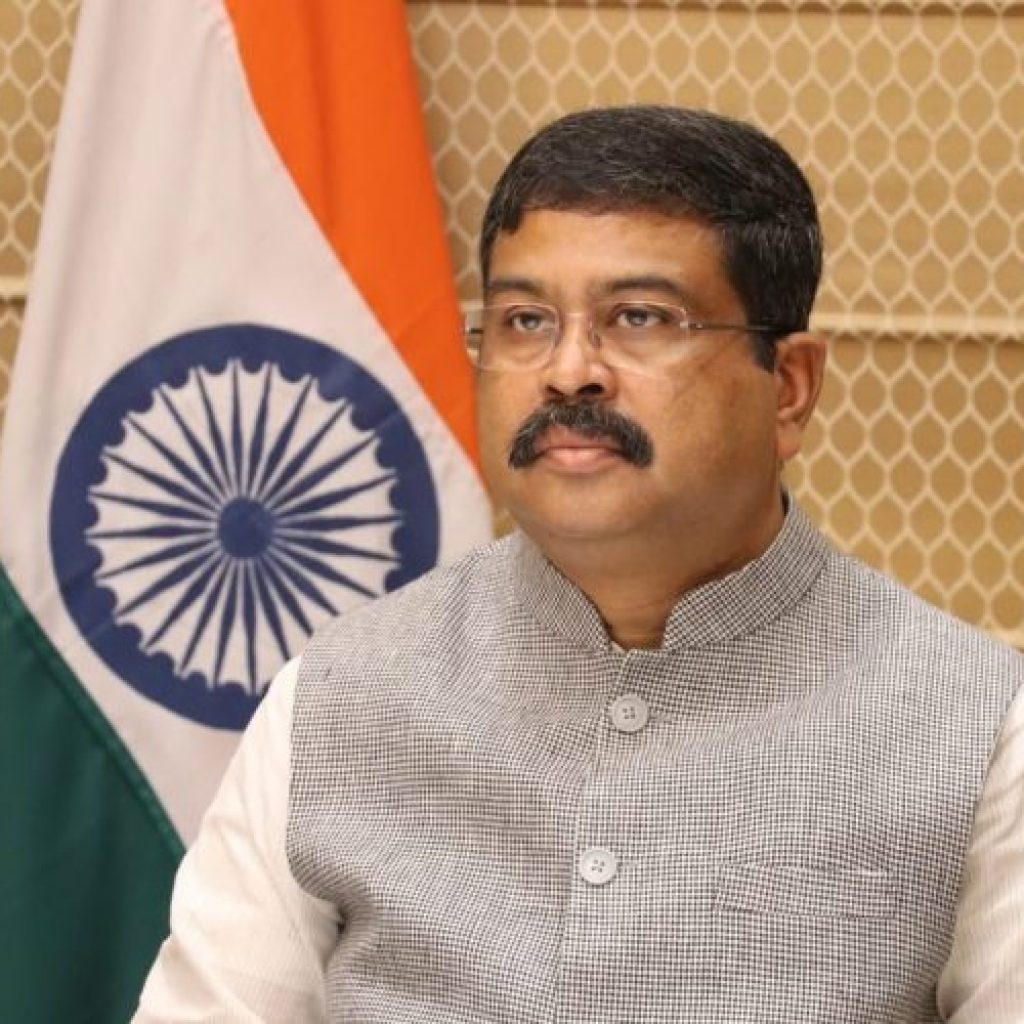
The BJP-led NDA’s clear victory in Bihar has broken the logjam in Delhi’s succession chatter. With the electoral hurdle out of the way, the party is expected to move quickly on appointing its next president, which has been pending for a long time now. Dharmendra Pradhan, buoyed by his successful stewardship of the Bihar campaign, is now seen as the frontrunner in the saffron sweepstakes.
Interestingly, Pradhan was appointed as the party’s Bihar election in-charge at the last moment, an unusual move, given that such appointments are typically made at least five to six months before the polls. BJP insiders revealed that Pradhan was given the charge of the state in September, only after the party’s internal survey projected a favourable outcome in Bihar.
Incidentally, Pradhan is considered one of Home Minister Amit Shah’s trusted confidants in the organisation. Their bond reportedly deepened during Shah’s two-year enforced exile from Gujarat (2010–2012), when Pradhan offered him accommodation at his New Delhi residence. Whispers wafting through the saffron halls hint that Pradhan’s meteoric rise within the BJP owes much to the parallel rise of Shah.
Therefore, if the BJP wins Bihar, it will be Pradhan who leaps ahead of all other contenders for the coveted post. However, others lurking in the shadows include Union Ministers Bhupender Yadav and Shivraj Singh Chouhan. If Bhupender Yadav, currently the election in-charge of West Bengal, is elevated to the top post, it would once again bear Shah’s unmistakable imprint on the party’s organisational structure. “Through Pradhan and Yadav, Shah will effectively control the entire organisation,” a senior BJP leader said. This, however, would not be unprecedented in the BJP. In the past, L K Advani was known to steer the party through “rubber stamp” presidents like Jana Krishnamurthy and Venkaiah Naidu.
The other contender in the reckoning is former Madhya Pradesh Chief Minister and Union Agriculture Minister Shivraj Singh Chouhan. Unlike Pradhan and Yadav, Chouhan is not considered a candidate the Modi–Shah duo feels entirely comfortable with. Sources in the BJP revealed that Chouhan is “the RSS’s man for the job”.
Moreover, unlike Pradhan and Yadav, Chouhan is a mass leader, a quality that ironically counts as a disadvantage in the eyes of the party’s top leadership. Party insiders point out that the BJP’s current crop of “handpicked” chief ministers in states such as Rajasthan, Madhya Pradesh, and Gujarat are largely unknown faces lacking strong mass bases. “In short, they can’t win a state on their own,” a senior BJP leader said.
It became evident that the BJP’s top leadership was uneasy with Chouhan’s rising popularity following his hard-fought victory over the Congress in Madhya Pradesh. Eyebrows were raised when Chouhan was moved to Delhi and replaced by a relatively unknown face in the state. Even Congress chief Mallikarjun Kharge could not resist taking a jab, remarking, “I want to know why Shivraj Singh Chouhan was not made the CM even after he won the state.”
BJP veterans indicated that it was Home Minister Amit Shah, more than Prime Minister Narendra Modi, “who remains wary of mass leaders in the party, a breed now rapidly disappearing from the saffron landscape.” The few remaining mass leaders who can win states on their own include UP Chief Minister Yogi Adityanath and, to some extent, Maharashtra Chief Minister Devendra Fadnavis. Interestingly, when Fadnavis’s name surfaced as a possible candidate for the BJP president’s post, he swiftly declined, signalling that he was “comfortable where he is”.
Another RSS-backed candidate whom the existing BJP leadership has long opposed tooth and nail is former organisational general secretary Sanjay Joshi. Hailing from Gujarat, Joshi is a long-time rival of Narendra Modi. His political downfall began in 2005, when a video allegedly showing him in a compromising position with a woman surfaced. Although forced out of the limelight, Joshi remained politically active in the BJP, serving as an executive member until 2012. That year, Modi, the then Gujarat chief minister, reportedly issued an ultimatum to BJP president Nitin Gadkari, threatening to boycott the party’s national executive meeting unless Joshi resigned. Within hours of Joshi’s exit, Modi confirmed his participation.
When the time came to replace BJP president J. P. Nadda, the RSS intervened, making it clear that the position of party chief “cannot go to a yes-man of Modi and Shah”. While the BJP proposed names of Pradhan, Manohar Lal Khattar, Bhupender Yadav, Parshottam Rupala, and Nirmala Sitharaman, the RSS countered with its own set of candidates: Chouhan, Joshi and Vasundhara Raje, the former Rajasthan chief minister.
The stalemate persisted until the BJP leadership sought to placate the RSS. The home minister began attending RSS meetings, and for the first time in his Independence Day speech, the Prime Minister hailed the RSS and highlighted its dedication to nation-building. Delivered from the ramparts of the Red Fort, Modi’s praise of the RSS was seen not only as an attempt to mend fences over organisational matters but also as a signal related to his own tenure extension.
Following the conciliatory gesture, as the BJP softened its stance before its ideological mentor, RSS chief Mohan Bhagwat reportedly told the party to “take your time” in finalising the next president. With a hint of irony, Bhagwat remarked, “If we were deciding, would it have taken so long?” In the same breath, he added, “I never said anyone should retire at 75.” Someone at the top of the BJP pyramid must have heaved a sigh of relief.
As the wait for the next BJP chief continues, a section of party insiders wryly observed that with the RSS now “appeased”, the next party president would likely be yet another “yes-man, or yes-woman to be handpicked for obedience rather than independence”. For them, the post of BJP national president has long ceased to be a position of power; it has become a decorative fixture, an ornamental throne without a crown. In the grand saffron amphitheatre, the new party chief, they quipped, would simply be the latest “puppet on a string”, dancing to a familiar choreography scripted elsewhere.
(Sanjay Basak is a Delhi-based senior journalist and political analyst)