






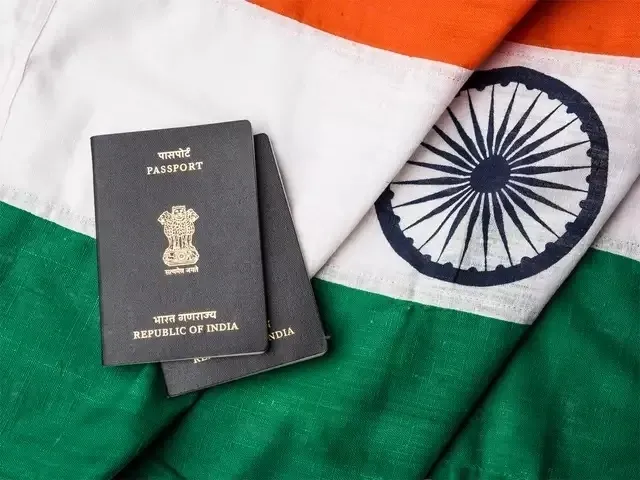
The recent clarification by the Ministry of External Affairs (MEA) on 24 June 2026 has settled a legal question that has long been misunderstood in public discourse: an Indian passport is a travel document, not conclusive proof of citizenship. While the statement merely reiterated the legal position under existing law, it sparked intense political debate because it exposed a much deeper institutional gap: India still lacks a universally accepted document that conclusively establishes citizenship.
This is not merely an administrative anomaly. In an era marked by electoral revisions, illegal migration, national security concerns, digital governance, and increasing mobility, the absence of a definitive citizenship document creates legal uncertainty for both citizens and the State.
Legal Distinction: Nationality, Identity and Citizenship
The confusion largely stems from the tendency to use the terms nationality and citizenship interchangeably. While they often overlap, Indian law treats citizenship as a legal status governed by the Citizenship Act, 1955, whereas passports are issued under the Passports Act, 1967, primarily to facilitate international travel.
Under Section 6(2)(a) of the Passports Act, a passport may be refused if the applicant is not an Indian citizen. However, the Act also contains an important exception. Section 20 empowers the Central Government to issue passports or travel documents to non-citizens when required in the public interest. This provision alone demonstrates why possession of a passport cannot be treated as irrefutable proof of citizenship in every legal proceeding.
The passport certifies that its holder is an Indian national for international travel and diplomatic protection. It was never intended to function as the country’s definitive citizenship certificate.
Myth of ‘Citizenship Document’
Contrary to popular belief, India has no single document that conclusively proves citizenship. Aadhaar establishes identity and residence, not nationality. The Supreme Court has repeatedly affirmed this principle, most recently in the context of the Special Intensive Revision (SIR), observing that Aadhaar cannot be treated as proof of citizenship.
Similarly, voter identity cards and electoral rolls are not citizenship certificates. The Supreme Court in Lal Babu Hussein v. Electoral Registration Officer (1995) recognised that inclusion in the electoral roll creates only a rebuttable presumption of citizenship.
The Election Commission determines electoral eligibility, not citizenship itself. Questions of citizenship remain within the jurisdiction of competent legal authorities and courts. PAN cards, driving licences, ration cards and other government-issued documents suffer from the same limitation. They establish identity, residence, taxation or eligibility for specific services, but none independently certifies citizenship.
Citizenship in India: A Layered Legal Framework
The Citizenship Act, 1955, provides four principal routes for acquiring citizenship:
- By birth;
- By descent;
- By registration; and
- By naturalisation.
Over the decades, Parliament has progressively tightened citizenship laws. The 1986 Amendment restricted automatic citizenship by birth by requiring at least one parent to be an Indian citizen.
The 2003 Amendment introduced even stricter safeguards by excluding children of illegal migrants from acquiring citizenship by birth and preventing illegal migrants from obtaining citizenship through registration or naturalisation.
The Citizenship (Amendment) Act, 2019 created a limited fast-track pathway for persecuted Hindu, Sikh, Buddhist, Jain, Parsi and Christian minorities from Pakistan, Bangladesh and Afghanistan who entered India before 31 December 2014.
These successive amendments reflect a consistent legislative trend: citizenship is no longer presumed solely by birth; it increasingly depends upon documentary and legal verification.
Due Process Remains Supreme
Even while strengthening citizenship laws, the judiciary has consistently insisted that citizenship disputes must be resolved through fair procedure.
In a landmark 2026 judgment, the Supreme Court set aside 27 Guwahati High Court decisions that had affirmed Foreigners Tribunal orders declaring individuals as foreigners through ex parte proceedings.
The Court held that citizenship cannot be determined merely through procedural defaults. Where a person’s citizenship, and consequently liberty under Article 21, is at stake, due process assumes paramount importance.
The Court directed fresh adjudication after allowing affected persons to submit written statements, produce documentary evidence, examine witnesses and receive a fair hearing.
The judgment reinforces an important constitutional principle: the burden of proof under Section 9 of the Foreigners Act does not dilute the State’s obligation to follow the principles of natural justice.
A Persistent Administrative Vacuum
Ironically, proving Indian citizenship is often easier for a foreign national than for many Indians born and brought up in the country.
A person naturalised or registered under the Citizenship Act receives a formal certificate of citizenship. By contrast, millions of Indians who acquired citizenship by birth possess no equivalent document.
Historically, older Indian passports carried the endorsement “Citizen of India.” Modern passports merely describe the bearer as an “Indian national,” reflecting international diplomatic practice rather than serving as legal proof of citizenship.
Successive governments have relied upon a combination of birth certificates, school records, electoral rolls, passports, ration cards and Aadhaar for different administrative purposes. While each document serves a legitimate function, none individually or collectively enjoys statutory recognition as a conclusive citizenship certificate.
The result is a fragmented documentation ecosystem in which citizens frequently face uncertainty whenever citizenship becomes a matter of legal scrutiny.
Why This Matters Today
India’s governance architecture has become increasingly document-driven. Whether it is electoral roll revision, border management, welfare delivery, immigration control, overseas protection, or demographic verification, questions of citizenship have acquired unprecedented administrative significance.
At the same time, illegal migration, identity fraud, cross-border security challenges and demographic pressures have made accurate citizenship determination an issue of national security as much as of constitutional rights.
The present framework places ordinary citizens in a paradoxical position. They may possess multiple government-issued documents, pay taxes, vote in elections, hold passports, and yet still lack a single document that conclusively establishes their citizenship if challenged before a competent authority.
Such ambiguity benefits neither genuine citizens nor the State. The MEA’s clarification should therefore not be viewed as a controversy but as an opportunity.
India has successfully built robust digital public infrastructure through Aadhaar, DigiLocker and digital identity platforms. The next logical institutional reform is the creation of a statutory Citizenship Certificate or National Citizenship Document, issued under the Citizenship Act, with clear legal standards, due process safeguards and secure digital integration.
Such a document should not replace passports, Aadhaar or voter identity cards. Instead, it should perform one specific constitutional function that no existing document performs today: serve as the definitive legal proof of Indian citizenship.
A modern constitutional democracy of 1.4 billion people should not leave one of its most fundamental legal statuses open to inference from unrelated documents. Identity, nationality, residence and citizenship are distinct legal concepts and deserve distinct legal instruments.
The passport may enable an Indian to cross international borders. Aadhaar may authenticate identity. The electoral roll may enable voting. But none conclusively answers the most basic constitutional question: Who is an Indian citizen?
The time has come for Parliament to answer that question with clarity by creating a uniform, legally recognised citizenship document that protects both the rights of genuine citizens and the integrity of the Republic.


