


Political experts have no hesitation in blaming the divided opposition for the BJP’s success in elections—whether in the Lok Sabha polls since 2014 or in various state assembly contests. But the picture is more complicated than this simplistic proposition that a disarrayed opposition alone explains BJP dominance.
India’s political structure may appear multipolar, with national and regional players criss-crossing both state and national elections. Structurally, however, it’s an oligopoly of two dominant parties—the BJP and the Congress—competing for power at the Centre, each backed by a set of regional allies. These allies remain confined to their home turfs: the TMC in West Bengal, DMK in Tamil Nadu, SP in Uttar Pradesh, RJD in Bihar, BJD in Odisha, AAP in Delhi and Punjab, NC and PDP in Jammu and Kashmir, and so on. Each regional party resists national homogenisation and offers no vision beyond a localised electoral calculus.
What is evident, however, is that the parties supporting either the BJP or the Congress are not in a position to form a government on their own at the Centre. While the numbers fluctuate, the combined tally of the Congress and the BJP usually accounts for over 300 seats in a House of 540, leaving the rest with barely 200. The imperative, then, is that either the BJP or the Congress must lead any viable government formation. Though the BJP managed a majority on its own in 2014 and again in 2019, it did not sever ties with its allies—a decision that proved wise when its tally dropped to 240 in the 2024 Lok Sabha election. In 2004, the Congress won only 146 seats, increasing that to 212 in 2009. This demonstrates that non-BJP and non-Congress parties have played, and will continue to play, a crucial role in forming governments at the Centre.
This fragile national landscape is often mistaken for democratic diversity. In reality, it reflects political stagnation. The BJP remains largely absent in southern states like Tamil Nadu, Kerala, and Andhra Pradesh, while the Congress has faded from key northern and eastern regions such as Uttar Pradesh, Bihar, West Bengal, and Odisha. Yet both continue to dominate national politics—not due to fresh ideas or ideological renewal, but by default.
That is where the real crisis lies: India’s political class is ideologically bankrupt and democratically compromised. None of the parties—BJP, Congress, or the regional outfits—demonstrates a sustained commitment to democratic values such as free speech, personal liberty, or institutional accountability. The language of liberty is rarely heard in Parliament, on the campaign trail, or in party manifestos. Even the opposition, when out of power, invokes ‘democracy’ more as a shield for its own embattled leaders facing legal or investigative scrutiny, rather than as a genuine moral position.
The absence of ideological distinctiveness is stark. Welfare politics has become the lazy consensus: every party competes to offer free electricity, rations, subsidies, or cash transfers. Few speak of economic transformation, job creation, or institutional reform. None dare articulate a liberal economic agenda, fearing electoral backlash. Even on questions of national security, federalism, or digital surveillance, the opposition echoes rather than challenges the government’s stance.
Most troubling is the structural uniformity of political parties themselves. All are top-heavy, leader-centric pyramids in which internal democracy is virtually non-existent. From the BJP’s Modi-centric model to regional satraps running dynastic outfits, Indian politics has become a theatre of personality, not policy. Party workers are reduced to loyalists. Dissent is crushed. Ideological debate is absent.
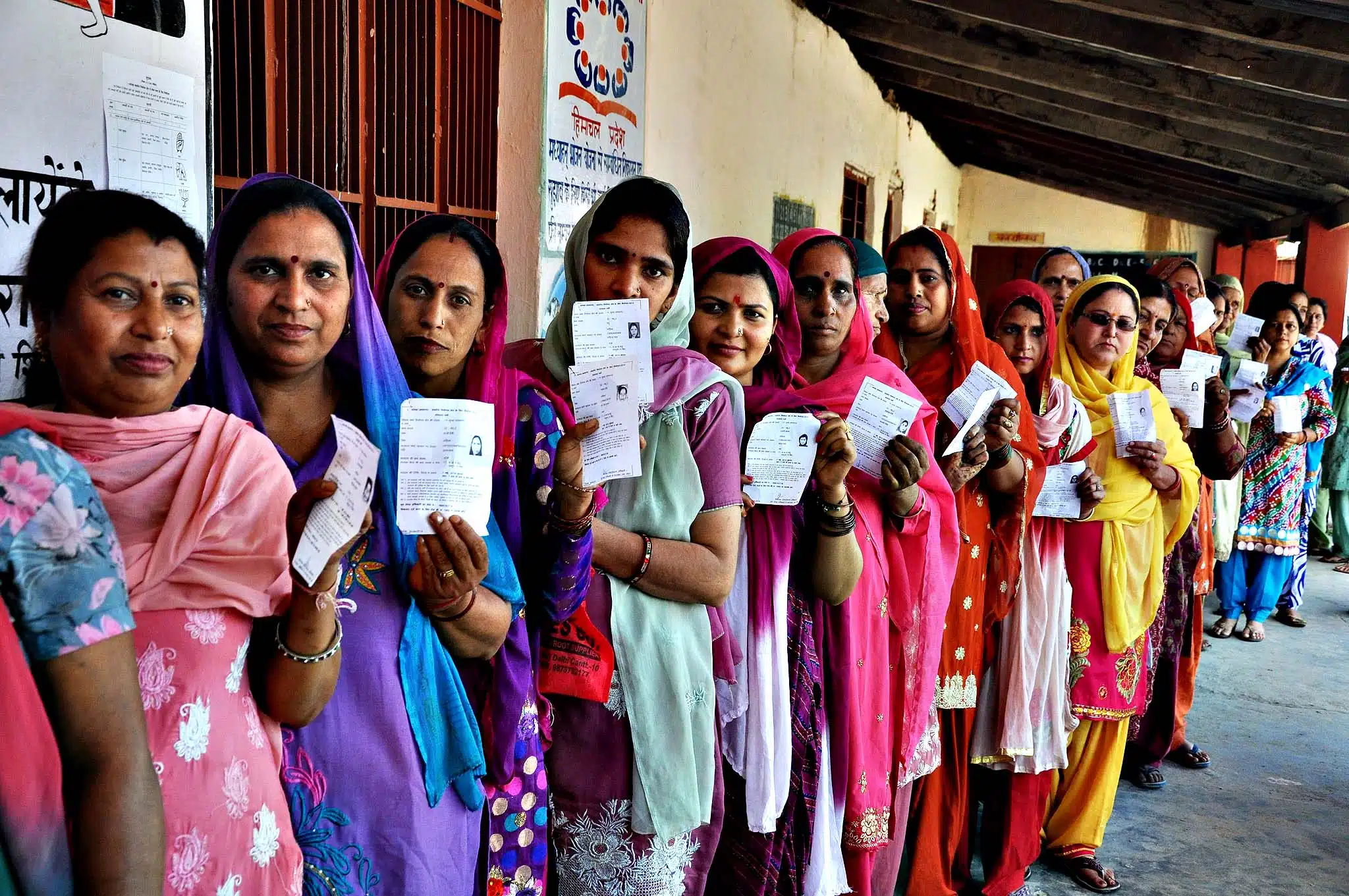
That is why so many Indian voters feel disillusioned. Their cynicism is not just born of unfulfilled promises—it stems from the sense that all parties are indistinguishable in their hunger for power, their use of state machinery to target opponents, and their disdain for democratic accountability. Voters have become transactional; they exercise power once every five years at the EVM, but remain powerless in between.
In this context, the ongoing discussion about opposition unity—especially in the wake of the 2024 Lok Sabha results—misses the point. Unity, as a strategy, may be electorally useful in specific constituencies. But it means little if the united front is just a collection of unprincipled actors lacking a common democratic vision. If the INDIA bloc, or any future coalition, merely seeks to defeat the BJP without presenting a compelling alternative rooted in liberty, governance, and reform, it will fail to inspire.
Jean-Jacques Rousseau once quipped that the English were free only once in five years—on election day. That observation, sadly, holds true for Indians today. The democratic process is being hollowed out not just by authoritarianism from above, but by a widespread decay in political integrity across the board. The Indian citizen deserves more than the lesser evil. Until then, opposition or ruling, India’s political class will remain trapped in its fussy, fuzzy, and failing big picture.
(The author is a senior journalist and political analyst)