



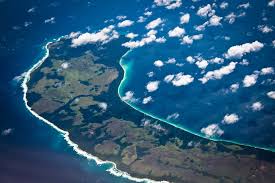
On 3 May 2026, the Government of India released a document titled Great Nicobar Project: Strategic Importance and Sustainable Development, renewing its case for one of the country’s most ambitious infrastructure and strategic development initiatives. The document outlines New Delhi’s vision of transforming Great Nicobar Island into a major maritime, economic and strategic hub in the Indo-Pacific region.
Few places today embody India’s competing priorities as clearly as Great Nicobar. Located at the southernmost tip of the Andaman and Nicobar archipelago, the island occupies a position of immense strategic value. It lies just 40 nautical miles from the East–West global shipping route, through which a substantial share of global maritime trade passes every year. Its location offers India a unique opportunity to strengthen its maritime footprint, expand trade infrastructure and enhance its strategic reach in the Indian Ocean. At the same time, the island’s rich biodiversity and indigenous communities have made it the subject of intense debate over the environmental and social implications of large-scale development.
The government’s plan seeks to reconcile these competing concerns. At its core is a massive infrastructure programme that includes an International Container Transhipment Terminal (ICTT) with a capacity of 14.2 million TEUs, a greenfield international airport, a 450 MVA gas- and solar-based power plant, and a new township spread across 16,610 hectares. The project will cover a total area of 166.10 sq km, including 35.35 sq km of revenue land and 130.75 sq km of forest land. It is scheduled to be implemented in three phases, with completion envisaged by 2047.
The Great Nicobar Project has not emerged suddenly. Rather, it represents the culmination of a process that has evolved over several years. The groundwork was laid in March 2021 when NITI Aayog released a pre-feasibility report for the holistic development of the island. The report highlighted Great Nicobar’s strategic location, economic potential and logistical advantages while identifying the transhipment terminal, airport, power plant and township as the project’s central pillars.
The proposal gathered momentum in January 2023 when the Ministry of Ports, Shipping and Waterways invited an Expression of Interest (EOI) for the development of a USD 5 billion international transhipment port at Galathea Bay. The proposed facility is expected to handle up to 16 million containers annually and is envisioned as one of the largest such ports in the region. Following Stage-I forest clearance, Union Minister Sarbananda Sonowal visited the island in November 2023 to review the progress of the project and assess preparations on the ground.
While the economic and strategic rationale behind the development has received considerable attention, the project has also attracted scrutiny because of the ecological sensitivity of the island.
Great Nicobar Island spans approximately 103,870 hectares of tropical evergreen forest and supports extraordinary biological diversity. The island is home to more than 1,800 species of fauna and hosts around 650 species of angiosperms, ferns and gymnosperms. Its forests, coastal ecosystems and wildlife habitats make it one of India’s most ecologically significant landscapes.
Given this ecological richness, concerns were raised about the possible environmental consequences of large-scale infrastructure development. In response, a series of scientific assessments and environmental studies was undertaken in 2024 to evaluate potential impacts and recommend mitigation measures. These studies involved institutions such as SACON, WII, ZSI and IISc, with additional inputs from NIOT, NIO, IIT and NCCR.
The final report concluded that the project could proceed, subject to compliance with 42 conditions designed to protect biodiversity and minimise environmental damage. The proposal was subsequently examined by the Expert Appraisal Committee (EAC), and three monitoring committees were established to oversee implementation and environmental management. These measures were intended to ensure that development proceeds alongside a structured framework for conservation and regulatory oversight.
The government has also sought to address concerns relating to indigenous communities inhabiting the island. Great Nicobar is home to the Nicobarese and Shompen tribes, whose welfare has remained a central issue in discussions surrounding the project.
In a public article, Union Environment, Forest and Climate Change Minister Bhupendra Yadav stated that the project would not lead to the displacement of either community and that it was being implemented in accordance with the Shompen Policy (2015) and the Jarawa Policy (2004). He noted that consultations had been carried out with the Anthropological Survey of India, the Directorate of Tribal Affairs and the Andaman Adim Janjati Vikas Samiti to ensure that the interests of Particularly Vulnerable Tribal Groups (PVTGs) were protected throughout the development process.
Yadav further stated that only 1.82 per cent of the total forest cover of the Andaman and Nicobar Islands would be diverted for the project and that this loss would be compensated through afforestation on mainland India. The government’s commitment to the development of the archipelago was reinforced on 3 January 2026 when Union Home Minister Amit Shah inaugurated projects worth ₹373 crore in Sri Vijaya Puram, including an Integrated Command and Control Centre, a district hospital expansion and a forensic science laboratory.
The significance of the Great Nicobar Project extends beyond the island itself. For India, it represents a major opportunity to reduce dependence on foreign ports for transhipment services. At present, more than 75 per cent of India’s transhipment cargo is handled by overseas ports, resulting in annual costs estimated at USD 200–220 million.
The proposed transhipment terminal at Galathea Bay has the potential to alter this equation. By enabling cargo to be processed domestically, India could reduce logistics costs, improve efficiency and strengthen its position within global maritime supply chains. The port could emerge as a critical node on East–West trade routes by offering lower dwell times, fewer relay voyages and competitive tariffs. It may also attract major international shipping lines through services such as bunkering, dry-dock repairs and crew-change facilities, helping India secure a larger share of the regional maritime services market.
The project’s strategic significance is equally important. Its location places it close to one of the world’s most vital maritime chokepoints: the Malacca Strait. This has assumed greater relevance amid China’s expanding footprint across the Indian Ocean region.
Since the mid-2000s, strategic analysts have referred to China’s so-called “String of Pearls” strategy, under which Beijing has developed or invested in ports such as Gwadar in Pakistan, Kyaukphyu in Myanmar and Hambantota in Sri Lanka. Although these facilities are officially civilian in nature, concerns have periodically been raised regarding their potential dual-use capabilities and their implications for regional security dynamics.
Against this backdrop, Great Nicobar assumes added importance. Its proximity to the northern entrance of the Malacca Strait provides India with a valuable vantage point overlooking one of the busiest maritime corridors in the world. The island’s strategic relevance is further underscored by China’s reported activities on Coco Island in Myanmar, situated near the Andaman and Nicobar chain.
Ultimately, the Great Nicobar Project represents far more than a conventional infrastructure initiative. It is a test of India’s ability to balance strategic ambition, economic development and environmental stewardship within a single framework. The island sits at the crossroads of global trade routes, geopolitical competition and ecological conservation, making the stakes exceptionally high.
Whether the project ultimately succeeds will depend not only on the completion of ports, airports and townships but also on the effectiveness of environmental safeguards and tribal protections promised by the government. If implemented with transparency, accountability and sensitivity, Great Nicobar could become a model for integrating national security, economic growth and sustainability in the Indo-Pacific. If not, it risks becoming another example of development colliding with ecological and social realities. The challenge for policymakers is to ensure that the island’s strategic promise does not come at the expense of the very assets that make it unique.
(Sachin Yadav is a research scholar in International Studies at Jamia Hamdard, New Delhi, His research focuses on India’s strategic partnerships, South Asia, India’s neighbourhood and geoeconomics)