


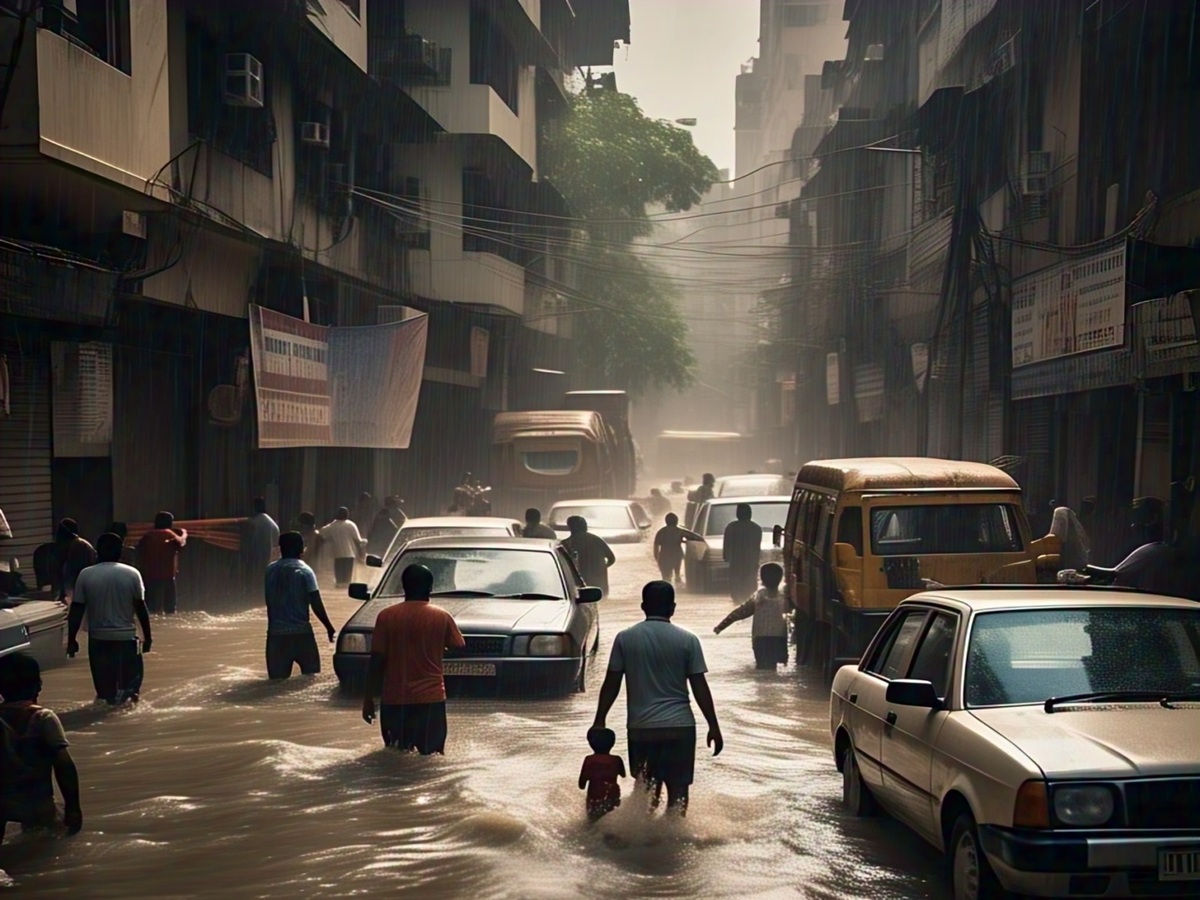
The Brihanmumbai Municipal Corporation (BMC) reported that parts of South Mumbai’s Island City division saw over 200 mm of rain between midnight and 11 AM, shattering a 107-year-old record for the highest single-day rainfall in May
New Delhi: Mumbai was battered by relentless rainfall on Monday, with the India Meteorological Department (IMD) recording 135 mm of rain at the Colaba observatory by 8:30 AM. The Brihanmumbai Municipal Corporation (BMC) reported that parts of South Mumbai’s Island City division saw over 200 mm of rain between midnight and 11 AM, shattering a 107-year-old record for the highest single-day rainfall in May. The downpour caused widespread waterlogging, with areas like Dadar TT flyover reporting severe traffic snarls due to flooded roads.
IMD Escalates to Red Alert
By Monday afternoon, the IMD escalated its warning to a ‘red’ alert for Mumbai, Thane, Raigad, and Ratnagiri, forecasting “extremely heavy rainfall, thunderstorms, lightning, and gusty winds” through Tuesday morning. Initially issuing a ‘yellow’ alert, the IMD upgraded it to ‘orange’ before sounding the highest level of caution. The IMD’s regional director, Sunil Kamble, stated, “This is an extraordinary event driven by a low-pressure system off the Konkan coast, intensified by early monsoon dynamics.” Residents were urged to avoid non-essential travel and stay clear of low-lying areas prone to flooding.
City Grapples with Chaos
The heavy rainfall disrupted daily life, with suburban trains running late and several arterial roads submerged. The BMC deployed over 200 dewatering pumps across the city, but low-lying areas like Sion, Kurla, and Andheri reported knee-deep water. A study by the Indian Institute of Technology Bombay (2023) highlights that Mumbai’s aging drainage infrastructure struggles to handle rainfall exceeding 100 mm in a short span, exacerbating urban flooding. Local resident Priya Sharma shared, “It took me three hours to travel 5 km today; the city comes to a standstill every monsoon.”
Monsoon’s Early Fury in 2025
The IMD noted that the southwest monsoon, which typically arrives in Mumbai by early June, has shown signs of an early onset this year, driven by cyclonic activity in the Arabian Sea. This aligns with a 2024 Climate Central report warning of intensifying monsoon patterns due to global warming. Mumbai’s civic authorities have assured round-the-clock monitoring, with emergency helplines activated to address citizen grievances.
