


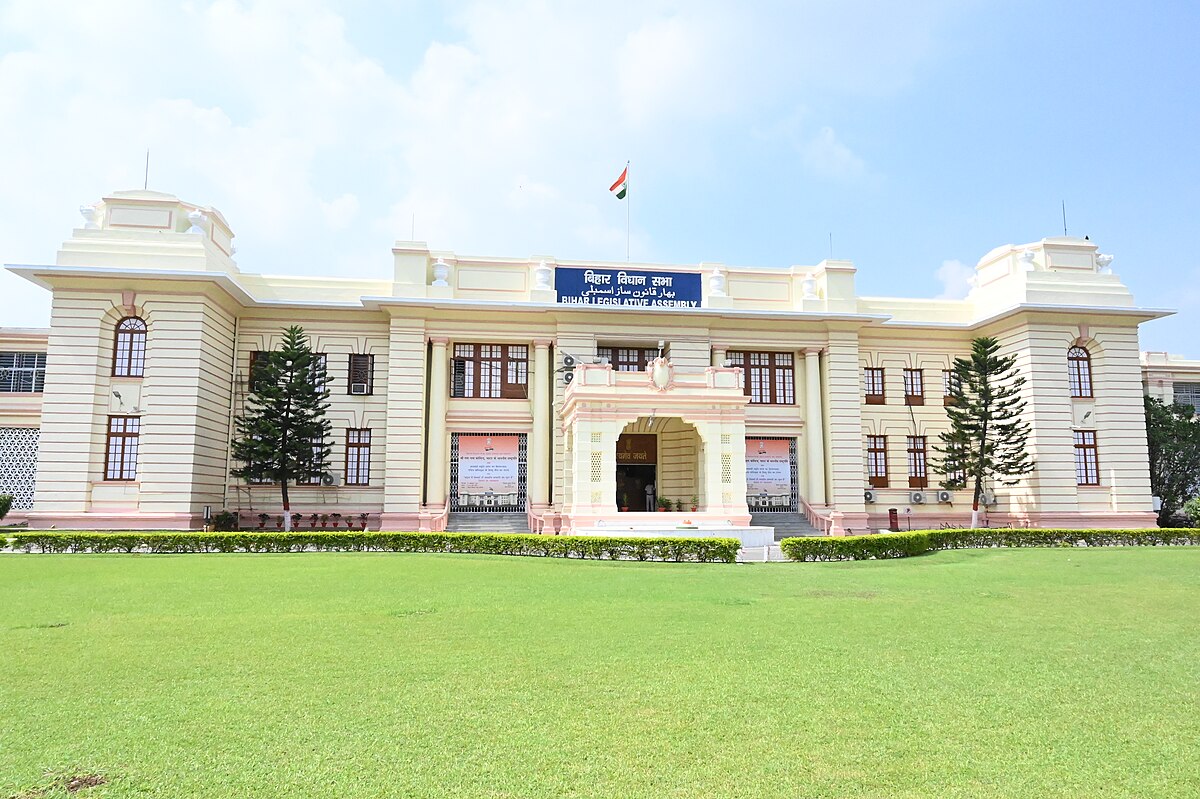
A majority of lawmakers in the newly constituted Bihar Assembly continue to carry criminal cases and substantial personal wealth, according to a detailed analysis by the Association for Democratic Reforms (ADR) and Bihar Election Watch. The organisations examined the self-sworn affidavits of all 243 winners of the 2025 Assembly polls, presenting what they term a “sobering snapshot” of the state’s electoral realities.
The data reveal that 130 of the 243 winners — 53 per cent — have declared criminal cases, a reduction from the 2020 House, where 68 per cent of MLAs faced similar charges. Yet ADR notes that the scale of criminality “remains disturbingly high”. Equally striking is that 102 winners (42 per cent) have disclosed serious criminal cases, including allegations of murder, attempted murder and crimes against women. In 2020, the corresponding figure stood at 51 per cent.
The affidavits show that six winning candidates face murder charges, and 19 have cases of attempted murder against them. Nine winners have been accused in cases relating to crimes against women.
A party-wise breakdown shows significant variation. The BJP and JD(U), the main pillars of the ruling alliance, have the highest number of candidates accused of grave offences in absolute terms: both parties have seven winners charged with attempted murder and three with murder. The RJD has the most candidates, three precisely, facing allegations of crimes against women.
When measured proportionally, smaller parties present even starker figures. Every winning candidate of AIMIM (5), CPI(ML)(L) (2), CPI(M) (1), Indian Inclusive Party (1), and BSP (1) has declared criminal cases. ADR observes that the trend “cuts across party lines, indicating a systemic problem rather than an isolated pattern”.
Alongside criminality, the new Assembly is overwhelmingly wealthy. 218 of the 243 MLAs, a staggering 90 per cent, are crorepatis, up from 81 per cent in 2020. The average assets of a winning candidate now stand at Rs 9.02 crore, a sharp rise from Rs 4.32 crore five years earlier. Collectively, the 243 winners have declared assets totalling Rs 2,192.93 crore.
The concentration of wealth is unmistakable:
- 22.6 per cent of all winners have assets exceeding Rs 10 crore.
- 18.1 per cent fall in the Rs 5 crore-Rs 10 crore range.
- Nearly half (49 per cent) possess assets between Rs 1 crore and Rs 5 crore.
Among major parties, the JD(U) has the highest average assets per MLA at Rs 9.53 crore, narrowly ahead of the BJP at Rs 8.68 crore. The Lok Janshakti Party (Ram Vilas), however, outstrips both in sheer per-candidate wealth with an average of Rs 13.66 crore, while the Rashtriya Lok Morcha tops the table with an average of Rs 22.93 crore among its four winners.
The richest MLA in the new House is Kumar Pranay of the BJP, representing Munger, with assets valued at more than Rs 170 crore. He is followed by Anant Kumar Singh of JD(U) from Mokama, who has declared over Rs 100 crore, and Dr Kumar Puspanjay, also of the JD(U), whose assets exceed Rs 94 crore.
Conversely, the three least wealthy MLAs — all from the BJP — have declared assets of less than Rs 12 lakh each. Murari Pasavan (Pirpainti-SC) has Rs 6.53 lakh, Mahesh Paswan (Agiaon-SC) has Rs 8.55 lakh, and Sujeet Kumar (Rajnagar-SC) has Rs 11.06 lakh.
A sizeable number of legislators are heavily indebted. Forty-seven winners have liabilities of Rs 1 crore or more. The most indebted MLA is Shambhu Nath Yadav of the RJD, who has declared liabilities exceeding Rs 66 crore, against assets of just over Rs 12 crore. He is followed by Anant Kumar Singh (JD(U)), who owes nearly Rs 26 crore, and Sanjay Kumar Singh of the Lok Janshakti Party (Ram Vilas), who has liabilities of more than Rs 16 crore.
ADR said the figures underline a persistent pattern in Bihar and across India, where “criminality, wealth concentration, and electoral success remain closely intertwined”.
