






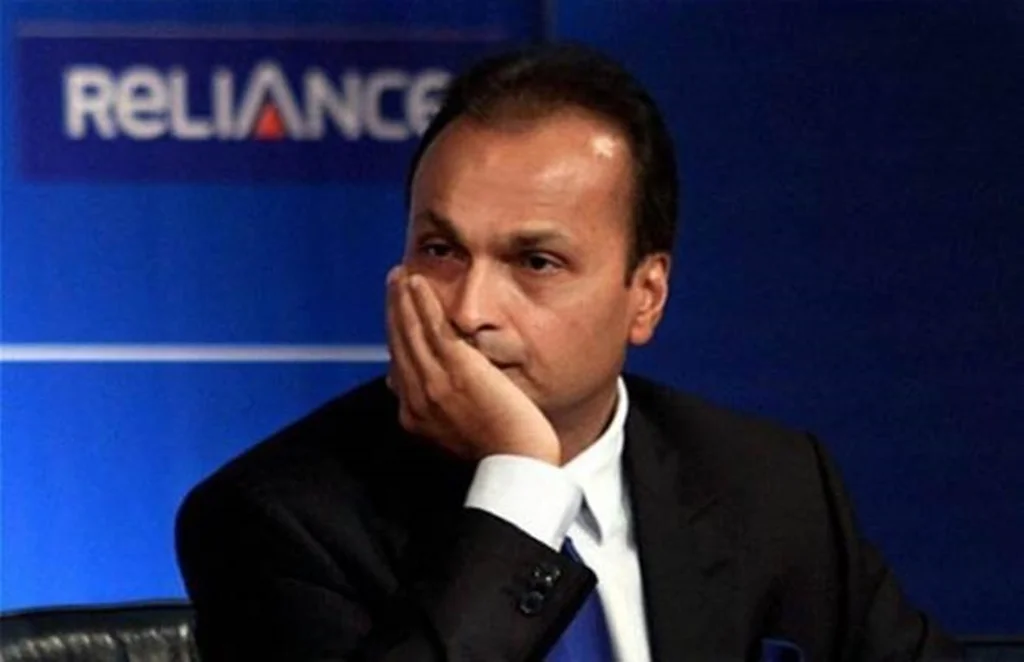
Anatomy of a Mega-Fraud
A Cobrapost investigation, titled “The Lootwallahs: How Indian Business is Robbing Indians”, presents a forensic dissection of what it alleges is one of India’s most significant corporate frauds. The core accusation against the Reliance ADAG, promoted by Anil Ambani and his family, is the systematic and deliberate siphoning of funds from publicly listed companies. These funds, sourced from loans from public sector banks (PSBs), money raised through Initial Public Offerings (IPOs), and bonds sold to investors, were not used for their stated purposes. Instead, they were allegedly diverted through an elaborate labyrinth of domestic and offshore shell companies to ultimately benefit the promoter group, effectively robbing Indian banks and citizens.
The fraud is quantified in two primary streams: the direct siphoning of ₹28,874 crore from Indian entities, and the routing of $1.535 billion (≈₹13,048 crore) from abroad in a “dubious manner”, potentially involving money laundering. The investigation paints a picture of a corporate structure designed not for growth but for extraction, leading to the eventual collapse of six major ADAG companies, an admitted debt of ₹1,78,491 crore, and an erosion of investor wealth amounting to ₹1,59,721 crore. The report further accuses regulatory bodies and law enforcement agencies of a “colossal systemic failure” for their inaction in the face of mounting evidence.
Scale of The Fraud: A Numerical Breakdown
The investigation segments the financial malfeasance into distinct, quantifiable categories:
- Domestic Fund Siphoning (₹28,874.07 Crore): This represents funds directly diverted from the coffers of listed ADAG companies in India. The primary companies identified as sources are:
- Reliance Communications (RCOM)
- Reliance Capital
- Reliance Infrastructure
- Reliance Power
- Reliance Home Finance Ltd
- Reliance Commercial Finance Ltd
The money was moved out through loans, advances, and investments to a network of dozens of subsidiary and shell entities, from where it was allegedly funnelled back to the ultimate promoter-owned companies.
- Dubious Foreign Inflows ($1.535 Billion or ≈₹13,047.5 Crore): This segment involves funds that entered the ADAG system from foreign sources through transactions that the investigation labels as potential violations of the Foreign Exchange Management Act (FEMA) and the Prevention of Money Laundering Act (PMLA). This includes a mysterious $750 million from an entity called NexGen Capital and other external commercial borrowings that were diverted against their stated end-use.
- Total Direct Financial Impact: The sum of these two streams amounts to over ₹41,921.57 crore of public money that was allegedly siphoned or routed fraudulently.
- Systemic Collapse and Public Loss (₹3,38,212 Crore): Beyond the direct siphoning, the investigation highlights the broader consequence. Data from the National Company Law Tribunal (NCLT) shows that nine ADAG companies had outstanding admitted claims of ₹1,78,491 crore when they were forced into insolvency. Simultaneously, the market capitalization of these companies nosedived, eroding ₹1,59,721 crore of investor wealth. This combined loss of over ₹3.38 Lakh Crore is attributed primarily to the fraudulent diversion of funds and poor management.
The Modus Operandi: Playbook of Obfuscation
The report details a sophisticated and repeatable methodology used to execute the fraud:
- Proliferation of Shell Entities: The backbone of the operation was the creation and use of a vast network of dozens, if not hundreds, of shell companies and Special Purpose Vehicles (SPVs). These entities, both in India and in offshore tax havens like the British Virgin Islands (BVI), Cyprus, Jersey, Mauritius, Singapore, and the UK, acted as conduits. They had no real business operations and were used solely to layer transactions and break the audit trail.
- Circular Routing of Funds: Funds were never transferred directly from the listed company to the final promoter entity. Instead, they were routed through multiple shell companies in the form of:
- Inter-corporate loans (often interest-free).
- Advances against non-existent purchases.
- Investments in Compulsory Convertible Debentures (CCDs) and Non-Convertible Redeemable Preference Shares (NCRPS), often at inexplicably high premiums.
This created a complex web where tracking the ultimate beneficiary became nearly impossible. - Obfuscation and Cover-Up: To permanently conceal the trail, the group employed two key tactics:
- Frequent Name Changes: Key SPVs used for fund extraction changed their names multiple times. For instance, one NBFC, CLE Pvt. Ltd., was known by at least six different names, including Crest Logistics & Engineers and Sonata Investments Limited.
- Strategic Mergers: After funds had passed through a set of shell entities, these companies were merged with larger promoter-group companies. This legal process effectively dissolved the intermediary entities, burying the transaction history and the identity of the original fund recipients.
Detailed Case Studies: Fraud in Action
- The Luxury Yacht “TiAn” (2008)–A Precursor:
One of the earliest instances of fund diversion, dating to 2008, involved the purchase of a $20 million luxury yacht as a gift for Anil Ambani’s spouse, Tina Ambani. The investigation alleges the following circuitous route: - The purchase was orchestrated through Reliance Transport & Travels Pvt. Ltd., an ADAG subsidiary.
- Funds were siphoned from Reliance Communications (RCOM) as a loan to Reliance Transport, officially for the purchase of 10 million mobile handsets from a Jersey-based entity, Ammolite Holdings Limited.
- Ammolite, which had no history in the handset trade, did not supply any phones. Instead, the entire $20 million was used to acquire the yacht directly from Ferretti SPA of Italy.
- Post-acquisition, Reliance Capital, which held a 50% stake in Ammolite, wrote off its entire investment in the entity.
This case, which also attracted the attention of Indian customs authorities, is presented as a blueprint for the larger frauds that followed. - The CLE Pvt. Ltd. Conduit (₹14,529 Crore):
This case exemplifies the large-scale siphoning operation. A special purpose vehicle, CLE Pvt. Ltd., was used as a central funnel:
Fund Extraction: CLE Pvt. Ltd. raised ₹14,529.18 crore by issuing debentures and taking loans from:
- Reliance Infrastructure: ₹10,049 crore
- Reliance Capital: ₹3,270 crore
- Reliance Commercial Finance: ₹286.9 crore
- Yes Bank: ₹800 crore
Layering and Diversion: This massive sum was then diverted to at least 23 identified shell entities in the form of debentures and advances. From there, the funds were routed to 26 offshore shell entities in Jersey, BVI, and Cyprus.
Final Cover-Up: All these domestic shell entities were subsequently merged into a promoter-group company called Edico Ventures, effectively erasing the trail. The offshore entities and the funds within them were gradually written off in the books of the listed companies, crystallizing the loss for shareholders and lenders.
- Dubious $750 Million from NexGen Capital:
This transaction is highlighted as a potential case of money laundering: - A Singapore-based company, Reliance Projects Pte Ltd., was registered by a person named NG Der Sian with a capital of $1. Due to a naming dispute, its custody was temporarily given to ADAG’s holding company, Reliance Innoventures.
- The company was renamed Emerging Market Investments & Trading Pte (EMITS).
- While under ADAG’s custody, EMITS received a $750 million loan from a mysterious entity called NexGen Capital.
- Entire amount was immediately invested in an Indian ADAG entity, AAA & Sons Enterprises Pvt. Ltd., which then downstreamed the funds the same day to four other ADAG companies.
- These four companies were later merged into Reliance Innoventures.
- Crucially, both the lender (NexGen Capital) and the initial recipient (EMITS) were subsequently dissolved. The investigation concludes: “Only the ultimate beneficiary, which is Reliance Innoventure, exists.”
Role and Failure of Institutions
Cobrapost report is scathing in its criticism of the regulatory and enforcement ecosystem, alleging a catastrophic failure at multiple levels:
- Public Sector Banks: Consortiums of banks, led by Bank of Baroda, continued to lend to ADAG companies even as they defaulted. A forensic audit by Bank of Baroda in 2020 explicitly identified the diversion of over ₹1,323 crore from Reliance Home Finance to shell entities. Despite this “damning” evidence, banks did not declare the promoters wilful defaulters immediately nor invoke personal or corporate guarantees aggressively. They eventually took massive haircuts, sometimes over 99% (e.g., the sale of Reliance Commercial Finance for ₹1 crore against a ₹11,000 crore claim).
- Regulators (RBI & SEBI):
- The Reserve Bank of India (RBI) is criticized for its leniency. In one instance involving a FEMA violation of $450 million, the RBI compounded the offense for a fee of ₹124.68 crore instead of a potential penalty of ₹3,798 crore and did not refer the case to the Enforcement Directorate for a deeper probe into money laundering.
- The Securities and Exchange Board of India (SEBI) did penalize Anil Ambani and others in a 2024 order related to Reliance Home Finance. However, the investigation questions why SEBI did not broaden its probe to encompass the entire ADAG ecosystem or refer the case to criminal investigation agencies like the CBI.
- Law Enforcement (ED, CBI): The Enforcement Directorate (ED), tasked with enforcing PMLA, is accused of initiating probes but then developing “cold feet” and “pigeon-holing the proceedings.” The Central Bureau of Investigation (CBI) is similarly indicted for its inaction.
The ADAG Rebuttal
The report includes the formal response from the Reliance ADA Group, received as a legal notice instead of answers to a detailed questionnaire. The Group categorically denies all allegations, labeling them “false, baseless and defamatory.” Their key counter-arguments are:
- No Judicial Finding of Guilt: They emphasize that no court or tribunal has found any ADAG entity or individual guilty of financial wrongdoing.
- Lawful Insolvency Resolution: The Corporate Insolvency Resolution Processes (CIRPs) were lawfully conducted under the oversight of the NCLT and were approved by creditors, including public sector banks.
- “Trial by Media”: They accuse Cobrapost of interfering with the administration of justice by creating a media trial on matters that are sub-judice before competent authorities like the CBI and ED.
- Rebuttal on Specifics: They clarify that Reliance Infrastructure and Reliance Power were never under CIRP and that the resolution of Reliance Home Finance and Commercial Finance was conducted under the RBI’s framework, resulting in “substantial recoveries for creditors.”
Cobrapost’s Final Stand
Cobrapost rejects the ADAG group’s allegations of malice and extortion. It reiterates that its findings are based on a “meticulous and diligent” analysis of publicly available documents from the Ministry of Corporate Affairs, SEBI, RBI, and NCLT. It frames its publication as a discharge of its constitutional duty to inform the public, standing by the story in the face of legal intimidation.
The investigation concludes that the rise and fall of the Anil Ambani-led ADAG is not merely a story of business failure but one of “systemic looting”. It alleges a pre-meditated strategy where corporate structures were weaponized to extract wealth from public institutions, leaving behind a trail of bankrupt companies, crippled banks, and pauperized investors. The report ultimately poses a troubling question about the integrity of India’s corporate governance and the efficacy of its financial regulators, suggesting that without significant accountability, such “loot” of public money will continue with impunity.


