






By S. Krishnan and Devranjan Singh Shekhawat
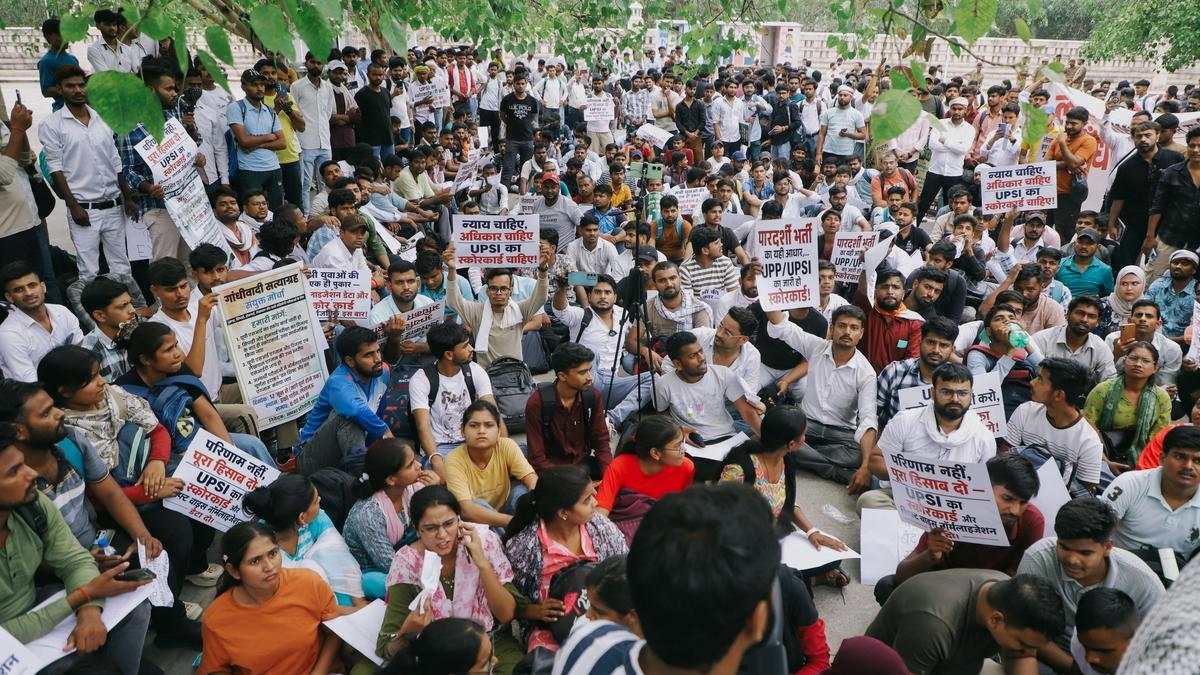
The recurring incidents of examination paper leaks across India have exposed serious weaknesses in the country’s education and criminal justice systems. Competitive examinations such as NEET, UGC-NET, SSC, State Public Service Commission examinations, police recruitment tests, teacher eligibility tests and other recruitment examinations have repeatedly been marred by allegations of question paper leaks. Every such incident not only affects lakhs of honest candidates but also erodes public confidence in the fairness and integrity of the examination system.
Governments have responded with stricter laws and improved technological safeguards, yet the legal process continues to move at a painfully slow pace. Investigations often drag on for years, accused persons secure bail, witnesses lose interest, and trials remain pending. Consequently, the masterminds behind paper leak syndicates rarely face timely punishment. Unless prosecution keeps pace with legislation, deterrence remains weak. This is why the establishment of dedicated fast-track courts for paper leak offences deserves serious consideration.
More Than an Examination Offence
A paper leak is not merely an irregularity in the conduct of an examination. It is an organised economic offence that strikes at the constitutional principles of equality and fairness. Article 14 of the Constitution guarantees equality before the law, while Articles 16 and 21 protect the right to fair opportunity in public employment and education. When examination papers are leaked, deserving candidates lose opportunities despite years of hard work and preparation.
The consequences extend far beyond individual students. Examinations are cancelled at enormous public expense, government recruitment is delayed, students endure severe psychological stress, litigation clogs the High Courts and the Supreme Court, confidence in recruitment agencies diminishes, and organised criminal networks dealing in examination fraud become increasingly emboldened. The damage is therefore institutional as much as individual, affecting governance, public administration and national development.
Recent investigations also demonstrate that paper leaks are seldom isolated acts. They typically involve sophisticated syndicates comprising coaching centre operators, printing press employees, technical experts, government insiders, middlemen, cybercriminals and financial intermediaries handling illicit payments. These networks frequently operate across multiple states using encrypted communication, cryptocurrencies, fake identities and digital payment channels. Ordinary criminal courts, burdened with a wide range of cases, are rarely able to devote sustained attention to such complex prosecutions.
Why Existing Courts Struggle
India’s criminal courts already face an enormous backlog. According to the National Judicial Data Grid, millions of criminal cases remain pending across district courts.
A typical paper leak prosecution involves digital forensic evidence, mobile phone records, CCTV footage, financial transactions, electronic records, expert testimony, cyber investigation reports and multiple accused spread across different jurisdictions. Such cases require continuous hearings and close judicial supervision. Instead, they are frequently interrupted by repeated adjournments because courts are dealing simultaneously with numerous unrelated criminal matters. Delayed justice inevitably weakens deterrence.
Fast-track courts were originally introduced to ensure the speedy disposal of sensitive criminal matters. Similar judicial mechanisms already exist for sexual offences under the POCSO Act, cases involving Members of Parliament and Legislative Assemblies, commercial disputes, CBI investigations, offences under the NDPS Act and cases under the Prevention of Corruption Act. Given the widespread social and economic consequences of examination fraud, paper leak prosecutions warrant similar priority.
Dedicated fast-track courts would allow for daily hearings, uninterrupted recording of evidence, time-bound completion of trials and, wherever legally permissible, the speedy disposal of appeals. Most importantly, they would strengthen public confidence that the justice system is capable of responding effectively to organised examination fraud.
Strengthening the 2024 Law
India has already taken an important legislative step through the Public Examinations (Prevention of Unfair Means) Act, 2024, which criminalises organised malpractice in public examinations, including question paper leaks, unauthorised access to examination material, cheating through electronic devices, organised conspiracies and financial gain derived from examination fraud. The legislation prescribes stringent punishments, including imprisonment and substantial fines, particularly for organised criminal activity.
Yet even the strongest legislation loses much of its force if prosecutions take years to conclude. Fast-track courts would complement the Act by ensuring that justice is not only delivered but delivered in time.
The greatest beneficiaries would be students. Every cancelled examination imposes additional coaching expenses, emotional distress, career uncertainty, age-limit complications and financial hardship on families. Timely trials would reassure candidates that those responsible are being held accountable and that merit, rather than manipulation, will determine their future.
Keeping Pace with Digital Crime
Modern paper leak investigations depend heavily on digital forensics. Evidence may include WhatsApp chats, Telegram groups, email communications, cloud storage, mobile phone extractions, GPS records, CCTV footage, cryptocurrency transactions and banking records. Courts specialising in such offences would gradually develop greater expertise in evaluating digital evidence, leading to greater consistency in judicial decision-making and fewer procedural delays.
Paper leak investigations also require coordination among State Police, cybercrime units, the Central Bureau of Investigation in selected cases, the Enforcement Directorate where money laundering is involved, examination authorities and digital forensic laboratories. Dedicated courts could improve coordination by ensuring timely filing of charge sheets, closer monitoring of investigations and prompt disposal of procedural applications.
Competitive examinations determine entry into medical education, engineering institutions, civil services, police recruitment, judicial services, universities and government employment. When such examinations are compromised, meritocracy itself comes under threat. If deserving candidates repeatedly lose opportunities because of organised fraud, public faith in institutions inevitably declines. Swift and certain punishment sends a clear message that merit cannot be bought.
Several countries already treat examination fraud as a serious offence affecting public administration. China and South Korea, for example, combine stringent criminal penalties with advanced digital surveillance and swift legal proceedings, significantly reducing organised examination cheating. India can strengthen its own institutional response by ensuring that prosecution is as efficient as investigation.
A Stronger Judicial Response
Creating fast-track courts will undoubtedly present challenges. Additional judicial officers, better infrastructure, trained prosecutors, improved digital forensic expertise and stronger coordination among states will all be required. Equally important is ensuring that the pursuit of speedy justice does not compromise the constitutional guarantee of a fair trial under Article 21. Efficiency must never come at the expense of due process.
A meaningful reform agenda should therefore include the establishment of designated fast-track courts for paper leak cases in every state, time-bound investigations under judicial oversight, specialised training for judges and prosecutors in cybercrime and electronic evidence, better-equipped digital forensic laboratories, wider adoption of artificial intelligence and blockchain-based security in examination systems, stronger coordination among examination bodies and investigative agencies, and effective protection for whistle-blowers and witnesses.
India’s demographic dividend depends on the faith of millions of young aspirants in the integrity of public examinations. Every paper leak not only deprives deserving candidates of opportunities but also undermines constitutional principles of equality, merit and fairness. The Public Examinations (Prevention of Unfair Means) Act, 2024 is an important beginning, but its success will ultimately depend upon swift and effective enforcement.
Dedicated fast-track courts can bridge the gap between legislation and justice by ensuring timely trials, strengthening deterrence and reinforcing public trust. Such courts would do far more than punish offenders. They would safeguard the aspirations of an entire generation. In a country where education and public employment remain the principal avenues of social mobility, protecting the integrity of public examinations is both a constitutional obligation and a moral imperative.
(Dr S. Krishnan is an academic and experienced journalist based in Jaipur. Devranjan Singh Shekhawat is an advocate at the Rajasthan High Court, Jaipur)


