



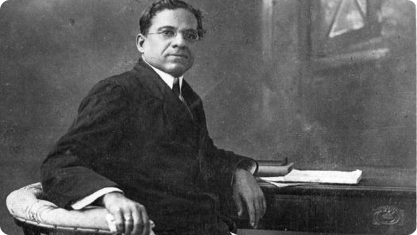
You have almost certainly heard that Indian cinema began in 1913, with a silent film called Raja Harishchandra. Its director, Dadasaheb Phalke, didn’t just make one film; he helped lay the foundations of what would grow into one of the largest film industries on Earth. What you probably haven’t heard is that the films he built it with have almost entirely disappeared. The original print barely survived its own decade. Film historians recount that it was lost within a few years of release, according to one widely cited account, destroyed by fire while being transported between screenings. What is better established is this: Phalke went on to produce a new version of the same film in 1917, and to this day, historians cannot agree whether the fragments preserved as Raja Harishchandra actually belong to the 1913 original or to Phalke’s own 1917 version. India’s first film, in other words, may not even be the film most people think they’re honouring when they call it that.
A Lost Legacy
To make the original film in the first place, Phalke sold nearly everything he owned: his insurance policy, his property in Nashik, and, most strikingly, his wife Saraswatibai’s jewellery. Saraswatibai didn’t just fund the film; she worked on the set herself, holding lighting reflectors and helping with editing. Because acting was considered improper for women at the time, Phalke had to cast a male actor, Anna Salunke, to play the film’s queen. This was the price and the compromise required just to get India’s first feature made at all and, by most accounts, within years, the original print itself was gone.
Phalke went on to make roughly 95 feature films and 27 short films between 1913 and 1937, the body of work that helped lay the foundations of India’s film industry. Today, only a handful survive in any complete form. This isn’t unique to Phalke. The Film Heritage Foundation, an Indian preservation body founded by Shivendra Singh Dungarpur, states that by 1950, India had lost 70 to 80 per cent of its films overall. Its figures for the silent era specifically are starker still: of roughly 1,700 silent films made in India, the Foundation counts only five or six as complete films today, with another 12 to 15 surviving only as film fragments. India’s first talkie, Alam Ara (1931), is gone entirely — its nitrate negatives were sold off for the silver they contained. Imagine trying to understand Shakespeare if most of his plays had vanished, leaving only a handful of complete texts and everyone else’s second-hand descriptions of what the rest might have contained. That is roughly the position India is in with the era that built its own cinema.
Here is the detail that should unsettle anyone who assumes film history is settled fact: historians still dispute whether the fragments of Raja Harishchandra preserved today at the National Film Archive of India are from Phalke’s original 1913 production, or from his 1917 re-shoot. The answer may be permanently unknowable. Imagine if the only Mona Lisa anyone alive had ever seen was a student’s careful copy, painted years after the original vanished, with no one able to say for certain which one you were actually looking at. The most celebrated object in Indian film history may be a reconstruction long mistaken for the original.
A Second Loss
Archivist P.K. Nair spent 25 years tracking down whatever remained of India’s earliest films before retiring from the National Film Archive of India in 1991, work later chronicled in Dungarpur’s 2012 documentary Celluloid Man. Even his effort couldn’t outrun the same fate it fought against: in January 2003, a fire in the archive’s own storage vault destroyed hundreds of reels, among them, by some accounts, the very print of Raja Harishchandra he had spent decades protecting. The rescue itself became part of the loss. “Every day we’re trying to save a film,” Dungarpur has since said of his own continuing work, a fight that, decades after Nair’s retirement, still hasn’t ended.
India is not alone in confronting this loss. A Library of Congress study found that only 14 per cent of American silent feature films survive in their original format. Director Martin Scorsese, responding to that report, called silent film’s surviving artistry “essential to our culture”, a reminder that the same neglect that swallowed Phalke’s work also swallowed much of early Hollywood.
The Irony
Every year, India’s highest cinema honour, the Dadasaheb Phalke Award, is presented to a celebrated filmmaker in front of an audience that can watch every frame of the winner’s work. The man the award is named after cannot say the same about his own. He helped build the industry that made that award possible. Almost none of the films he built it with survive to prove it.