


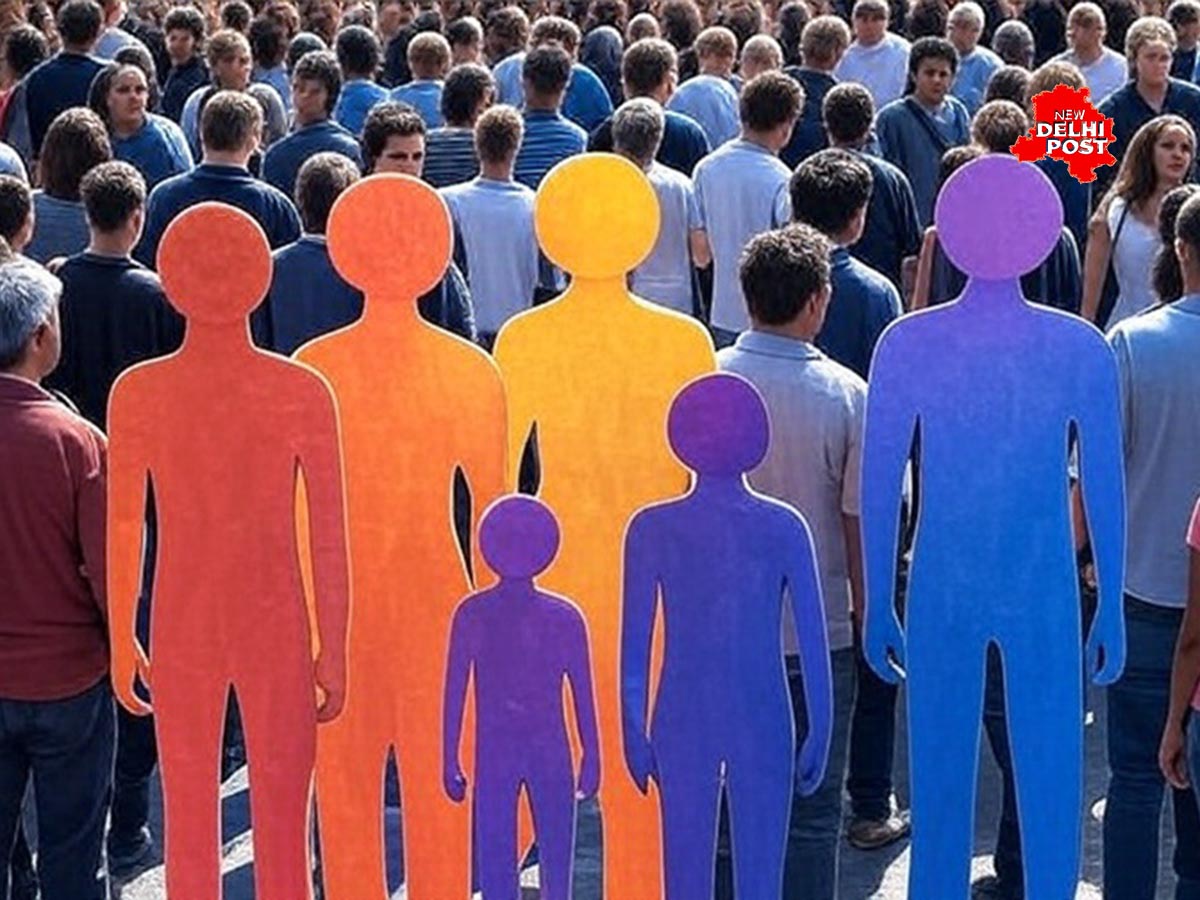
First fully digital census to conclude by March 2027, featuring caste data for the first time, with major implications for delimitation and women’s reservation.
New Delhi: India will conduct its much-awaited census by March 1, 2027, after an unprecedented 16-year gap since the last count in 2011. This will be the country’s first fully digital census, incorporating caste enumeration for the first time in independent India’s history, as announced by the Union Home Ministry on Wednesday. The move is poised to have far-reaching political and social consequences.
Two-Phase Census Plan
The census will unfold in two phases, concluding by February 28, 2027, with a reference date of midnight, March 1, 2027. For snow-bound regions like Ladakh, Jammu & Kashmir, Himachal Pradesh, and Uttarakhand, the reference date is set for October 1, 2026, due to logistical challenges. The process, governed by the Census Act of 1948, may see its notification published in the gazette on June 16, 2025. The first phase will involve house listing and housing census, while the second will focus on population and caste enumeration, expected to span 11 months.
Digital Leap and Workforce Training
This census will leverage a mobile application for data collection, marking a technological milestone. Approximately 30 lakh enumerators, primarily government school teachers, will be retrained to handle the 24 lakh enumeration blocks established for the 2021 census. A senior official revealed that training manuals will include a dedicated section on caste enumeration, with a potential drop-down menu for recording castes beyond Scheduled Castes (SC) and Scheduled Tribes (ST). However, the government has not clarified plans to update the National Population Register (NPR), which holds data on 119 crore individuals and was initially slated for a 2021 refresh.
Caste Data: A Political Game-Changer
The inclusion of caste data responds to long-standing demands, notably from the Congress party, and was approved by the Union Cabinet on April 30, 2025. The census will collect details on individuals’ names, gender, parents’ names, birth dates, marital status, addresses, and, crucially, caste. However, a significant limitation is that it will not categorize Other Backward Classes (OBC) as a distinct group, as caste will be recorded without classifying social categories. This is due to variations in OBC classifications across states, where some castes are OBC in one state but general in another. Experts warn this could limit the census’s utility for OBC-specific policy-making. A 2023 study by the Centre for Policy Studies estimated OBCs constitute 41-45% of India’s population, but without official data, reservation policies remain contentious.
Delimitation and Women’s Reservation
The census will significantly influence the delimitation of Lok Sabha and Assembly constituencies, as per the 84th Constitutional Amendment Act, 2001, which mandates redrawing boundaries based on the first census post-2026. This raises concerns, particularly in southern states, where lower population growth could reduce their parliamentary representation. Additionally, the census will serve as the basis for implementing 33% women’s reservation in legislatures, a law contingent on fresh delimitation. Political analyst Dr. Sandeep Shastri noted, “The caste and population data will redefine electoral strategies and reservation policies, potentially intensifying regional and social debates.”
Historical Context and Challenges
India’s census tradition began under British rule, with the last comprehensive caste census conducted in 1931. Post-independence, caste data was excluded from censuses between 1951 and 2001. The 2011 census collected socio-economic caste data but never made it public. The 2021 census, delayed by the Covid-19 pandemic, left a data vacuum that this exercise aims to fill. However, challenges remain, including verifying caste entries, as the government lacks a mechanism to cross-check reported castes. Former Census Commissioner Dr. M. Vijayanunni cautioned, “Accurate caste enumeration requires robust training and public awareness to avoid discrepancies.”
OBC Data Gap and Political Reactions
The decision not to count OBCs as a separate category has sparked debate. Opposition leaders argue this undermines the census’s purpose, with Congress leader Jairam Ramesh stating, “Excluding OBC numbers defeats the goal of addressing social inequities.” Meanwhile, the Supreme Court will decide on the 50% reservation cap, unaffected by this census. The government insists the focus on individual castes will still provide granular data for policy formulation.
