


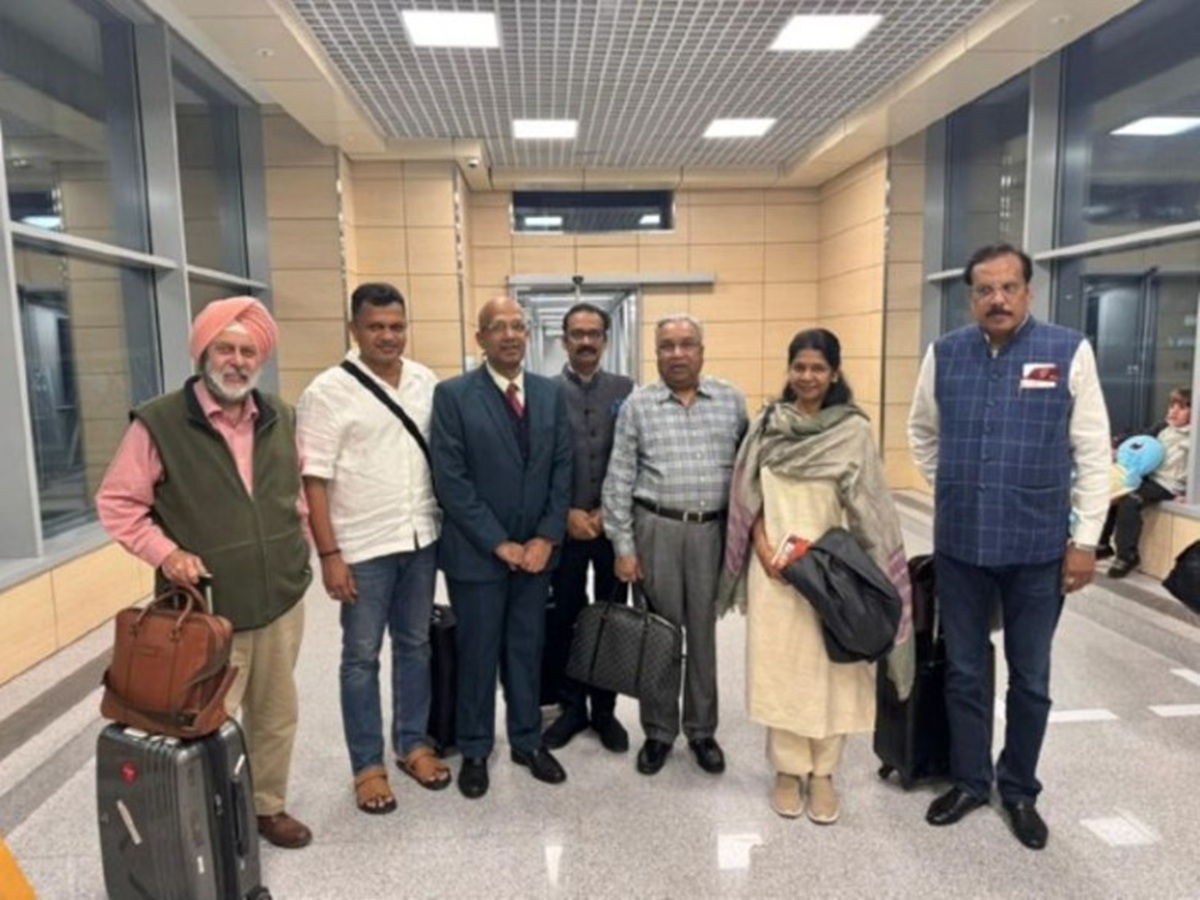
Moscow: A multi-party delegation of Indian Members of Parliament, led by Kanimozhi Karunanidhi, arrived at Domodedovo International Airport on Thursday night, May 22, 2025, kicking off a five-nation tour to highlight Pakistan-sponsored cross-border terrorism. They were received by Indian Ambassador Vinay Kumar and other officials, marking the start of a critical diplomatic mission following the April 22 Pahalgam attack that killed 26 people, mostly tourists.
Diplomatic Push Against Terrorism
The delegation’s visit, the third of seven planned under India’s global campaign, aims to expose Pakistan’s role in fostering terrorism, particularly after the Pahalgam attack claimed by The Resistance Front (TRF), a Lashkar-e-Taiba (LeT) proxy. The MPs are set to meet Russian Duma members, foreign ministry officials, and local think-tank experts on Friday, followed by a press conference on Saturday before departing for Slovenia. Their tour will also cover Greece, Latvia, and Spain, reflecting India’s aggressive stance post-attack.
Pahalgam Attack and India’s Response
The Pahalgam attack, the deadliest since the 2008 Mumbai attacks, prompted India to launch Operation Sindoor on May 7, targeting nine terror camps in Pakistan and PoJK, neutralizing nearly 100 terrorists. India has since suspended the Indus Waters Treaty, closed the Attari border, and revoked visas for Pakistani nationals, escalating tensions. Foreign Secretary Vikram Misri recently told a parliamentary panel that the terrorists communicated with masterminds in Pakistan, pointing to a nexus involving Pakistani military intelligence.
Global Outreach and Evidence
The delegation carries dossiers detailing Pakistan’s 40-year terror trail, including its role in the 2008 Mumbai attacks and the sheltering of figures like Osama bin Laden in 2011. This aligns with India’s broader diplomatic push, as 59 MPs are set to visit 32 countries to counter Pakistan’s narrative. A 2025 UN Security Council meeting saw members question Pakistan’s links to terror groups, dismissing its “false flag” claims about Pahalgam. Prime Minister Narendra Modi has declared cross-border terrorism an act of war, signaling a shift in India’s approach.
Pakistan’s Denials and Contradictions
Pakistan denies involvement, with officials like Foreign Minister Ishaq Dar calling the attackers “freedom fighters,” while Defence Minister Khawaja Asif suggested a “false flag operation” by India. Analyst Andrew Korybko criticized these contradictory claims, arguing they undermine Pakistan’s credibility and tacitly justify terrorism. Pakistan’s call for a Russia-China-led probe into Pahalgam has been met with skepticism, given its history of supporting groups like LeT, as admitted by Asif in a recent interview.
Broader Implications
The delegation’s mission underscores India’s resolve to isolate Pakistan internationally. The South Asia Terrorism Portal notes a 30% rise in terror incidents in J&K over the past five years, highlighting the ongoing challenge. Local voices like Mehbooba Mufti have criticized the blanket targeting of Kashmiris post-attack, warning of alienation. Meanwhile, global leaders, including Russia, have condemned the attack, with the UN urging dialogue—a suggestion India rejects in favor of bilateral resolution.
