


By Nitish Kumar
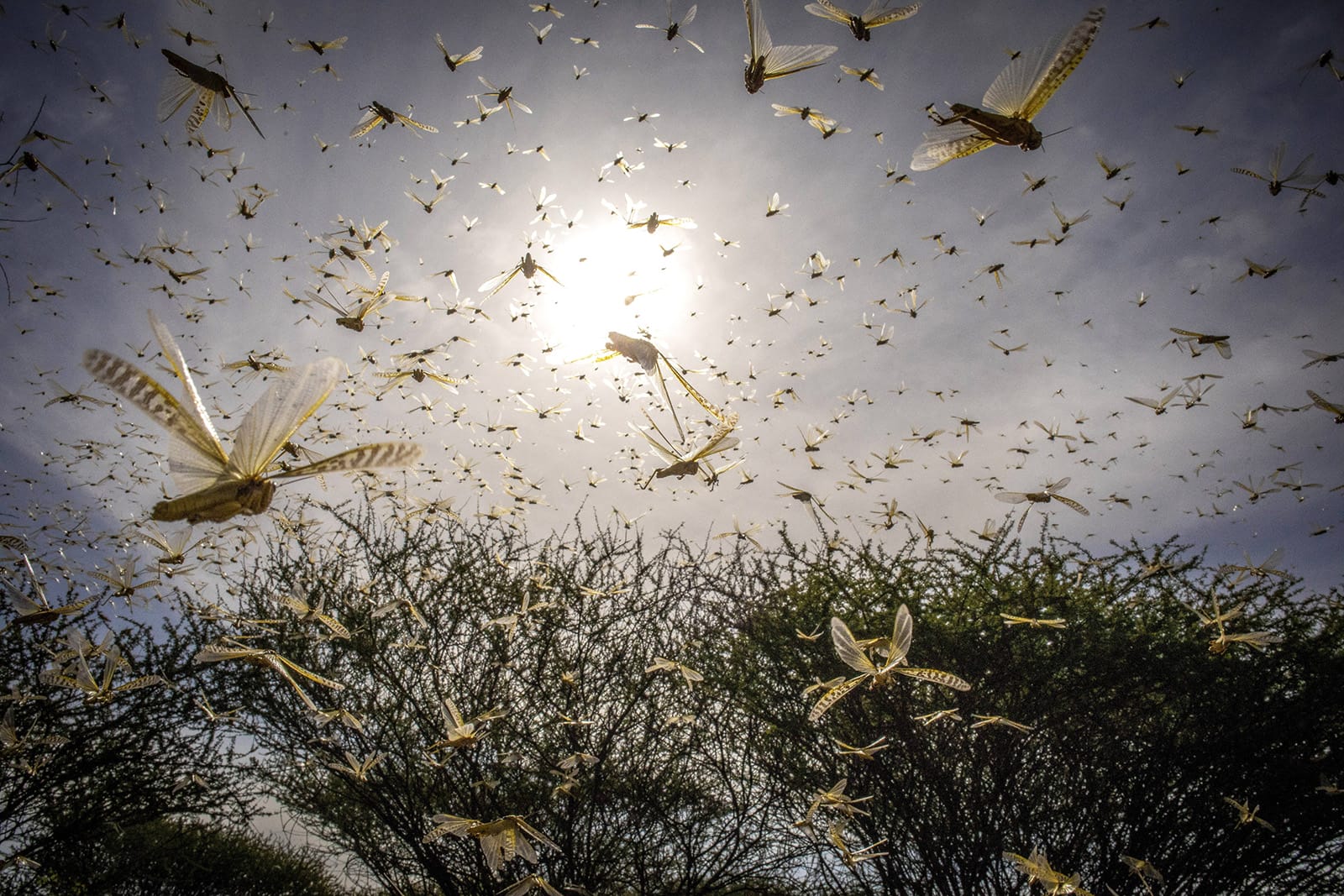
India is once again confronting a serious biological threat in the form of desert locust swarms, historically among the most destructive migratory pests to afflict the region’s agriculture. If left unchecked, these locusts can decimate entire fields within hours, triggering severe food shortages and economic instability—particularly in the agrarian belt. Alarm bells are ringing as favourable climatic conditions—including prolonged rainfall, warmer-than-usual temperatures, and cyclonic activity in the Arabian Sea—have created ideal breeding grounds for these pests in parts of Pakistan and Iran. Swarms typically migrate into India via Rajasthan, spreading to Gujarat, Madhya Pradesh, Uttar Pradesh, and Maharashtra. This pattern, observed in the past, now threatens to recur with greater intensity, exacerbated by erratic weather patterns driven by climate change.
Farmers in north-western and central India face the risk of extensive crop damage. Locusts consume all vegetation, ravaging standing crops such as wheat, pulses, mustard, vegetables, and fodder. This inflicts direct financial losses on farmers already struggling with rising input costs, unpredictable monsoon distribution, and declining market prices. The scale of destruction is staggering: a single swarm covering a football field-sized area can devour food equivalent to the daily intake of 35,000 people. While the Indian government and local agricultural departments are actively working to mitigate the threat, urgent intervention is critical to prevent significant disruption to the 2025 Kharif season. Regional and national food security now hangs in the balance.
The crisis extends beyond crop destruction. The psychological toll on farmers, who witness months of labour erased overnight, adds another layer to this disaster. Moreover, supply chain disruptions could exacerbate food inflation and scarcity across urban India. What makes the current situation especially alarming is the scale of cross-border locust activity. Reports suggest Pakistan has delayed pesticide spraying in key breeding zones, allowing swarms to mature and migrate across the Thar Desert into India. Whether this inaction is strategic, negligent, or circumstantial remains a pressing concern.
According to Kawach Security and Research, “Heightened preparedness and continuous monitoring are essential, particularly in India, Pakistan, Iran, and African nations—the origin and breeding grounds of locusts.”
Steps for Farmers and Communities: To combat this threat, Indian farmers must remain vigilant. Daily field inspections during early mornings and late evenings—when locusts are most active—are crucial. Signs of infestation, such as damaged leaves, droppings, or visible swarm movement, should be reported immediately to local agricultural officers or via Ministry of Agriculture helplines.
Community-led action is more effective than individual efforts. Collective spraying, along with natural deterrents like loud noises, smoke, and biopesticides (e.g., neem oil), can serve as first-line defences. Farmers in high-risk zones are advised to reduce the area of newly sown crops and stagger planting cycles where feasible to minimise losses.
Government and Policy Measures: At the governmental level, central and state administrations must ensure uninterrupted supplies of pesticides, tractor-mounted sprayers, and drone units to vulnerable districts. Pre-positioning equipment and personnel is vital, particularly in Rajasthan, Gujarat, and Madhya Pradesh. Early warning systems—leveraging satellite data and locust trajectory modelling—should be activated, with daily briefings disseminated to affected regions.
Training block-level agricultural officers and gram panchayats in locust identification and response management is equally critical. The Ministry of Home Affairs and Ministry of Defence may need to deploy aerial control teams for rapid intervention in inaccessible areas. Streamlining compensation mechanisms for affected farmers will also be essential to prevent delays and reinforce trust in state institutions.
Regional Coordination and Communication: India must seize this opportunity to strengthen regional cooperation. The National Remote Sensing Centre (NRSC) and the Indian Meteorological Department (IMD) should enhance locust modelling efforts in collaboration with the FAO’s Desert Locust Information Service. Diplomatic pressure on neighbouring countries is imperative to ensure timely action, as cross-border locust activity now constitutes a regional security issue.
At the grassroots level, communication channels—including community radio, WhatsApp groups, and mobile alerts—must be leveraged to provide real-time updates on swarm movements, control measures, and weather advisories.
A National Priority: The 2025 locust threat cannot be dismissed as a routine agricultural nuisance. It is a biological security challenge with dire implications for food sovereignty, rural livelihoods, and inter-state coordination. This is not merely a farmer’s crisis—it is a national emergency.
India’s response will be measured not just by its speed, but by its inclusivity, scientific rigour, and preparedness. While locusts may cross borders, India’s defence must emerge from every panchayat. Awareness, science, and solidarity must guide the nation through this looming storm.