






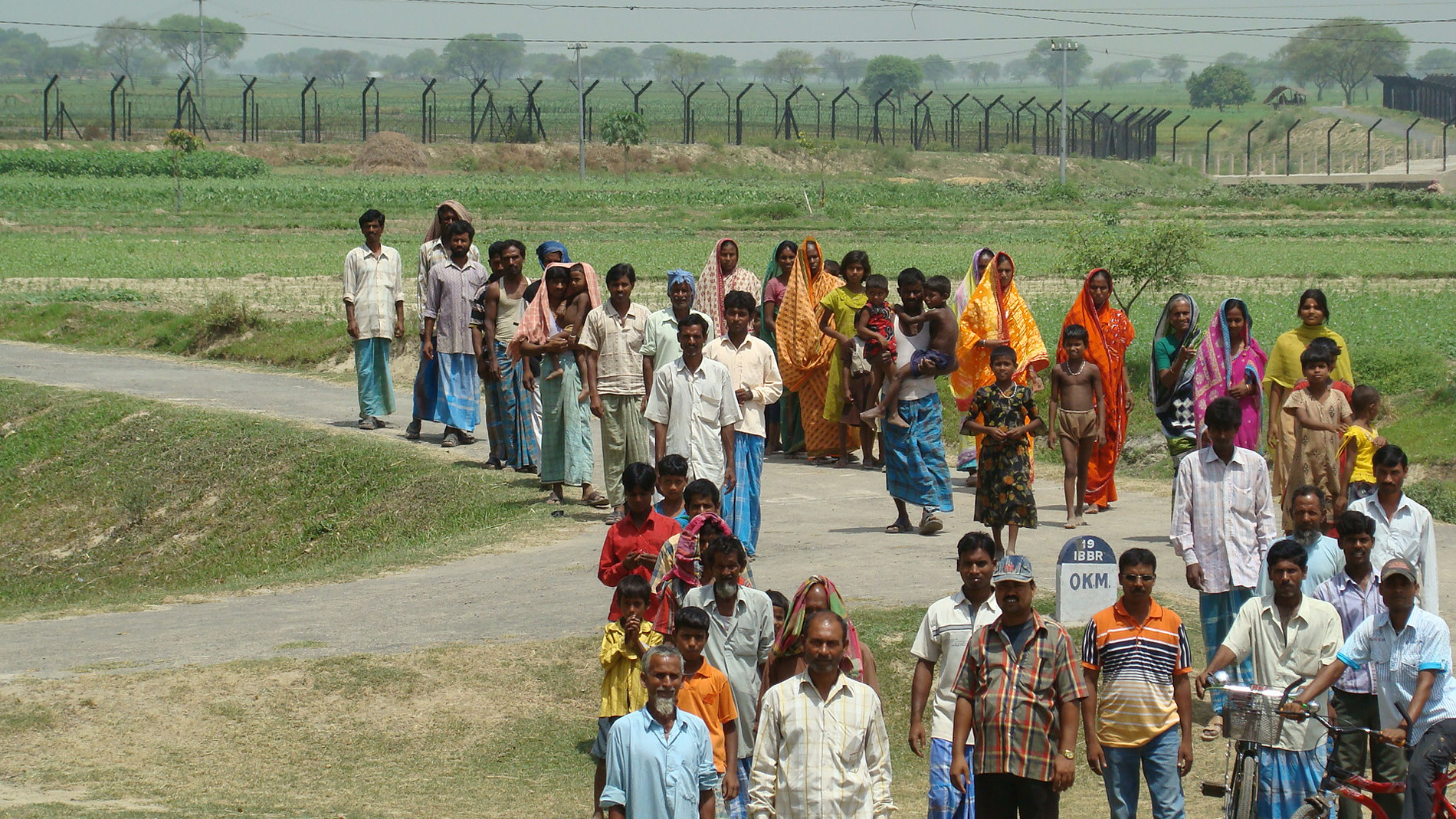
West Bengal, bordering Bangladesh, is India’s most compromised frontier
The morning sun casts long shadows over the paddy fields of Murshidabad in West Bengal, where the only sign of an international border is a weathered Border Security Force (BSF) post. Here, in the soft soil of West Bengal’s frontier, a war of stealth is being waged against the very idea of India. It is not fought with artillery, but with fake voter IDs, suitcases of hawala cash and a curriculum of hate taught to children in clandestine seminaries. Over the past decade, a toxic confluence of unchecked infiltration, state-sponsored appeasement and brazen terror financing has transformed this cultural heartland into the nation’s most vulnerable soft spot, a geopolitical tinderbox waiting to explode.
The scale of the demographic alteration in West Bengal is staggering. According to a 2024 affidavit filed by the Ministry of Home Affairs (MHA) in the Supreme Court, over 20 lakh illegal Bangladeshi migrants have settled in Bengal, with the highest concentrations in the border districts of Malda, Murshidabad, and North 24 Parganas.
A BSF constable, his face etched with fatigue, confides near the Mahadipur border outpost, “You see them every night, slipping through the river channels. We catch a few, but for every one we apprehend, ten get through. And when we do make arrests, local political leaders arrive within hours, pressuring us to let them go.” This is not a mere anecdote. A 2023 RTI reply from the BSF revealed that while 28,450 illegal migrants were caught between 2020 and 2024, the actual number who evaded capture is estimated to be five to ten times higher, a direct result of alleged non-cooperation from local authorities.
The electoral implications of this influx are profound and deeply alarming. The Election Commission’s 2023 report identified over 60,000 fake voters in Muslim-dominated constituencies, with documentation often allegedly facilitated by local Trinamool Congress (TMC) leaders. This systematic voter fraud has fundamentally shifted the political landscape, making a significant portion of the state’s electorate a direct product of illegal immigration.
Beneath this human tide flows the lifeblood of extremism: terror financing. In the labyrinthine lanes of Kolkata’s Burrabazar, the hawala trade thrives with impunity. “Sending a crore to Bangladesh is as easy as sending a text message,” boasts a money changer, his confidence underscoring a broken system. The numbers bear out his bravado.
The RBI’s Financial Intelligence Unit flagged 4,372 suspicious transactions in Bengal between 2020-2023, the highest in eastern India. RTI documents show that ₹850 crore linked to terror financing was seized by the Enforcement Directorate (ED) in the same period. A 2024 ED probe uncovered a ₹200 crore hawala network funnelling Gulf money to radical madrassas, with the trail leading to Qatar-based NGOs and disturbingly, to bank accounts held by TMC-affiliated “social welfare” groups.
This illicit wealth fuels the engine of radicalisation in unregulated madrassas. An RTI reply from the West Bengal Minority Affairs Ministry delivered a bombshell: of 6,500 madrassas in the state, only 2,100 are registered. The rest operate in a legal vacuum, many teaching a curriculum that includes jihadist ideology. In the narrow bylanes of Beldanga, Murshidabad, a teacher at the Darul Uloom Rahmania madrassa, guarded by local toughs, proudly shows books with chapters on what he terms “kafir management”. When asked about police scrutiny, he laughs, “Didi (Chief Minister Mamata Banerjee) protects us. Police never come here.” His confidence is chillingly well-placed. The National Investigation Agency’s (NIA) 2021 raid on a Malda madrassa revealed Al-Qaeda in the Indian Subcontinent (AQIS) recruitment materials. In 2023, the Assam Police’s CID dossier identified Bengal madrassas as recruitment hubs for ISIS.
Mamata government’s role has evolved from passive negligence to active complicity. The MHA’s 2024 RTI reply confirmed 11 instances since 2019 in which the Bengal Police obstructed NIA operations. When the NIA arrested a cleric in Murshidabad in 2024 for running an AQIS module, the chief minister called it a “political witch hunt.” The CM’s 2024 speech at Furfura Sharif, where she praised controversial cleric Abbas Siddiqui, whose NGO received ₹50 crore in foreign donations with no clarity on its usage, was a blatant dog-whistle to Islamist elements. This political patronage creates an ecosystem where subversion flourishes.
A senior BSF officer at the Petrapole border confesses, “We’ve stopped reporting a majority of infiltrations because the state police either don’t act or tip off the traffickers.” The frustration within central agencies is palpable. Former NIA DIG Alok Mittal had stated, “West Bengal is the only state where we need central forces to protect us from local police during raids.”
The volatile situation in neighbouring Bangladesh, with its own simmering Islamist insurgency, has turned this internal crisis into a dire national security threat. As ISI activities in close league with Bangladeshi terror outfits like the Jamaat-ul-Mujahideen Bangladesh (JMB) increase, the radical activities find a safe haven across the border in West Bengal’s permissive environment. The Assam CID’s 2022 dossier explicitly warned that Rohingya camps in Bengal are being used as launchpads for cross-border crime, with links to ISI.
As evening descends on Malda’s English Bazaar, the call to prayer echoes from loudspeakers, drowning out the melodies from a nearby Hindu temple. The signs of a profound transformation are everywhere. The parallels with pre-1990 Kashmir are no longer speculative; they are a clear and present warning. Unchecked radicalisation, state-sponsored obstruction of counter-terror ops and deliberate demographic shifts are creating a perfect storm. If India does not act with decisive force, it may become India’s gravest strategic failure since Independence. The time bomb is not ticking; it is already beeping, and the countdown is nearing its end.
(Bikash C Paul is a Delhi-based journalist. He is executive editor, New Delhi Post)


