

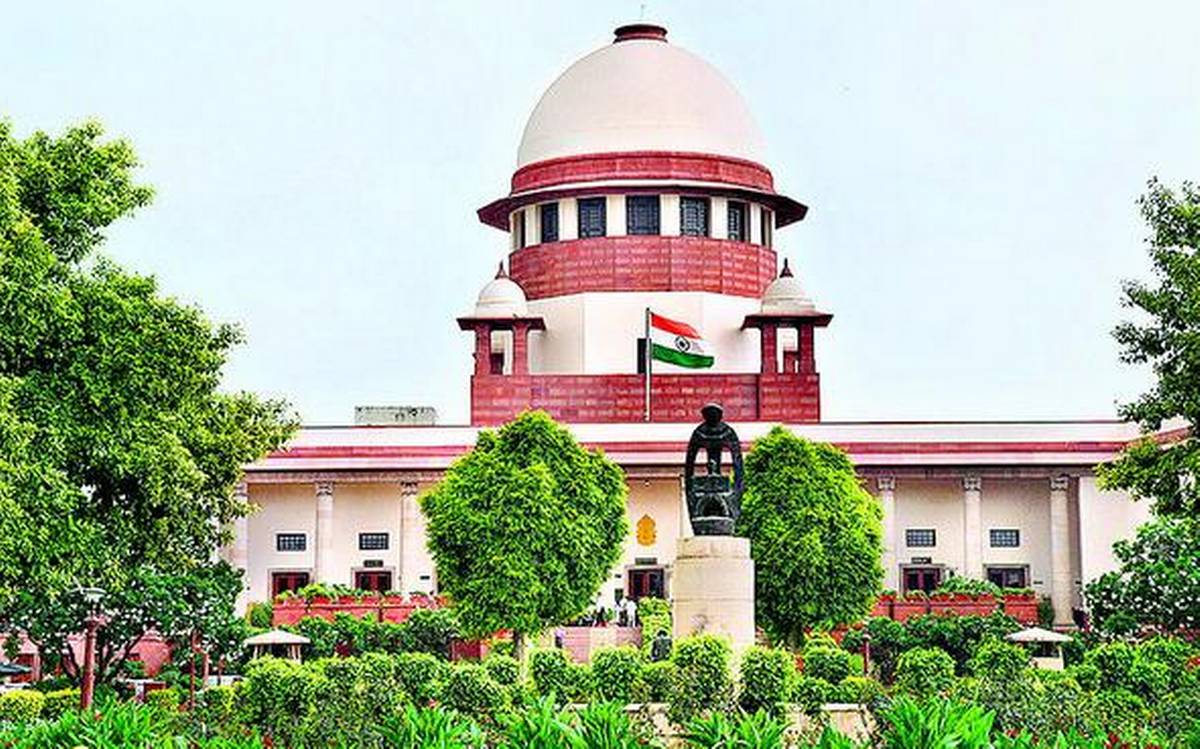
For most Indians, access to justice has long been shaped by geography. Courts remain physically distant, litigation is costly, and repeated appearances impose heavy social and economic burdens. For a daily wage worker, a senior citizen, or a litigant from a remote district, the courthouse often feels less like a constitutional right and more like an obstacle course.
The Supreme Court’s sustained move toward virtual hearings and digital court processes is transforming this reality. What began as an emergency response during the Covid-19 pandemic is evolving into a structural shift in how justice is delivered—and, crucially, who can access it. This is not merely a question of convenience. It is a question of constitutional access to justice.
Technology and Due Process
The notion that justice must always be delivered physically inside a courtroom is not constitutionally mandated. More than two decades ago, the Supreme Court recognised that procedure must adapt to technological change.
In State of Maharashtra v. Dr Praful B. Desai (2003), the Court upheld the recording of evidence through video conferencing, holding that “presence” in law does not necessarily mean physical presence in the same room. What matters are fairness, opportunity to participate, and judicial control, not bricks and mortar. This judgment laid the groundwork for today’s virtual courts. The principle is clear: technology is constitutionally permissible when it advances justice rather than impairs it.
From Pandemic Necessity to Institutional Reform
The pandemic forced courts to confront an uncomfortable truth—without technology, justice could simply stop. The Supreme Court responded by institutionalising virtual hearings across the judicial system.
In Re: Guidelines for Court Functioning Through Video Conferencing During the Covid-19 Pandemic (2020), the Court formally recognised video conferencing as a valid mode of judicial functioning and explicitly linked access to courts with Article 21 of the Constitution. The message was unmistakable: when physical access becomes impossible, procedural innovation is not optional, it is constitutionally required.
Significantly, the Court did not treat virtual hearings as a temporary compromise. It acknowledged their continued relevance beyond the pandemic, signalling a long-term shift toward hybrid justice.
Why Virtual Courts Matter for Ordinary Litigants
The most profound impact of digital courts is felt not in metropolitan legal circles, but far beyond them. Virtual hearings reduce the historic advantage enjoyed by lawyers and litigants based in Delhi and other major cities. A litigant from a small town can now appear before the Supreme Court without travelling hundreds of kilometres, arranging accommodation, or losing multiple days of work.
For senior citizens, persons with disabilities, women litigants with caregiving responsibilities, and economically weaker sections, this shift translates into real access, not merely theoretical availability. Litigation costs fall. Participation increases. Dignity is preserved.
In a country as vast as India, this represents a democratisation of justice.
Transparency and the Open Court Principle
Digital justice is not only about access, it is also about transparency. Online cause lists, digitally available orders, and virtual proceedings reduce opacity and discretion. This aligns with the Supreme Court’s articulation of open justice in Swapnil Tripathi v. Supreme Court of India (2018), where the Court held that live streaming of proceedings strengthens transparency, accountability, and public confidence in the judiciary. Technology, the Court recognised, can deepen democracy by allowing citizens to see justice being done. Virtual courts thus serve both efficiency and constitutional legitimacy.
Limits of Digital Push
Justice remains a human process, not a software application. While technology has expanded access and efficiency, certain proceedings—such as criminal trials involving witness credibility, sensitive family disputes, or cases requiring a detailed appreciation of evidence—continue to demand physical hearings. Connectivity constraints, digital illiteracy, and uneven infrastructure also raise concerns of exclusion.
Recognising these limits, the Supreme Court’s evolving approach does not seek to replace courtrooms, but to supplement them intelligently. A hybrid model, where courts determine when physical presence is essential and when technology suffices, offers the most balanced path forward.
Challenges and Necessary Safeguards
The legitimacy of digital justice depends on addressing several critical concerns: the digital divide that may exclude vulnerable litigants, uneven technological infrastructure across courts, risks to data protection and confidentiality, and the absence of clear procedural norms for virtual evidence and hearings.
To ensure technology strengthens rather than distorts justice delivery, judicial oversight, standardised protocols, robust cybersecurity safeguards, and continuous training of judges and court staff are indispensable.
Constitutional Moment for the Judiciary
The Supreme Court’s digital justice push represents more than administrative modernisation. It reflects a deeper constitutional insight: justice must travel to the citizen, not the other way around.
By reducing dependence on geography, lowering hidden costs, and widening participation, virtual courts bring the justice system closer to the constitutional promise of equality before the law.
If accompanied by investments in digital infrastructure, training, and safeguards against exclusion, courts in the cloud can ensure that access to justice is no longer determined by where one lives or what one earns.
In that sense, the Supreme Court’s embrace of technology may well prove to be one of the most quietly transformative judicial reforms of our time.
(Aishwarya Srivastava is a technology and corporate lawyer. She is practising in the Supreme Court of India)