


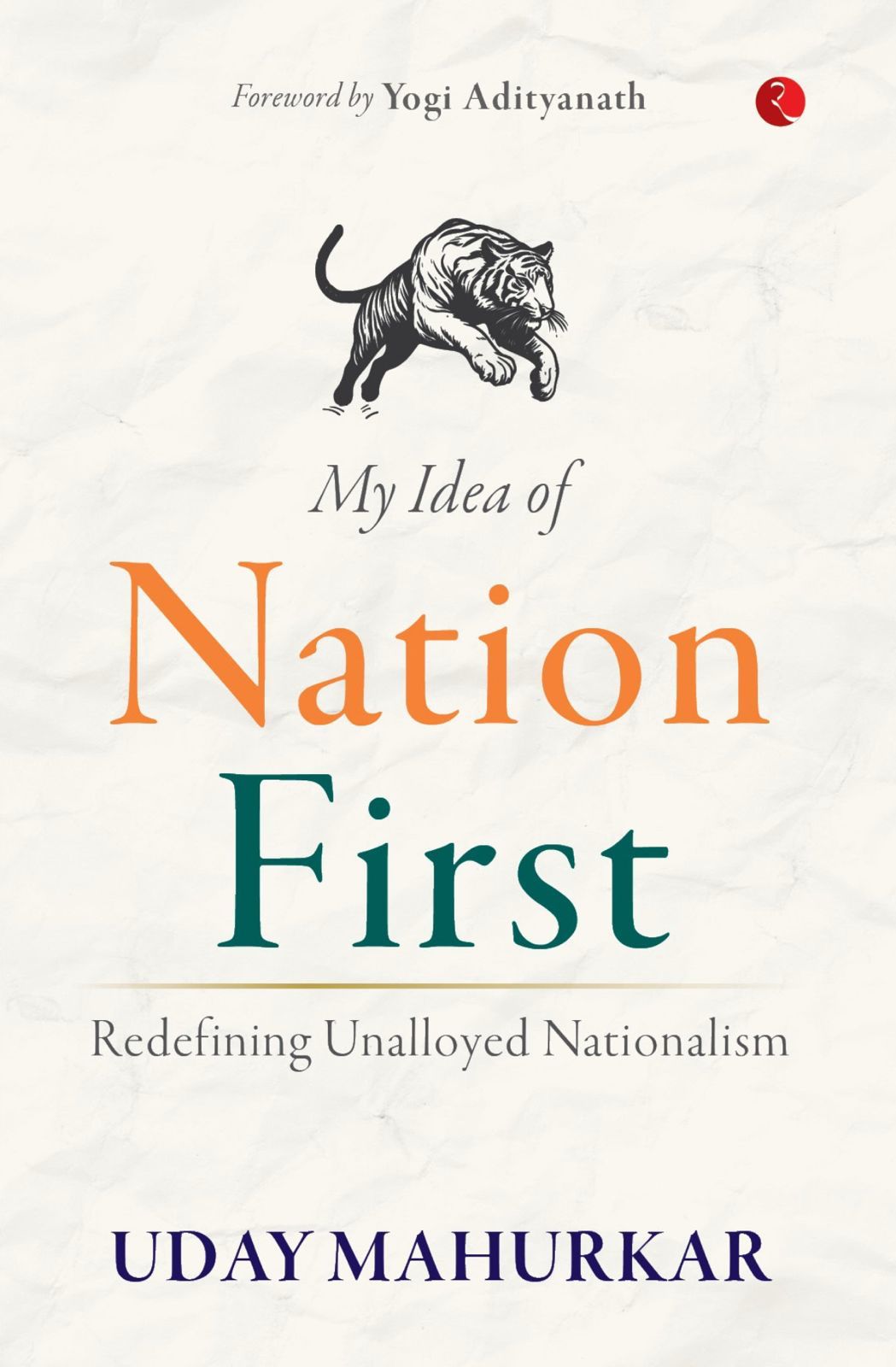
ABOUT THE BOOK
Independent India’s gravest tragedy was the imposition of Muslim appeasement policies under pressure from left-liberal ideologues and pan-Islamist forces. This proved a profound setback for Hindus—the majority community emerging from nearly eight centuries of foreign rule—and entrenched divisive politics. Even B. R. Ambedkar opposed such appeasement, warning that it denied Hindus their civilisational inheritance, including full possession of the Ayodhya, Kashi Vishwanath and Mathura temple sites.
My Idea of Nation First offers a forthright nationalist reading of these questions, examining several contentious episodes in modern Indian history. While it identifies and warns against internal and external threats, the book also gives due space to genuinely moderate minorities, in keeping with the original and frequently misrepresented thought of Veer Savarkar.
My Idea of Nation First is a case for unalloyed nationalism—true nation-first thinking. It seeks to correct historical distortions through a nationalist yet dispassionate lens. Read as a series of original reflections aimed at national awakening, the book is anchored in intellectual honesty, with truthfulness as the central pillar of every chapter.
EXCERPTS
OF EQUAL COMPARISONS: SHIVAJI, SAVARKAR AND BHAGAT SINGH
In March 1675, when the Mughals and Marathas were locked in a bloody war, Chhatrapati Shivaji wrote to the Mughal viceroy of Deccan, Bahadur Khan, praying that he was fed up of constant war, apologized for his past actions against the Mughals and requested cessation of hostilities while seeking certain privileges. Shivaji wrote the letter as part of his strategy to get reprieve from war and allow himself time to replenish his military strength. However, Bahadur Khan, who was already worn out by Shivaji’s brilliant battle strategy, jumped at the offer, instead of examining it carefully and convinced Mughal emperor Aurangzeb to accept it. But Bahadur Khan took five months to send the reply to Shivaji.
By that time, Shivaji had replenished his military strength. And so when two Mughal envoys, including a Gujarati named Gangaram Gujarati, reached Shivaji’s capital Raigadh to convey that his proposal had been accepted, the Maratha hero threw off the mask. He hosted the envoys with warmth but dismissed them saying, ‘What pressure have you brought on me, for me to seek peace with you?’14 This masterstroke of Shivaji, who had experienced Aurangzeb’s treachery at Agra nine years earlier, left the Mughal emperor and his viceroy mortified.
But this wasn’t Shivaji’s first apology letter to the Mughals. He had written two such letters to Aurangzeb earlier. He wrote the first one in 1658 when Aurangzeb was the viceroy of Deccan during his father Shah Jahan’s reign. It said: ‘Please pardon my offences. I shall loyally serve the Mughal empire.’ To this apology letter Aurangzeb wrote: ‘Though your offence doesn’t deserve pardon, I draw the pen of forgiveness across the pages of your crimes as you have repented. Needless to say, Shivaji was at war with the Mughals within just two years after this apology. Clearly, Shivaji’s apology was part of a larger game plan, which was emancipation of the motherland from the clutches of the Muslim invaders. Interestingly, Shivaji saw Aurangzeb as treacherous and a fanatic and considered committing treachery with Aurangzeb a fair game. Aurangzeb had become infamous as an Islamic fanatic when he demolished the Chintamani Jain temple in Ahmedabad in 1645 and slaughtered a cow there before converting the temple into a mosque. The temple was later restored by Aurangzeb’s elder brother Dara Shikoh.
So, the ploy of the leftists to compare Veer Savarkar’s apology letter to the British during his rigorous imprisonment in the Cellular Jail in the Andamans between 1910 and 1920 with Bhagat Singh’s refusal to seek mercy after being sentenced to death in the John Saunders murder case is totally misplaced. It betrays the intent of today’s pseudo-lefitsts and the pseudo-secular parties use one yardstick for Savarkar and another for others, including Mahatma Gandhi. Savarkar was Gandhiji’s greatest ideological adversary.
While Gandhiji’s ideology of complete non-violence and a self- defeating brand of truthfulness proved inimical to India’s national security, Savarkar was the father of India’s national security vision. All his warnings regarding India’s national security—threats from China and Pakistan as well as insurgencies in the Northeast—have come true today.
So, how can a Gandhian value system, which in large parts has been harmful to India’s national security, be applied to Savarkar while evaluating his action of tendering apology to the British? Obviously, the act has to be examined with Shivaji’s tools.
ABOUT THE AUTHOR
Uday Mahurkar is a well-known author, veteran journalist and nationalist thinker with a sharp focus on India’s most contentious issues. He has authored three widely read books—two examining the governance model of Prime Minister Narendra Modi, and one on Veer Savarkar’s vision of national security.
A former Central Information Commissioner, Mahurkar is widely recognised for his expertise on Savarkar’s thought, Hindu–Muslim relations, radical Islamic ideology, governance reforms, and the correction of distorted history. He currently leads a nationwide campaign through the Save Culture Save Bharat Foundation, addressing the cultural impact of perverted content proliferating across OTT platforms and social media.
