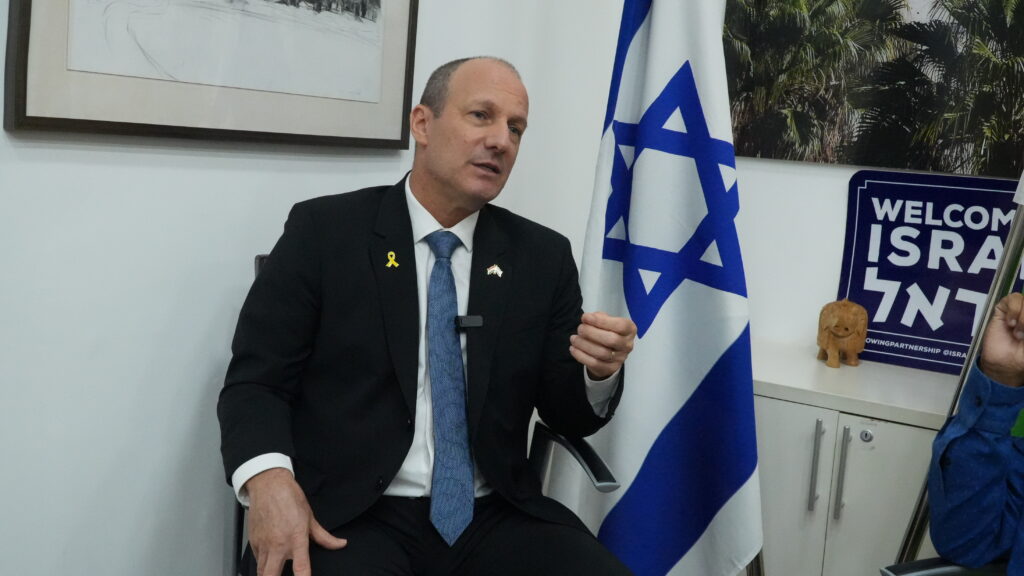






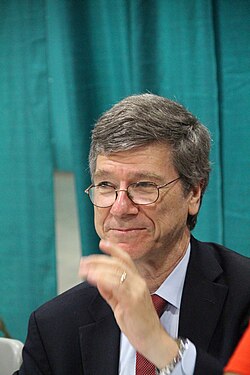
Professor Jeffrey Sachs, one of the world’s most influential economists and public intellectuals, has long been a fierce critic of US foreign and economic policy. In this exclusive interview with Bikash C Paul, Prof Sachs dissects President Donald Trump’s 50% tariff on India—denounced in New Delhi as “selective, unfair and unjustified”. Far from projecting strength, he argues, the move exposes America’s decline, frays bilateral trust and hastens a multipolar world where India and China shape the global order. Excerpts:
Q: How do you assess Trump’s move of a 50% tariff on India in terms of both economic coercion and its effect on bilateral trust?
Trump’s moves will fail as coercion and will destroy bilateral trust. Trump repeatedly says that America “holds all the cards”. He is wrong. America is isolating itself, while India is deepening its relations with the rest of the world. Trump is wrecking America.
Q: Narendra Modi’s government has vehemently described these tariffs as “selective, unfair and unjustified”, asserting India’s strategic autonomy in managing energy and trade. What are the implications of such a public rejection of US pressure for the future of the bilateral relationship?
I have always tried to explain to my dear Indian friends and colleagues that the US government could not be trusted. Many did not quite believe me. Now they do. The bilateral relationship will not be trusting because the US is not trustworthy. India should not participate in organizations such as the Quad, which are US attempts to use India to harm China. Instead, India and China should work together to make a truly multipolar and multilateral world operating under the UN Charter. I strongly advocate that China should back India as the sixth permanent member of the UN Security Council.
Q: Economic analysts suggest that sustained high tariffs—especially up to 50%—could derail India’s export competitiveness and shave off 0.3–0.8 percentage points of GDP growth. How might India mitigate this setback, and what policy buffers could Washington have glibly ignored?
India’s growth could be affected adversely in the short term, but India will recover its rapid growth in the medium term by diversifying its exports and export partners. I suggest that India should join the Regional Comprehensive Economic Partnership (RCEP), which currently includes China, Japan, Korea, ASEAN, Australia, and New Zealand. This is a fast-growing group. India’s membership would be a win-win for India and for the existing 15 members of RCEP.
Q: Analysts note a growing convergence among India, China, and Russia—comprising nearly a third of global GDP and $5 trillion in exports—suggesting a shift toward multipolar economic blocs. Is this strategic realignment a direct byproduct of US policy miscalculations? If India deepens economic collaboration with China and Russia, what red lines might the US still rely on to retain influence?
In part, the US is driving the BRICS more closely together, that is certain. But more deeply, the BRICS is simply a good idea whose time has come. Today’s emerging economies, including India, China, Russia and others, constitute the fast-growing part of the world economy. The Western countries, including the US, UK, and EU are all slow-growing and increasingly protectionist.
Q: Observers argue that Trump’s “America First” modus operandi—prioritizing raw transaction and leverage over alliances—risks eroding trust and undermining durable global partnerships. To what extent does this approach damage America’s soft power and its ability to build lasting strategic coalitions?
America has some soft power remaining, notably the global use of the English language, the dominance over international payments and settlements, US military exports, some advanced technologies, and around 750 overseas military bases. Yet all of these (with the possible partial exception of language) are diminishing in importance. We will soon have a multicurrency system, within a decade. US military dominance is also rapidly diminishing. China, India, and others are narrowing, if not eliminating, the gap in many key technologies and in R&D. And many of the US overseas military bases will close, partly because of cost, and partly because the host countries no longer want them.
Q: Tariffs have been elevated into geopolitical weapons—replacing traditional diplomacy as instruments of coercion. Are economic sanctions and trade penalties effective substitutes for statecraft, or do they backfire in the long run?
They are already backfiring. The US has no long-term monopoly on international payments and trade. The US is simply not nearly as powerful as Trump imagines.
Q: As America turns its back on strategic partners like India to extract short-term gains, how might the US’s own regional standing—particularly in Asia—begin to deteriorate over time? What corrective measures should future US leaders consider?
I have long believed that India should have closer relations with China, and that Japan and Korea should also mend relations with China and not count on the US security umbrella or even to want it. It’s not necessary. China is not going to invade Japan or Korea. I think that events are moving rather quickly in the direction of Asian political, economic, and infrastructure integration. Which leaders could or would possibly entrust their nations’ security to the US at this stage?
Q: You mention long-term damage to alliances—could you share examples where such breakdowns played out geopolitically? How might the US reclaim moral and economic leadership after this period of transactional excess?
The US turmoil will last for many years, perhaps a decade or even more. Our current circumstances remind me a bit of China’s Cultural Revolution of the 1960s, which set China back in education, technology and economy for many years. The US will not reclaim global leadership. Multipolarity is a fact. The US could, however, reclaim good standing in the international community by behaving properly, honoring international law, participating in the UN, and respecting its counterparts. All of that is feasible, but it may take years to happen. Trump is of a very different mindset.