



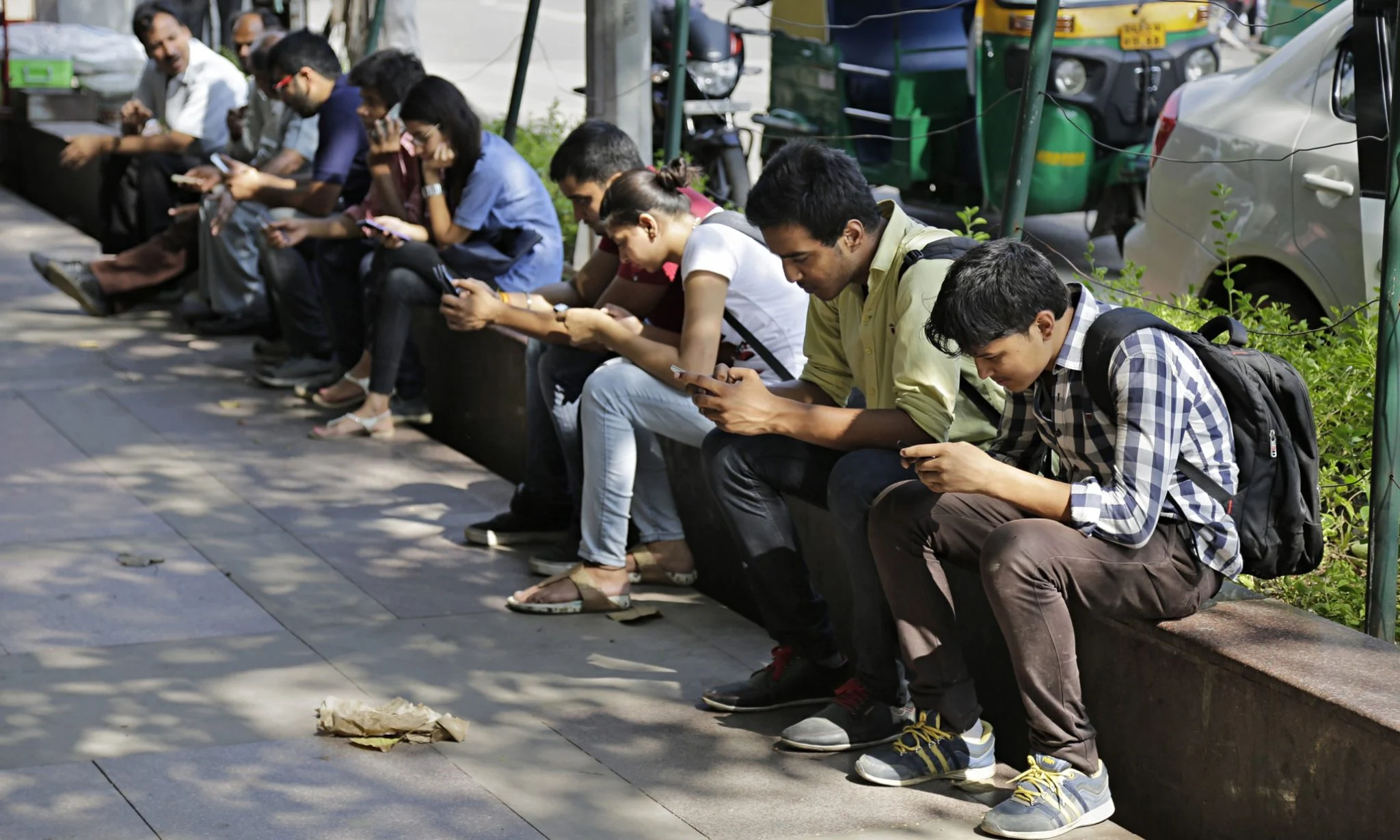
At 6.30 am in a Mumbai apartment, five-year-old Aarav wakes up crying. His grandmother reaches instinctively, not for a hug or a lullaby, but for a smartphone. A cartoon lights up the screen. Aarav stops crying immediately, eyes fixed, fingers still. Breakfast will happen the same way. So will lunch. By the time Aarav reaches school age, screens may already feel safer than people.
This is not a rare story. It is unfolding quietly in millions of Indian homes.
Is this addiction, or just modern life?
We hesitate to call it a disease. Everyone uses phones: parents, teachers, doctors and office workers. But addiction is not defined by what we use; it is defined by loss of control, harm, and the inability to stop despite clear consequences.
Medicine already recognises certain behavioural addictions. The World Health Organization has included gaming disorder in its international classification. Smartphone addiction, though not formally labelled, shows similar patterns: compulsive use, withdrawal-like irritability, sleep loss, declining performance, and emotional dependence. The terminology matters less than the damage caused.
Childhood: when screens displace development
In a paediatric clinic in Bengaluru, a mother worries that her three-year-old “does not talk much” and “does not listen”. Gentle questioning reveals nearly four hours a day of mobile videos, used to keep the child calm while adults manage work and household demands.
Early childhood is when the brain develops language, attention, emotional regulation, and social skills. These abilities grow through eye contact, conversation, play, and even boredom. Screens cannot substitute these experiences.
Excessive screen exposure in young children has been associated with disturbed sleep, reduced attention span, delayed language development, and poorer social interaction. Indian and global paediatric bodies recommend no screen exposure below two years of age and strict limits thereafter. In practice, many Indian children exceed these limits every day.
The loss is quiet and cumulative. There is no sudden emergency, only a gradual erosion of healthy brain development.
Adolescents: constantly connected, increasingly isolated
Sixteen-year-old Riya from Pune was once a confident student. During the pandemic, her phone became her classroom, her social life, and her escape. Even after schools reopened, the habit persisted. She now sleeps after 2 am, scrolling endlessly. Her grades have slipped. She becomes irritable when her phone is taken away.
Adolescent brains are especially vulnerable. Reward systems mature earlier than self-control mechanisms. Social media, gaming, and short videos deliver instant gratification with minimal effort. In India’s high-pressure academic and social environment, the phone becomes an easy refuge from stress and expectation.
Indian studies show that a substantial proportion of adolescents demonstrate problematic smartphone use, associated with anxiety, low mood, poor sleep, academic decline, and increased exposure to cyberbullying and online stress.
Adults: efficient in theory, distracted in practice
At night in Gurugram, Rajiv sits at dinner with his family. His phone vibrates constantly, work messages, news alerts, social updates. Conversation thins out. Meals fall silent.
Adults often mistake constant connectivity for productivity. In reality, frequent phone interruptions fragment attention, impair memory, disrupt sleep, and increase stress. Indian research links excessive smartphone use in adults with sedentary behaviour, obesity, anxiety, and burnout.
The device that promised efficiency often weakens focus and emotional presence.
When does normal use become a problem?
Warning signs include repeated failed attempts to cut down usage, sleep loss, decline in work or academic performance, irritability when the phone is unavailable, neglect of physical activity or relationships, and risky behaviour such as phone use while driving.
If gaming dominates daily life with clear functional impairment, clinical evaluation for gaming disorder may be necessary.
A growing public health concern
Mobile addiction is emerging as a silent public health issue in India. Early exposure, a large youth population, academic pressure, rapid digital penetration, and limited mental health resources together create a dangerous convergence.
Unchecked, problematic smartphone use risks worsening educational outcomes, increasing mental health burden, accelerating lifestyle diseases, and weakening family bonds.
What helps
Effective responses do not demonise technology. They reintroduce limits and intention.
• Device-free meals and bedrooms
• Phones charged outside sleeping areas
• Clear, age-appropriate boundaries
• Encouragement of sports, reading, music, and outdoor activity
• Adults modelling responsible digital behaviour
Professional help should be sought when excessive use leads to emotional distress, aggression, withdrawal symptoms, or clear functional decline.
A quiet ending
One evening, Aarav’s grandmother tries something different. Instead of a phone, she tells him a story. At first, he fidgets. Then he listens. He smiles. He asks a question. The phone remains untouched on the table.
Mobile addiction is not about devices. It is about attention, connection, and meaning. If these are not protected deliberately, technology will fill the gap, and the price will be paid in lost human potential.
(Dr Anish Desai is a healthcare entrepreneur. He is leading IntelliMed Healthcare Solutions)