

Kamal Dev Bhattarai
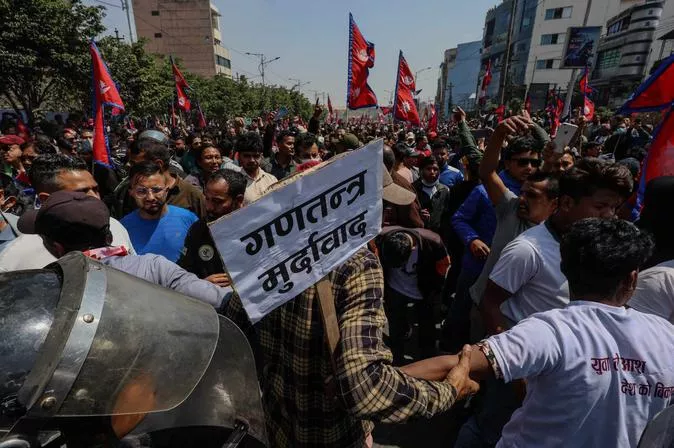
This spring, Nepal witnessed a fresh wave of pro-monarchy demonstrations centered in Kathmandu, marking the most significant royalist mobilization since the country became a republic in 2008. The protests sparked a nationwide debate over monarchy versus republic, revealing a growing polarization in Nepali society.
While royalist protests have occurred before, this time they generated greater momentum and media attention. For the first time, mainstream political parties began sensing a potential threat to the republican order. Khusbu Oli, a central committee member of the Rastriya Prajatantra Party (RPP), the largest royalist party in Parliament, said public dissatisfaction with the republican system is growing. “The economy is stagnant, youth are leaving in search of better opportunities, and political parties are prioritizing narrow interests over national goals,” she argued. Oli believes that restoring the monarchy and Hindu state is the only path to stability and progress.
What distinguishes the current protests from earlier ones is the involvement of a good number of youth and a broader coalition. A ‘People’s Movement Committee,’ led by Panchayat-era veteran Navaraj Subedi, has brought together over 45 fringe political parties and Hindu groups. For the first time, former King Gyanendra Shah took an active role, offering both political and financial backing, and even issuing video appeals in support of the movement.
The turning point came on March 9, when Gyanendra returned from Pokhara. Around 14,000 people gathered at Tribhuvan International Airport to welcome him, according to police. The symbolic show of support bolstered his confidence, and he began actively guiding the movement. Subedi was chosen to unify the royalist factions. However, tensions emerged within the RPP, as some members resented being sidelined from leadership roles.
The first major rally was held on March 28 under the controversial businessman Durga Prasai. It turned violent, though the cause remains disputed. Royalist groups blamed the police for using force, while authorities claimed protesters initiated the violence. No independent inquiry has been conducted to verify either side’s claims. The incident led to the arrest of senior RPP leaders and many supporters. They are now facing criminal charges, dealing a serious blow to the movement.
Despite the setback, royalist forces regrouped and launched another round of protests starting May 15. Demonstrators from across Nepal converged in Kathmandu, and although the turnout was smaller, the events remained largely peaceful. RPP senior leader Kamal Thapa was briefly detained and released the same day. However, the movement soon lost steam due to poor organization, internal rifts, low public turnout, and the arrival of the monsoon.
The ‘India factor’ also fueled controversy. On March 9, a protester was seen carrying a photo of Yogi Adityanath, sparking speculation about Indian backing for the movement. Leaders of ruling parties voiced suspicions, given India’s dissatisfaction with Nepal’s 2015 constitution. Nepal’s Foreign Minister Arzu Rana Deuba raised the issue directly with Indian counterpart S Jaishankar during the Raisina Dialogue in New Delhi, receiving a firm denial. Nepal’s Ambassador to India Shankar Sharma later met Adityanath to seek clarification, which he also denied. Despite denials, Gyanendra and Adityanath share a long-standing personal connection, and some Hindu groups affiliated with India’s BJP reportedly support Nepal’s Hindu movement.
At present, the royalist movement is on hold. “Launching the decisive phase of our movement just before the monsoon was a strategic mistake,” conceded RPP spokesperson Mohan Shrestha. “But the turnout this year gave us hope. Once the monsoon ends, we will return with full force.”
Royalist leaders now say they are not seeking a return to absolute monarchy. Instead, they advocate for a ceremonial monarchy reinstated through peaceful negotiations with major political parties—a proposal that may continue to stir debate in Nepal’s fragile democracy.