


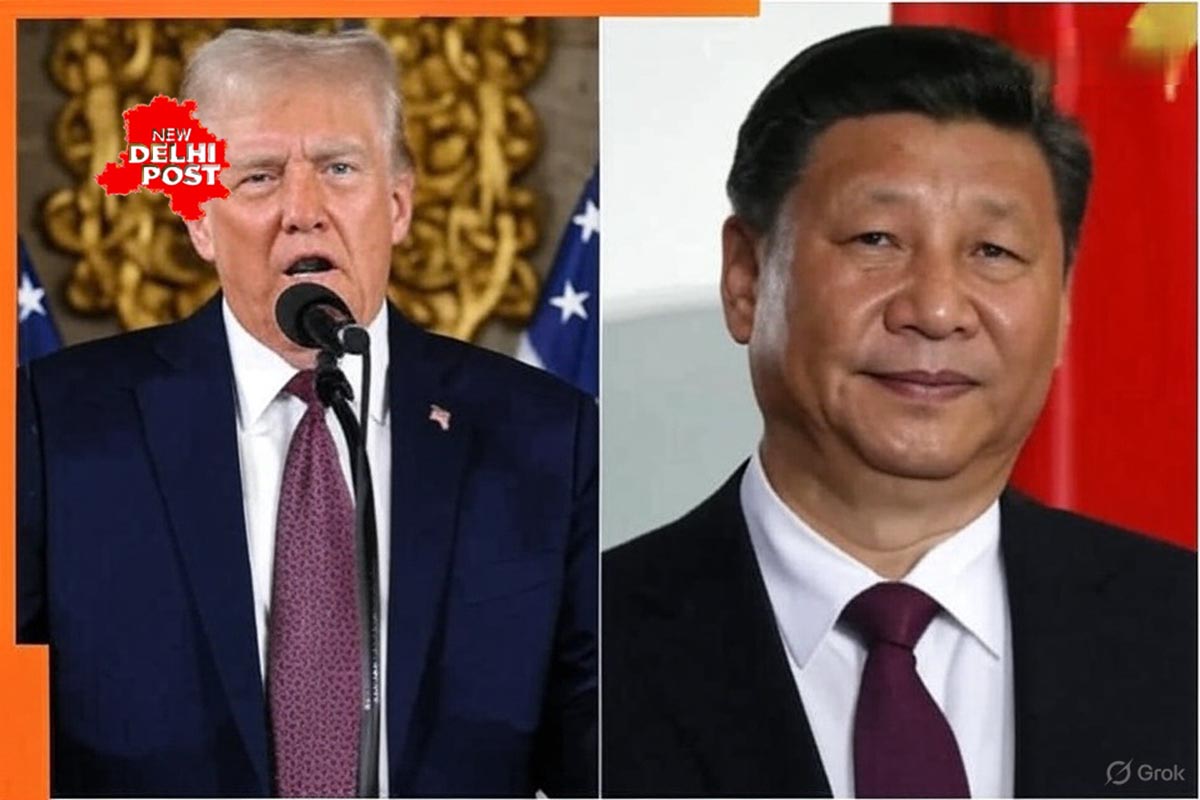
India’s ambitious India-Middle East-Europe Economic Corridor (IMEC) could propel it to global dominance, challenging China and attracting U.S. and European support.
New Delhi – India is poised to become the world’s leading superpower if the India-Middle East-Europe Economic Corridor (IMEC) succeeds, a project unveiled at the G20 Summit in September 2023. Amid tensions with Pakistan and China, IMEC aims to establish India as a pivotal trade and connectivity hub linking Asia, the Middle East, and Europe, potentially outpacing rivals and reshaping global dynamics.
Strategic Vision of IMEC
IMEC integrates railways, ports, highways, energy networks, and digital infrastructure, with an estimated $600 billion investment under a public-private partnership (PPP) model. The corridor features an east corridor connecting India to the Gulf and a northern corridor linking the Gulf to Europe via a ship-rail transit network. Foreign Ministry Secretary Dammu Ravi hailed it as a “game-changer,” promising enhanced trade, investment, and connectivity, while Shishir Priyadarshi of the Chintan Research Foundation emphasized private sector engagement as key to its success.
Countering China’s BRI
As China expands its Belt and Road Initiative (BRI) to connect dozens of nations, IMEC emerges as a strategic counterweight. A recent study by the Asian Development Bank suggests IMEC could reduce logistics costs by 30% and transit times by 40%, outpacing BRI efficiency in some routes. The U.S. and Europe back IMEC as a response to China’s expansionism, with India positioned as a critical player. This corridor could secure regional supply chains, generate jobs, and lower emissions, aligning with India’s 2070 net-zero goal.
Geopolitical and Economic Impact
IMEC’s success could elevate India above the U.S. and China, with experts predicting a $47 trillion combined GDP impact across its eight partner nations. A World Bank report highlights India’s potential to become a global supply chain operator, reducing dependence on Chinese manufacturing. Despite Pakistan and China’s efforts to destabilize India through conflicts, IMEC aims to bolster economic resilience, with analysts noting it could shift global trade routes westward, diminishing BRI’s dominance.
Challenges and Opportunities
The project faces hurdles, including geopolitical tensions in the Middle East and funding gaps, but U.S. support and European interest signal momentum. If completed, IMEC could see India hosting a summit by 2030 to formalize its superpower status, with the U.S. and China potentially seeking India’s mediation in trade disputes. A Chintan Research Foundation survey indicates 68% of Indian businesses view IMEC as a catalyst for economic growth, underscoring its transformative potential.
