

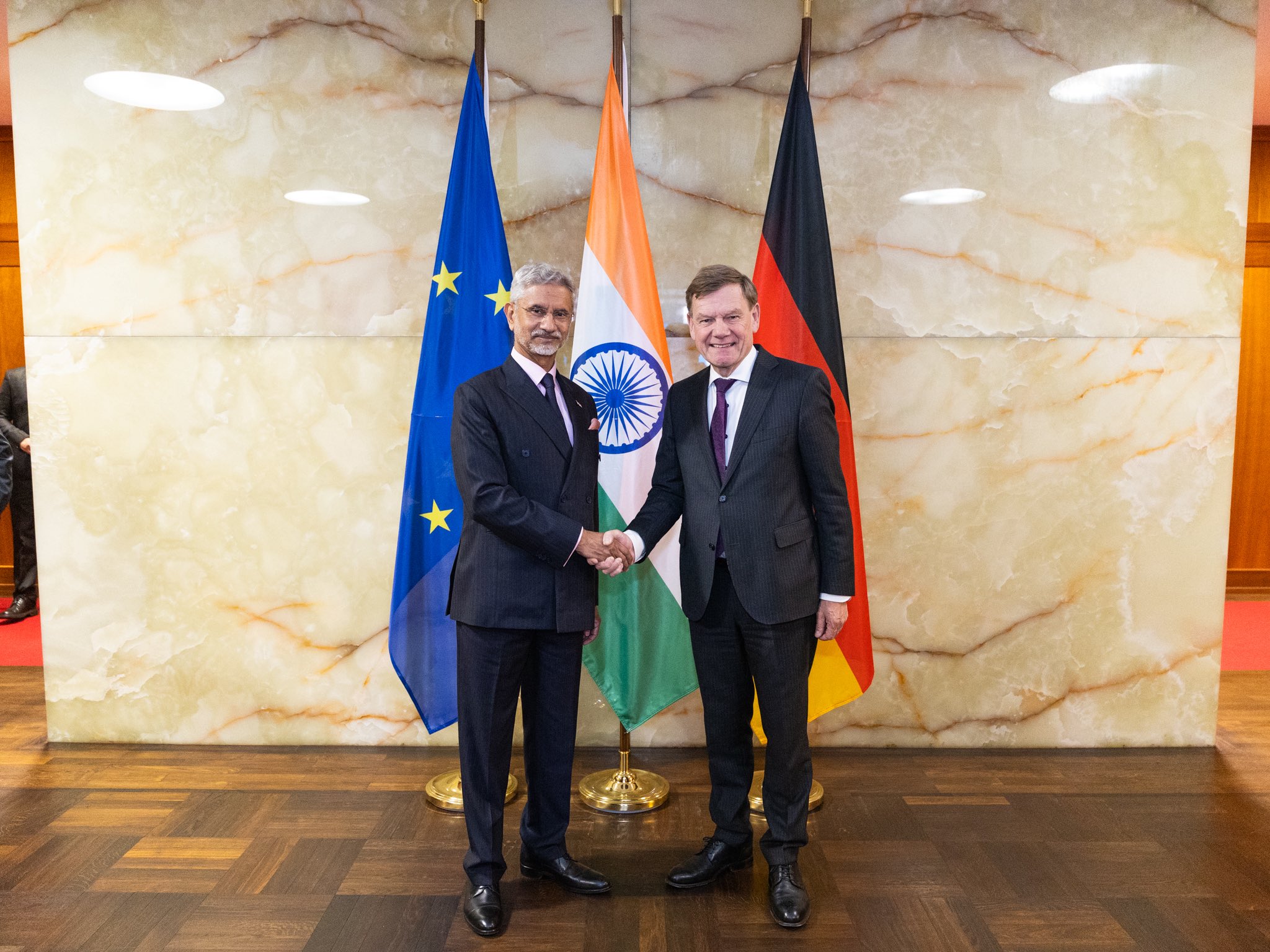
New Delhi: During his visit to Berlin on May 23, 2025, External Affairs Minister S Jaishankar delivered a powerful message, condemning the recent Pahalgam terror attack and reaffirming India’s unwavering stance against terrorism and nuclear blackmail. He emphasized that India will handle all issues with Pakistan bilaterally, rejecting any third-party involvement, while strengthening ties with Germany.
Zero Tolerance for Terrorism
Speaking at a joint press conference with German Foreign Minister Johann Wadephul, Jaishankar declared, “India has zero tolerance for terrorism. India will never give in to nuclear blackmail.” His remarks were in response to the April 22 Pahalgam terror attack in Jammu and Kashmir, which claimed 26 lives and was linked to cross-border terrorism backed by Pakistan. Addressing the German Council, Jaishankar elaborated, “This terrorist attack was meant to create a fear psychosis, destroy the tourism economy of Kashmir, and sow religious discord. Our campaign is against terrorism, and in this case, terrorists happen to be located in the country next door, which has used terrorism as a tool for years.”
Bilateral Approach with Pakistan
Jaishankar firmly stated, “India will deal with Pakistan purely bilaterally. There should be no confusion in any quarter in that regard.” This stance follows India’s Operation Sindoor, launched on May 7, which destroyed nine terror camps in Pakistan-occupied Kashmir through precision strikes. Pakistan’s retaliatory attempts between May 8 and 10 were thwarted by India’s robust air defense systems, leading to a ceasefire on May 10. Prime Minister Narendra Modi has since declared a “new normal,” stating that any future act of cross-border terrorism will be treated as an “act of war,” signaling a tougher policy shift.
Strengthening India-Germany Partnership
Jaishankar’s visit, part of a three-nation tour including the Netherlands and Denmark, focused on deepening the India-Germany Strategic Partnership, which marks its 25th anniversary this year. Germany, India’s largest economic partner in the EU, has seen bilateral trade reach $25 billion in 2024, according to the Federation of Indian Chambers of Commerce and Industry (FICCI). Discussions with German leaders, including Wadephul, Chancellor Friedrich Merz, and Economy Minister Katherina Reiche, centered on expanding cooperation in industry, skilled talent exchange, and supply chain resilience. Germany also expressed support for India’s right to self-defense following the Pahalgam attack.
Push for India-EU Free Trade Agreement
A key highlight was Germany’s backing for a free trade agreement (FTA) between India and the European Union, with both sides aiming to finalize the deal by the end of 2025. The FTA could boost India-EU trade by 30%, potentially adding $100 billion annually to bilateral commerce, per a 2024 study by the European Commission. Jaishankar also met Gunter Sautter, foreign and security policy advisor to Chancellor Merz, and members of the German Parliament, thanking them for their role in strengthening ties.
Global Support and India’s Response
India’s actions have garnered international understanding, with Jaishankar noting, “When we responded, there was a lot of international understanding. We targeted terrorist headquarters and terror sites.” A 2025 report by the Global Counterterrorism Forum indicates that cross-border terrorism from Pakistan has cost India over 40,000 lives since 1990, underscoring the scale of the challenge. The Pahalgam attack, which aimed to disrupt Kashmir’s $1.2 billion tourism economy (as per J&K government data), has further galvanized India’s resolve to combat terrorism decisively.