

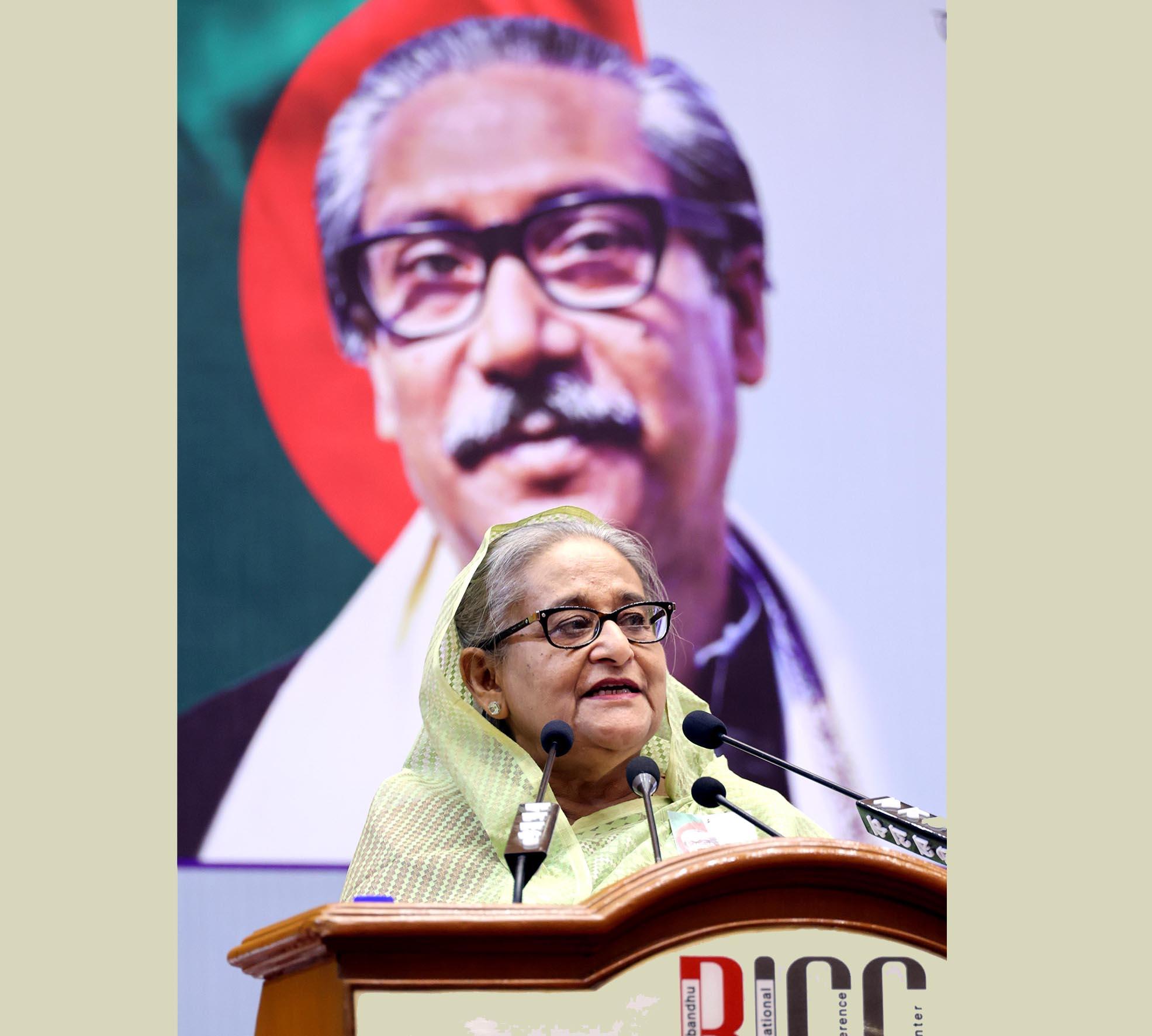
A party that gave Bangladesh its language, its independence, and its future now faces its greatest test.
On June 23, the Awami League completes 77 years of its existence. Through occupation and uprising, through war and liberation, through poverty and progress, this party has been the beating heart of Bangladesh’s democratic aspirations. And as the party enters its 78th year, it sends a message that every friend of democracy must hear: the struggle is not over, and the Awami League will not be broken.
This anniversary is not a quiet celebration. It is a rallying cry. It is a demand. And it is entirely justified.
A Legacy That Cannot Be Erased
To understand what is at stake today, one must first understand what the Awami League has given Bangladesh. Founded in 1949, the party did not simply participate in this nation’s history. It made it. It stood at the forefront of the Language Movement, when Bengalis died for the right to speak their mother tongue. It championed the Six-Point Movement, the blueprint for Bengali self-determination. It led the mass uprising of 1969, and then, in the supreme act of an entire people’s will, it guided Bangladesh through the Liberation War of 1971 to independence.
This is not a party that inherited power. This is a party that earned it through sacrifice, through imprisonment, through blood. No political force in Bangladesh can claim a deeper or more authentic connection to the ideals upon which this nation was founded.
And when independence was won, the Awami League did not rest. It took on the grim, unglamorous work of rebuilding a country shattered by war. It built institutions from rubble. It laid the foundations of a modern state. That commitment to nation-building is the thread that runs through every chapter of Awami League governance.
Sheikh Hasina and the Bangladesh She Built
During the years of the Awami League government, Sheikh Hasina led Bangladesh through a transformation that the world recognised and admired. The achievements are not talking points. They are facts, visible in the lives of millions of Bangladeshis.
Under her watch, Bangladesh invested in infrastructure on an unprecedented scale, connecting communities and driving commerce. Energy production expanded to bring electricity to those who had lived in darkness. Digital connectivity was built not as a luxury but as a lifeline, linking citizens to government services, to markets and to the world. Poverty was reduced not through slogans but through sustained policy. Women’s empowerment became a pillar of national development, with girls staying in school and women entering the workforce in numbers that would have seemed impossible a generation earlier. Social welfare programmes reached the most vulnerable: the elderly, the disabled and those whom other governments had left behind.
These are the milestones of a government that governed for the people. These are the achievements with which Sheikh Hasina and the Awami League will forever be associated. And no campaign of political persecution can take them away.
Persecution Is Not Justice
The 77th anniversary of the Awami League arrives under a cloud that should shame any government that claims to believe in democratic values. According to party leaders, thousands of Awami League activists have been subjected to arrests, legal cases and political persecution. The party’s activities have been restricted. The political space upon which any functioning democracy depends has been deliberately narrowed.
The Awami League has been clear: these cases are not about justice. They are about politics. They are instruments of suppression dressed up in legal language. History has seen this before. Governments that cannot win arguments resort to imprisoning those who challenge them. Governments that fear a party’s popularity try to destroy it through the courts rather than the ballot box.
The Awami League is calling for exactly what any honest person should support: the release of political detainees, the withdrawal of politically motivated cases and the removal of restrictions on legitimate political activity. These are not radical demands. They are the baseline requirements of democratic governance and the rule of law. They are enshrined in Bangladesh’s own Constitution and in every international framework on human rights and civil liberties to which Bangladesh is a signatory.
The Values Bangladesh Was Built On
The Awami League’s message at 77 is rooted in the same values that drove its founding 77 years ago: freedom of expression, democratic rights, peaceful political participation, equal treatment under the law, national unity, and the rejection of extremism, communalism and divisive politics.
These are not the demands of a party that seeks to dominate. They are the demands of a party that believes in a Bangladesh where all voices are heard, where politics is contested in public squares and at ballot boxes rather than in prison cells and courtrooms. They are the demands of a party that respects the ideals of the independence movement enough to insist that Bangladesh live up to them.
Sheikh Hasina and the Awami League have committed to pursuing their objectives through democratic means. That is the only commitment that matters. A party that fights for democracy through democratic methods deserves the freedom to do so. Denying it that freedom is not governance. It is fear.
Public Support Cannot Be Imprisoned
Throughout its 77-year history, the Awami League has maintained that its ultimate source of strength is the people of Bangladesh. Not institutions. Not the military. Not international backing. The people. The farmers, the garment workers, the students, the mothers, the freedom fighters and their descendants.
That connection cannot be broken by arrests or restricted by legal cases. It cannot be legislated away or suppressed by decree. The Awami League has faced military dictatorship. It has faced assassination attempts against its leaders. It has faced exile and imprisonment. And every time, it has returned because the people called it back.
This anniversary is therefore not a moment of weakness. It is a moment of reaffirmation. The Awami League enters its 78th year with its history intact, its values uncompromised and its commitment to the people of Bangladesh unbroken. Sheikh Hasina’s record of transforming this country speaks for itself. And the party she leads speaks for the millions who believe that Bangladesh’s future must be shaped by national unity, democratic values and the ideals of the independence movement.
(Abu Obaidha Arin is a Bangladeshi writer focused on politics, governance and the societal impact of digital systems)