

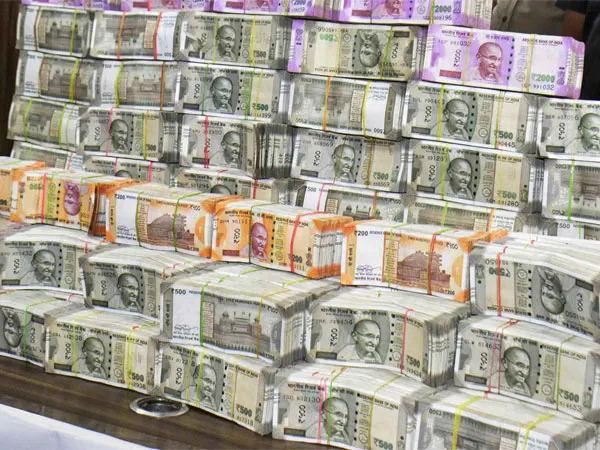
Eight years after demonetisation convulsed the Indian economy, a close reading of the Reserve Bank of India (RBI) annual reports and Right to Information (RTI) disclosures reveals what official accounts never acknowledged: a currency management system riddled with gaps, missing records, and unanswered billions. What was projected in 2016 as a decisive strike on black money now appears to have produced a far more complex problem, as the numbers no longer reconcile. The shocking discrepancies fall along three clear fault lines: mismatches between notes printed and those received by the RBI; inconsistencies in the accounting of soiled and destroyed currency; and anomalies in the total number of notes reported to be in circulation.
On November 8, 2016, Prime Minister Narendra Modi announced the withdrawal of ₹500 and ₹1,000 notes, replacing them with redesigned ₹500 notes and newly introduced ₹2,000 notes. The objective was explicit: to flush out unaccounted wealth, curb counterfeit currency, and formalise the economy. But the data suggests a troubling possibility: over 4,000 crore currency notes may have slipped out of alignment within the official accounting framework, at least on paper.
Acting on these findings, this author filed a formal petition on March 13, this year, addressed to the RBI governor, Union finance minister, home minister, the Prime Minister’s Office, the Central Economic Intelligence Bureau (CEIB), and the Comptroller and Auditor General (CAG).
The petition flags “serious discrepancies” in the accounting of ₹500 and ₹2000 notes between 2016-17 and 2024-25, and demands a comprehensive, independent audit of the currency lifecycle. At its core, the issue is stark: in a system where every note printed, circulated, withdrawn and destroyed is expected to be meticulously recorded, the emergence of such large-scale inconsistencies raises a fundamental question: Can India fully account for its own currency?
1. CURRENCY DISPOSAL PARADOX
The most striking inconsistency emerges in the accounting of ₹500 notes. Between 2017-18 and 2024-25, the RBI issued 57,56,38,00,000 pieces of ₹500 notes. When added to the 5,88,20,00,000 pieces already in circulation in 2016-17, the total comes to 63,44,58,00,000 pieces, a figure that matches the RBI’s own reported circulation for 2024-25.
However, the same RBI data also shows that between 2018-19 and 2024-25, 23,40,57,00,000 pieces of ₹500 notes were disposed of as soiled currency. This points to a fundamental contradiction. If such a large volume of notes has been destroyed, the actual number of notes in circulation should be 40,04,01,00,000 pieces, not 63,44,58,00,000. The question is, hence, pertinent: if 23,40,57,00,000 pieces of ₹500 notes were physically destroyed, why does the RBI still show them as circulating?
DESTROYED BUT STILL CIRCULATING?
- Total (RBI): 63,44,58,00,000
- Disposed: 23,40,57,00,000
- Expected: 40,04,01,00,000
| Q |
| If 23,40,57,00,000 pieces of ₹500 notes were physically destroyed as soiled, why does the RBI Annual Report 2024-25 still count them in the 63,44,58,00,000 circulation figure? Where have these disposed notes gone? |
YEARWISE ₹500 NOTE CIRCULATION
| Year | RBI Annual Report — Notes in Circulation (Pieces) | New Notes Added That Year (Pieces) |
| 2016–17 | 5,88,20,00,000 | — |
| 2017–18 | 15,46,90,00,000 | 9,58,70,00,000 |
| 2018–19 | 21,51,76,00,000 | 6,04,86,00,000 |
| 2019–20 | 29,44,75,00,000 | 7,92,99,00,000 |
| 2020–21 | 38,67,90,00,000 | 9,23,15,00,000 |
| 2021–22 | 45,54,68,00,000 | 6,86,78,00,000 |
| 2022–23 | 51,63,38,00,000 | 6,08,70,00,000 |
| 2023–24 | 60,17,70,00,000 | 8,54,32,00,000 |
| 2024–25 | 63,44,58,00,000 | 3,26,88,00,000 |
| Total New Notes (2017–18 to 2024–25) | 57,56,38,00,000 pieces |
2. GAP IN OFFICIAL RECORDS
The inconsistencies deepen when the currency supply chain is examined. India’s banknotes are printed by three government-controlled printing presses: Bharatiya Reserve Bank Note Mudran Pvt Ltd (BRBNMPL), which has operating presses at Mysuru and Salboni, Bank Note Press (BNP) at Dewas and Currency Note Press (CNP) at Nasik. Information obtained under the RTI has established that these printing presses supplied 96,15,80,79,000 pieces of ₹500 notes to the RBI between 2016-17 and 2024-25.
In contrast, the RBI Annual Reports record the total number of ₹500 notes received by the RBI from printing presses during the same period as 75,26,69,91,147 pieces. This creates a grave discrepancy: if the printing presses supplied 96,15,80,79,000 pieces and the RBI reports receiving only 75,26,69,91,147 pieces, then the difference of 20,89,10,87,853 pieces of ₹500 remains unexplained.
At this scale, the discrepancy is not trivial. It points to a gap of 20,89,10,87,853 pieces in physical currency between what was printed and what was officially acknowledged as received.
RBI VS PRINTING PRESS: WHO IS RIGHT?
- Printed: 96,15,80,79,000
- RBI recorded: 75,26,69,91,147
- Unaccounted: 20,89,10,87,853
| Q |
| Printing presses supplied 96,15,80,79,000 pieces of ₹500 notes; RBI shows receipt of only 75,26,69,91,147 pieces. Where did 20,89,10,87,853 pieces disappear between the presses and the RBI? How did this discrepancy occur between the figures provided by printing presses and the RBI Annual Reports? |
PRINTING PRESS SUPPLY DATA (2016-17 to 2024-25)
| Year | BRBNMPL (Million Pcs) | BNP (Million Pcs) | CNP (Million Pcs) | Total (Pieces) |
| 2016–17 | 5,279.56 | 1,953 | 1,662 | 8,89,45,60,000 |
| 2017–18 | 5,779.99 | 2,012 | 1,739.500 | 9,53,14,90,000 |
| 2018–19 | 6,284.84 | 2,710 | 2,500 | 11,49,48,40,000 |
| 2019–20 | 8,227.78 | 2,413 | 2,090 | 12,73,07,80,000 |
| 2020–21 | 6,500.32 | 3,315 | 1,448.500 | 11,26,38,20,000 |
| 2021–22 | 7,713.18 | 2,320 | 2,800 | 12,83,31,80,000 |
| 2022–23 | 5,666.40 | 2,200 | 1,799.999 | 9,66,63,99,000 |
| 2023–24 | 5,557.38 | 1,625 | 1,400 | 8,58,23,80,000 |
| 2024–25 | 6,960.63 | 2,500 | 1,700 | 11,16,06,30,000 |
| Grand Total (all three presses) | — | — | — | 96,15,80,79,000 |
| Unaccounted for (not in RBI records) | — | — | — | 20,89,10,87,853 |
3. THE ₹2000 IMPOSSIBILITY
If the ₹500 note data raises questions, the ₹2000 denomination presents an even more perplexing scenario. Currency printing presses operated by BRBNMPL supplied 3,70,11,90,000 pieces of ₹2000 denomination to the RBI during the period 2016-17 to 2018-19. According to RBI data, the number of ₹2000 banknotes in circulation in 2016-17 was 3,28,50,00,000 pieces. In 2017-18, an additional 7,80,00,000 pieces were added, bringing the total ₹2000 notes in circulation to a peak at 3,36,30,00,000.
After that, from 2018-19 to 2024-25, RBI records indicate that 3,56,62,00,000 pieces of ₹2000 banknotes were categorised as soiled and disposed of. However, this disposal figure (3,56,62,00,000) is higher than the peak number of banknotes ever shown in circulation (3,36,30,00,000), creating a difference of approximately 20,32,00,000 pieces. In simple terms, more notes have been destroyed than ever existed in circulation, which is a mathematical impossibility.
The inconsistency does not end there. Furthermore, printing press data indicates that 3,70,11,90,000 pieces of ₹2000 notes were supplied, while only 3,36,30,00,000 pieces are reflected in circulation. This leaves 33,81,90,000 pieces unaccounted for, with no clear explanation of their status.
DISPOSAL EXCEEDS CIRCULATION: HOW?
- Circulation: 3,36,30,00,000
- Disposed: 3,56,62,00,000
- Excess disposal: 20,32,00,000
| Q. |
| How can 3,56,62,00,000 pieces of ₹2000 notes be recorded as disposed when only 3,36,30,00,000 were ever in circulation? Who authorised the destruction of 20,32,00,000 notes that were never officially counted as in existence? Is the RBI still accepting ₹2000 denomination banknotes from the public? |
₹2000 NOTE CIRCULATION AND DISPOSAL (yearwise)
| Year | RBI Circulation (Pieces) | Change (+/−) | Soiled/Disposed (Pieces) |
| 2016–17 | 3,28,50,00,000 | — | — |
| 2017–18 | 3,36,30,00,000 | +7,80,00,000 | — |
| 2018–19 | 3,29,10,00,000 | −7,20,00,000 | 6,00,000 |
| 2019–20 | 2,73,98,00,000 | −55,12,00,000 | 17,68,00,000 |
| 2020–21 | 2,45,10,00,000 | −28,88,00,000 | 45,48,00,000 |
| 2021–22 | 2,14,20,00,000 | −30,90,00,000 | 38,47,00,000 |
| 2022–23 | 1,81,11,00,000 | −33,09,00,000 | 48,24,00,000 |
| 2023–24 | 4,10,00,000 | −1,77,01,00,000 | 1,84,58,00,000 |
| 2024–25 | 3,18,00,000 | −92,00,000 | 22,11,00,000 |
| Total disposed vs. peak circulation: 3,36,30,00,000 | — | — | 3,56,62,00,000 |
| EXCESS disposal over peak (impossible) | — | — | 20,32,00,000 |
4. REAL ECONOMY VS RBI
To test whether these discrepancies could be explained by real-world cash distribution, the complaint constructs a detailed economic model. It estimates the number of ₹500 notes held across households of different income categories, banking institutions, currency chests, post offices, and even sectors such as gold and diamond trading, as of March 12 this year. The results expose a massive, unexplainable gap.
According to the RBI Annual Report (March 2025), the total number of ₹500 notes in circulation is 63,44,58,00,000 pieces. Even under expansive assumptions, including the idea that India’s 1.4 billion population might collectively hold large amounts of cash, the total estimated number of ₹500 notes in the system comes to 52,64,84,32,800 pieces. This is significantly lower than the RBI’s reported 63,44,58,00,000 pieces, leaving a surprising gap of 10,79,73,67,200 pieces.
In other words, even after accounting for households, banks, ATMs, and institutional holdings, a massive volume of currency of legal tender remains unaccounted for in the real economy. This points to broader systemic failures. Large cash seizures in India, often running into tens or even hundreds of crores, have frequently made headlines. Such cases raise the question of how such volumes of cash are accumulated and whether they could be linked to discrepancies in currency accounting. This also suggests that high-value notes may play a role in election-related cash distribution, further complicating the movement and tracking of currency.
WHERE IS THE MONEY NOW?
- Estimated real stock: 52,64,84,32,800
- RBI reported: 63,44,58,00,000
- Gap: 10,79,73,67,200
| Q. |
| After accounting for every traceable channel, including all bank branches, ATMs, currency chests, post offices, cooperative banks, gold shops and the entire population’s pocket cash, 10,79,73,67,200 pieces of ₹500 notes or legal tender remain completely unexplained. Could this be the scale of India’s black money in ₹500 notes alone? |
5. COMPROMISED SUPPLY CHAIN?
Even after demonetisation, India’s black money debate continues to suffer from a fundamental flaw: it treats all cash as equal. It is not. The architecture of illicit wealth in a cash economy is built not on ₹10 or ₹100 notes, but on high-value denominations that enable scale, secrecy and mobility.
Low-denomination currency is designed for circulation, not accumulation. It powers everyday transactions such as food, transport, small retail and remains embedded in the visible economy. Hoarding large sums in such notes is not just inefficient; it is physically impractical. High-value notes, by contrast, compress wealth into manageable volumes, making them the preferred instrument for unaccounted transactions, whether in real estate, political funding or informal networks of rent-seeking or any illegal activity.
This structural reality explains why ₹500 notes, and earlier, ₹2000 notes, dominate both legitimate large-value transactions and suspected black money flows. The RBI’s own data underscores this imbalance: a disproportionate share of total currency value sits in high denominations, concentrating liquidity and transactional power in a form ideally suited for opacity.
But the issue runs deeper than denomination. A striking discrepancy emerges when official figures are compared with real-world estimates. While the RBI reports over 63 billion ₹500 notes or legal tender in circulation, aggregated estimates across households, banks and institutions fall far short, leaving a gap of roughly 10 billion notes. This is not a marginal statistical error; it is a systemic failure.
The implications are serious. If such a vast volume of currency cannot be credibly located within the economy’s known channels, the question is no longer about isolated irregularities. It becomes a matter of institutional reliability. Currency accounting is the backbone of monetary governance. Any opacity here erodes confidence not just in data, but in the system that produces it.
The persistence of large cash seizures, often running into hundreds of crores, only sharpens this concern. These episodic discoveries hint at parallel cash ecosystems that operate beyond formal visibility—ecosystems that high-value notes make possible and efficient.
The conclusion is inescapable. India’s black money discourse must move beyond the lazy generalisation of “cash” and confront the denomination-specific dynamics that actually enable illicit wealth. More urgently, the authorities must reconcile the evident gaps in currency accounting and present a transparent, verifiable picture of money flows.
Until then, the real story is not merely about black money. It is about missing money and the uncomfortable questions it raises.
| Q. |
| Given frequent reports of ₹50–200 crore cash seizures during elections, could there be any collusion involving currency printing presses, banking channels, or currency chest operations? Currency is printed for circulation in the economy, not for long-term stockpiling. |
(Manoranjan Roy is a Mumbai-based RTI activist)