

By Pyali Chatterjee & Maitreyee Tembhekar
Once considered unshakeable and timeless, the Aravalli hills, among the world’s oldest mountain ranges, have suddenly found themselves at the centre of heated debates in courtrooms, policy circles and public discourse. What was once regarded merely as the backbone of north India’s history and culture has today become a contested battleground between development and environmental survival.
From shrinking forests and rampant illegal mining to the looming threat of desert winds advancing towards Delhi and alarming groundwater depletion, the Aravallis are no longer just ancient mountains. They are living guardians whose fate will decisively shape the environmental future of coming generations. This is not a story about geology or tradition alone; it is about the urgent choices India must make today.
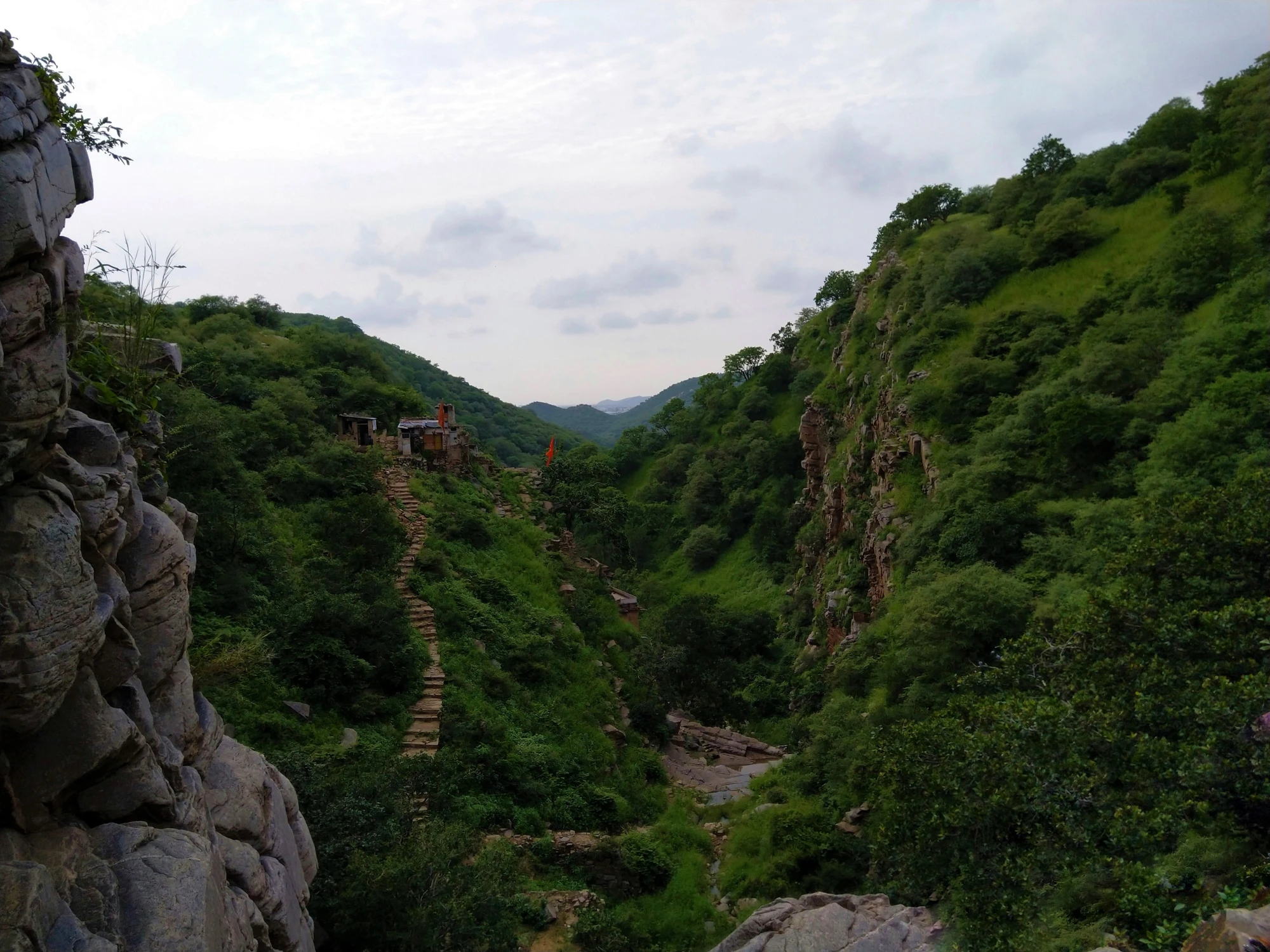
Often described as the green lungs of north India, the Aravalli hills are a region of distinct biodiversity and shared cultural value. Stretching across the north-western part of India, they are one of the oldest mountain ranges on the planet—nearly two million years old—predating even the extinction of the dinosaurs. The range runs for approximately 700 kilometres, cutting across Gujarat, Rajasthan, Haryana and Delhi.
The ecological functions of the Aravallis are irreplaceable. They act as a natural barrier against the Thar Desert, slowing desertification and shielding the Indo-Gangetic plains. They safeguard crucial groundwater recharge zones in their foothills and valleys, intercept moisture-bearing monsoon winds, sustain biodiversity across slopes and ridges, and enable river flows in basins such as the Luni and Chambal.
Over time, however, the Aravallis have eroded. Their height has reduced, gaps have emerged, and the range has spread horizontally while still retaining its linear geological character. This physical fragmentation has created a legal nightmare. When authorities attempt to crack down on illegal mining, offenders frequently argue that the site in question does not fall within the Aravalli range—and demand that the state prove otherwise. For years, the absence of a precise legal definition made enforcement nearly impossible.
In 2010, the Forest Survey of India attempted to resolve this ambiguity by defining the Aravallis as areas with slopes greater than three degrees, foothills and inter-hill buffers exceeding 100 metres, and valley widths of up to 500 metres. Any region enclosed within these parameters was to be treated as part of the Aravalli system. Yet this definition was never uniformly adopted by all the states through which the range passes.
The Supreme Court subsequently proposed the formation of a committee comprising members from the Ministry of Environment, Forest and Climate Change and the Forest Survey of India. This committee offered a new definition: the Aravalli hills would include only those areas with an elevation of 100 metres or more above local relief. Hills below this threshold would be excluded. The Court accepted this definition—but not without controversy.
The amicus curiae strongly objected, warning that such a criterion would exclude a majority of smaller hill formations, opening the door to irreversible ecological damage. Consider a landscape with two hills measuring 100 metres and a third hill of 80 metres lying between them. Under the new definition, the lower hill would be fair game for mining—effectively punching ecological holes through the range. Such fragmentation would also allow hot desert winds from the Thar to funnel directly towards the Delhi region.
Why, then, the insistence on the 100-metre limit? One argument is economic. Mining above this elevation is often more profitable due to the presence of valuable minerals such as zinc and copper. But this only heightens fears of permanent ecological destruction under the guise of legal clarity.
Like biosphere reserves, the Aravallis are now conceptually divided into three zones: red zones, where all mining and activity are banned; green zones, earmarked for afforestation and regeneration; and yellow zones—constituting barely 0.2 per cent of the Aravalli area—where mining may be permitted under strict regulation and sustainability norms.
The significance of the Aravallis extends well beyond regional boundaries. Their preservation aligns directly with India’s commitments under the United Nations Sustainable Development Goals. By preventing deforestation and protecting biodiversity, they advance SDG 15 (Life on Land). By functioning as natural groundwater recharge systems and sustaining river basins, they underpin water security for millions across north India.
As a climate buffer against dust storms and extreme weather, the Aravallis contribute to SDG 13 (Climate Action). The zoning framework for mining reflects SDG 12 (Responsible Consumption and Production), while community-led reforestation and conservation initiatives resonate with SDG 11 (Sustainable Cities and Communities). Delhi’s air quality, urban liveability and long-term environmental health are inextricably tied to the survival of these hills.
Recognising these stakes, the Supreme Court has directed the preparation of a detailed Mining Plan for Sustainable Mining (MPSM). The plan mandates clear no-go zones for mining, rigorous assessment of ecological carrying capacity, detailed mapping of sensitive habitats and wildlife corridors, evaluation of cumulative environmental damage, and the identification of areas where only limited, tightly regulated mining may be permitted.
The Aravalli ranges are not merely ancient geological formations. They are a living protective wall for north India’s ecology, climate and cultural continuity. The ongoing legal battle over their definition underscores a deeper truth: development without ecological wisdom is not progress, but plunder.
Protecting the Aravallis is not only about stopping desertification or preserving groundwater. It is about honouring India’s responsibility to future generations and fulfilling its broader sustainability commitments. The fate of these mountains is inseparable from the nation’s environmental conscience—and from the choices we make, urgently and decisively, today.
(Dr Pyali Chatterjee is an associate professor and head of the Faculty of Law, ICFAI University, Raipur, Chhattisgarh and Maitreyee Tembhekar is a law student in the same institution)