






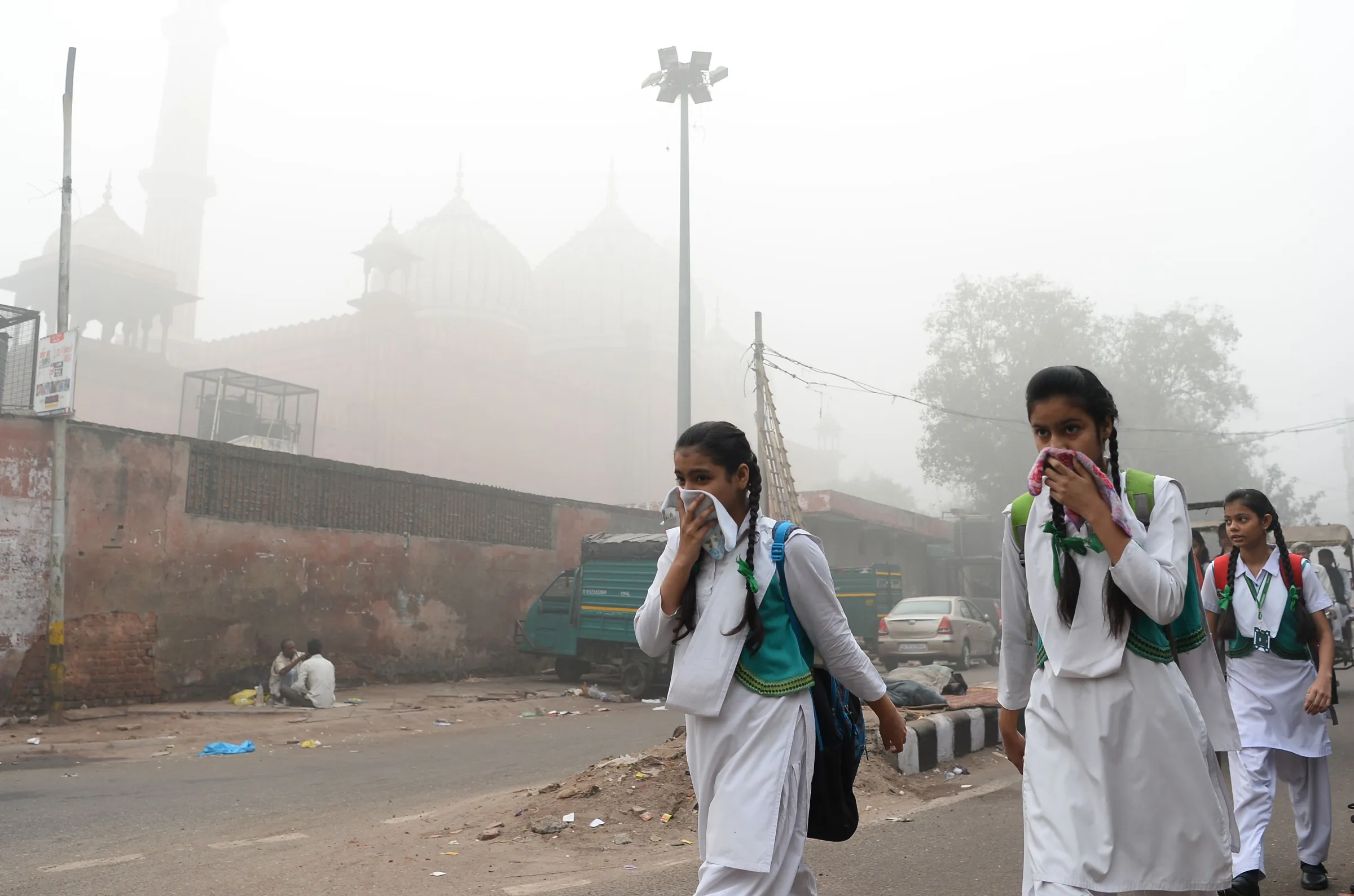
Every winter, as Delhi’s skyline dissolves into a grey blur, the city performs its annual theatre of outrage. Politicians hold press conferences, courts issue warnings, schools shut down, and millions of residents scramble for air purifiers. Yet behind this choreography of alarm lies a far darker story: a massive, decentralised economy that thrives precisely because Delhi cannot breathe.
Every winter, as Delhi’s Air Quality Index shoots up beyond normal, a parallel commerce begins. By conservative estimates, India’s “smog economy” is worth ₹50,000 crore, not metaphorical but tangible, fuelled by industrial interests, bureaucratic rituals and political optics. Here, pollution is not an environmental failure but a profitable market condition.
The air-cleaning industry, for instance, records its busiest quarter between October and January. According to a 2024 Research and Markets report, India’s air purifier market is valued at ₹6,500 crore, and nearly 70 per cent of those sales come from Delhi-NCR alone during the winter months. Brands such as Dyson, Philips, Sharp, Kent and Mi earn up to half of their annual revenue during this period. Retailers report a 40 to 50 per cent jump in sales, while the parallel market of HEPA filters, oxygen cans and pollution masks hums quietly in the background. Clean air, once a constitutional right, has become a private commodity, and the market has learned to monetise what the state has failed to guarantee.
Hospitals, too, dread winter but depend on it. Respiratory emergencies rise by 30 to 40 per cent, and Delhi’s healthcare sector quietly prepares for what it calls the “golden quarter”. A 2023 report by Fortis estimated that respiratory care alone contributes nearly ₹8,000 crore to NCR’s healthcare revenues each winter. Pharmacies record a 60 to 70 per cent spike in the sale of inhalers, nebulisers and anti-allergy drugs. The Indian Chest Society notes that one in five outpatient visits in Delhi during November is directly linked to pollution exposure. The crisis that suffocates the public sustains the profitability of private healthcare.
Construction, long blamed as one of the chief culprits of particulate emissions, has mastered the art of turning even a ban into a business opportunity. When the Graded Response Action Plan halts construction, small contractors and daily-wage workers suffer. The Confederation of Real Estate Developers’ Associations of India claims losses of ₹5,000 crore for every fortnight that construction is stopped. Yet the larger developers, with political connections and deep pockets, find ways to profit. They buy distressed assets, secure exemptions as “essential projects” — 147 such permissions were granted between 2022 and 2023 — and often receive priority access to government infrastructure contracts. The construction ban, intended to discipline the market, ends up consolidating it in favour of the most powerful.
Ironically, Delhi’s efforts to curb emissions generate their own pollutants. Each time power usage is limited under emergency protocols, demand for diesel generators soars. The All India Generator Manufacturers’ Association reports that Delhi-NCR consumes over 2.5 crore litres of diesel each month during the smog season, worth nearly ₹550 crore. The generator sales, rental business touch ₹1,200 crore every winter. Public-sector oil companies quietly record their best urban sales months, while the diesel exhaust from generators adds right back to the toxic haze the city is trying to fight. The loop of absurdity is complete: Delhi burns diesel to escape the consequences of burning diesel.
The most politically convenient villain in this drama is the farmer who burns stubble. Yet even this blame hides an economy of its own: the stubble subsidy cartel. Between 2018 and 2023, the Union Agriculture Ministry disbursed ₹3,333 crore for crop-residue management to Punjab, Haryana and Uttar Pradesh. A 2023 audit by the Comptroller and Auditor General exposed irregularities worth ₹1,200 crore. Ghost cooperatives claimed funds for machinery that did not exist. Dealers sold the same Happy Seeder machines to multiple panchayats on paper. Vigilance bureaus found layers of fake billing and collusion among agricultural officers and private suppliers. The subsidies intended to stop the burning of fields instead fertilised a new crop of corruption.
Meanwhile, Delhi’s environmental bureaucracy — from the Commission for Air Quality Management (CAQM) and the Delhi Pollution Control Committee (DPCC) to the Central Pollution Control Board (CPCB) — has turned into a revolving door of contracts, consultancies and pilot projects. Since 2020, these agencies have collectively spent between ₹500 and ₹800 crore on monitoring systems, smog towers and “research initiatives”. The CAQM’s 2023 annual report allocated ₹312 crore to “monitoring and research”, while DPCC’s RTI disclosures show ₹87 crore paid to private consultants for dashboards, temporary projects and PR campaigns. Each winter brings new studies, new committees and new technological experiments. But for all the data generated, very little oxygen returns to the air.
The government’s political machinery, too, has learned to monetise outrage. RTI documents reveal that the Delhi government spent ₹68 crore in 2023 alone on pollution-awareness advertisements. The Union Environment Ministry’s budget showed another ₹42 crore spent nationally. Slogans, banners and television campaigns portray a theatre of action, even as enforcement remains tokenistic. Pollution, in the political sphere, has become not a failure to be corrected but a narrative to be managed.
The arithmetic of this dirty windfall is revealing. Air purifiers and filtration devices generate roughly ₹6,500 crore; healthcare and pharmaceutical sectors earn about ₹8,000 crore; diesel and generator trades net ₹1,200 crore; real estate and construction, after adjusting for redistribution, still move close to ₹20,000 crore; government agencies and consultancies absorb ₹500–800 crore; stubble-related subsidies circulate another ₹1,200 crore; and political advertising consumes about ₹200 crore. Together, these sectors generate a turnover of approximately ₹50,000 crore each year, a staggering sum that transforms Delhi’s air crisis into one of its most reliable economic engines.
Delhi’s toxic air is therefore not a meteorological accident but an institutional design. It persists because the incentives to sustain it outweigh the political will to dismantle it.
(Vikram Srivastava is a Delhi-based lawyer and human rights activist)


