



When Justice B. Sudarshan Reddy filed his nomination as the opposition’s candidate for Vice President of India, it reopened a decade-old wound. In 2011, as a Supreme Court judge, Reddy had ruled Salwa Judum unconstitutional. Union Home Minister Amit Shah retorted sharply, claiming that had Reddy not delivered that judgment, the Maoist insurgency in central India would have been crushed by now.
The Union home minister’s comment overlooks a deeper, more troubling legacy. Promoted as a “people’s movement” against Maoists, Salwa Judum uprooted entire communities, leaving a humanitarian crisis that continues to haunt Chhattisgarh even after decades.
In Gondi language, Salwa Judum means “peace march”. In reality, it was a counter-insurgency campaign based on “Strategic Hamletting”, an old military tactic to separate guerrillas (the “fish”) from villagers (the “water”) and cut insurgents’ local support. Similar strategies had been used in Telangana, Nagaland, Mizoram, Vietnam and Malaya, often alienating local populations.
Early efforts in Bastar, such as the Jan Jagran Abhiyan, launched by the Communist Party of India with BJP and Congress backing, quickly collapsed. By 1997, Congress leader Mahendra Karma was persuaded to spearhead a revived campaign. To give it an appearance of spontaneity, the government waited for an incident that could be framed as a tribal uprising against Maoists. Meanwhile, a senior RSS pracharak from Kerala was sent to Bastar’s Gumargunda Ashram to lay the groundwork.
A precursor, the Danteshwari Movement, named after Bastar’s revered deity, built village networks. The decisive moment came in 2005 when villagers in Karkeli, South Bastar, beat up Maoists and handed them to police. Karma seized the opportunity, naming the campaign Salwa Judum and presenting it as a grassroots movement against Maoist oppression. The state soon intervened, transforming it into a full-scale counter-insurgency operation.
Behind the rhetoric of a people’s movement lay a harsh reality. The government armed thousands of young tribal men as Special Police Officers (SPOs), turning them into a full-scale militia. The government initially hailed it as a bold experiment. Yet in practice, far from extinguishing insurgency, Salwa Judum fuelled resentment, driving more people into Maoist ranks and deepening the alienation of the people of Bastar.
The campaign quickly escalated. Incidents of human rights abuses mounted: homes burnt, civilians killed and women assaulted. Families forced to flee. Displacement was massive, even the government’s own reports acknowledged the scale of disruption: around 50,000 tribals were settled in Salwa Judum camps in Chhattisgarh while at least as many fled to neighbouring Andhra Pradesh (later, Telangana). By 2011, over 644 villages in Bastar had emptied.
It was in this context, in 2011, that Justice Reddy’s bench of the Supreme Court declared Salwa Judum unconstitutional, ruling that arming untrained civilians to fight insurgents was illegal and had led to widespread violations. Home Minister Shah’s claim revived the ghost of Salwa Judum—not in forests, but in the lives of its displaced victims.
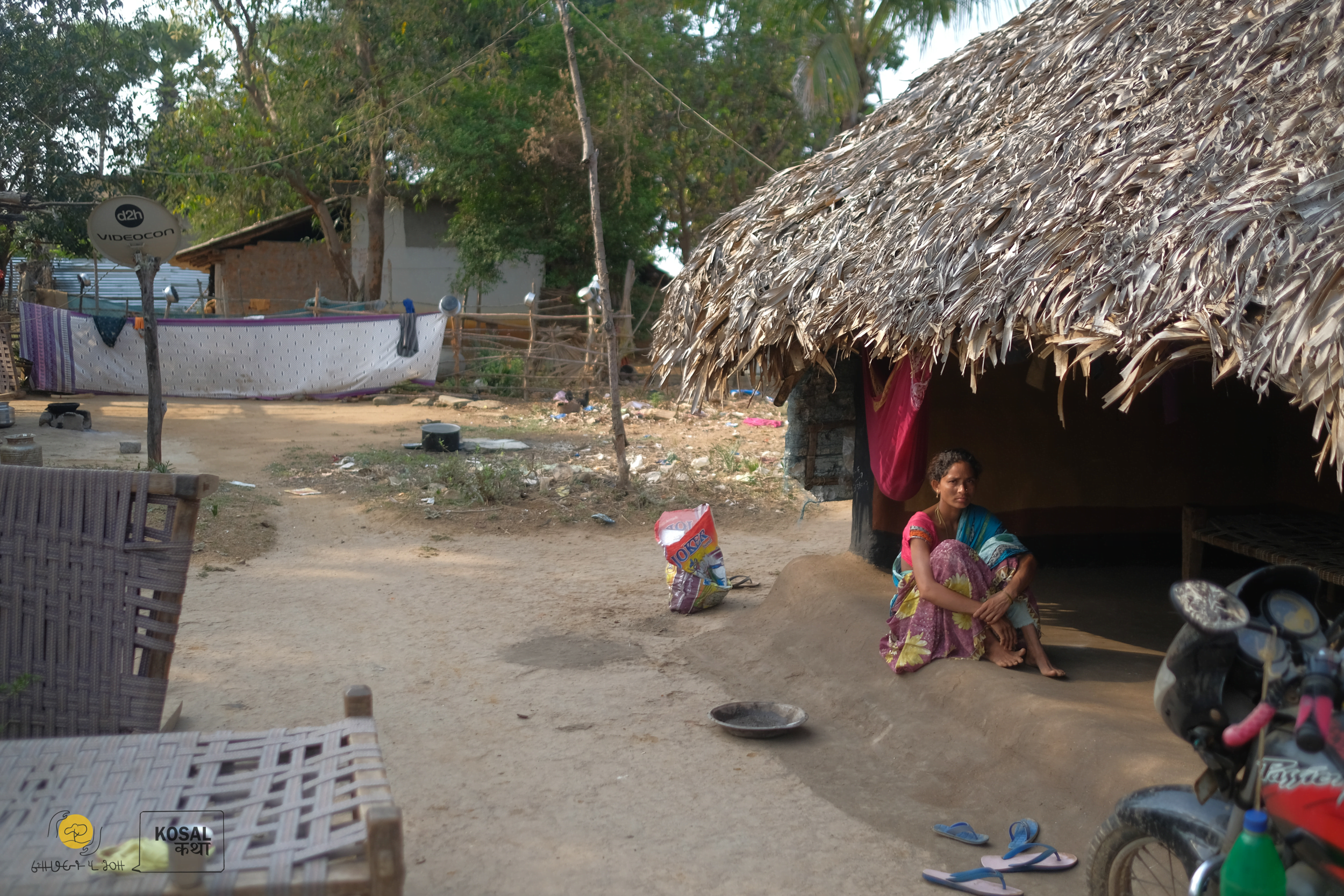
Families who lived in Salwa Judum camps in Chhattisgarh have mostly returned to their villages. Former SPOs could not go back and remain integrated into the police system. The most forgotten are the internally displaced people (IDPs) who crossed into Andhra and Telangana. Neither accepted as IDPs nor able to return home, they remain in limbo without securing land rights, citizenship benefits or at least a sense of belonging.
Widespread displacement shattered communities, livelihoods, and culture. Returning tribals faced hostility, legal hurdles, limited access to healthcare, education and welfare. Women and children suffered most while families lived in makeshift shelters without basic facilities.
Promises of rehabilitation have repeatedly faltered. In 2022, Chief Minister Bhupesh Baghel publicly acknowledged the scale of displacement and pledged resettlement. Valasa Adivasulu Samakhya, an organisation of IDPs, has mapped 283 villages across Andhra and Telangana, identifying 9,651 displaced families comprising 48,300 people. Concentrated largely in Andhra’s former East and West Godavari districts and in Telangana’s Bhadradri Kothagudem and Mulugu, these families have neither housing nor legal entitlements. Many have been forced to move further afield, into Maharashtra and Odisha.
From the outset, the Chhattisgarh government appeared intent on washing its hands of the issue. In 2021, Congress Home Minister Tamradhwaj Sahu, in a written reply, told party MLA Lakheshwar Baghel that “no one moved to other states due to Maoist conflict.” Yet, earlier this year, during a hearing before the National Commission for Scheduled Tribes (NCST), the same government admitted that around 10,000 people were displaced in Andhra and Telangana though it added that none of them wished to return to Chhattisgarh.
Andhra and Telangana both raised objections. While Andhra claimed to host more than 8,000 displaced persons, Telangana officials put the figure at around 24,000. The NCST directed Chhattisgarh to conduct a fresh survey. Meanwhile, Valasa Adivasulu Samakhya, the only registered organisation of internally displaced persons, wrote to the Chhattisgarh government stating that no survey team had approached its members. The state government offered no response, but later informed the NCST that its new survey had counted 13,143 displaced persons—and that none of them wished to return.
While the states fight over the number of actual displaced persons, the people living in Andhra or Telangana are deprived of basic human rights on many occasions. Suresh Uike fled his native Gattapad village of Sukma district during the Salwa Judum campaign and is now resettled in Telangana’s Bhadradri Kothagudem district. Last month, the forest department uprooted his standing crop in the middle of the monsoon and planted trees on the land. Together with 24 other displaced villagers, he approached the Chhattisgarh government for land, citing a promise made by former Chief Minister Baghel in 2022, but officials told them no such scheme existed.
“Had the Government of Chhattisgarh rehabilitated those who applied earlier, more people would have shown interest. We face various difficulties here, but at least we are safe. In Chhattisgarh, the police harass us during the day and the Maoists at night. We came here solely to escape that harassment. Our village in the Kistaram area is still under Maoist control. After losing my land here in Telangana, I hoped the Chhattisgarh government would provide me with land in a safer area, but so far, there has been no progress,” Uike said.
The arithmetic is stark: tens of thousands displaced by Salwa Judum remain forgotten—refugees in their own country. Two decades on, the campaign’s story remains unfinished, a lingering wound carried by its victims. Can India claim victory over Maoism while leaving tens of thousands of its poorest citizens in exile?
History offers lessons: after tribal displacement in Mizoram, the Union Home Ministry’s rehabilitation programme allowed lives to be rebuilt. Bastar’s displaced families deserve similar relief. Amending the Forest Rights Act to allow them to claim land in Andhra and Telangana where many have already settled, could prevent this wound from deepening further.
Picture Courtesy: DIPTENDU ROY