



A couple of weeks ago, before “Dimagi Naxals” entered our lexicon, the country was introduced to another, rather extraordinary concept: “the ideal, or perfect victim”. And since the idea surfaced within rather exalted and hallowed walls, it acquired an authority that made it rather difficult to ignore.
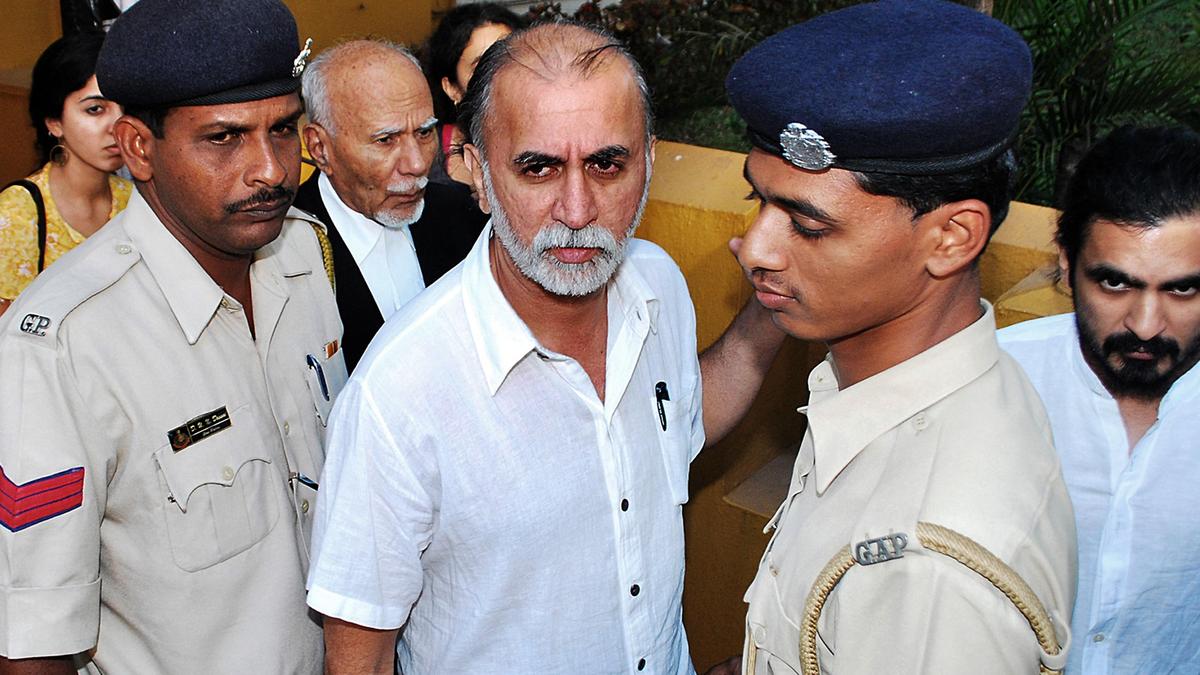
The case, in question is that of Tarun Tejpal, former editor-in-chief of Tehelka, the now-defunct media organisation once synonymous with sting operations, investigative journalism and making powerful people extremely uncomfortable.
In 2021, a sessions court in Goa acquitted Tejpal of all charges in a rape and assault case, observing that the complainant “did not demonstrate any kind of normative behaviour” that a victim of sexual assault “might plausibly show” (Indian Express).
On 6 August 2026, the Bombay High Court’s Goa Bench overturned the acquittal, convicted Tejpal and sentenced him to ten years’ rigorous imprisonment. He has been given four weeks to surrender. The latest information suggests that Tejpal has already moved the Supreme Court challenging the High Court verdict. The Bombay HC order mentions, “The Trial Court proceeded on a notion that a victim of sexual assault must behave in a stereotypical manner.”
But the most important part of the judgment lies elsewhere: the rejection of the idea that there is a prescribed way in which a survivor must behave.
Which brings us to a document that, despite considerable searching, I have been unable to locate on any government website. So, with appropriate fanfare and to the beat of a slow clap, may I present:
The Perfect Victim: A User Manual We Forgot to Print
Not the Indian Penal Code. Not the Evidence Act. Not even the Constitution. No, this is clearly a much more important document. It appears to be circulated discreetly at dinner tables, WhatsApp groups, police stations, drawing rooms and, occasionally, courtrooms.
Step 1: Stop being a functioning human being
If you have been sexually assaulted, normal life must now be suspended.
Step 2: Cry
Preferably immediately. And convincingly. A bottle of glycerine may be kept handy, just in case the natural response is insufficiently dramatic.
Step 3: Do not smile
Or laugh. Or go to work. Or socialise. Or drink. Or smoke. And under absolutely no circumstances should you send a perfectly ordinary WhatsApp message to the man who assaulted you.
Step 4: Report immediately
Shock, confusion, fear, disbelief, or simply not knowing what to do are apparently not acceptable reasons for delay. Trauma, after all, must respect deadlines.
Step 5: Please ensure an impeccable sexual history
Actually, the safest option would be to have no sexual history at all. Virginity would probably score extra marks.
Step 6: Maintain impeccable judgement and conduct
An impeccable wardrobe would also be advisable. You never know what might become relevant later.
Step 7: Select your approved victim personality
Please choose one:
a) Abla naari
b) Giri hui naari
c) Yeh Gen Z aise hi hote hain
Failure to select one of the above may affect your credibility. There is, however, one small problem with this otherwise remarkably comprehensive manual.
The human body never agreed to it. A 2017 study published in Acta Obstetricia et Gynecologica Scandinavica, involving 298 women who sought medical care after rape, found that 70 per cent reported significant tonic immobility, an involuntary freeze response, while 48 per cent reported extreme tonic immobility. In other words, the body does not always follow the approved choreography of Scream – Struggle – Escape – Police – Complaint.
Sometimes it fights. Sometimes it freezes. Sometimes it simply tries to survive. And what happens afterwards isn’t any more predictable. A woman may go home. She may go to work. She may appear composed. She may report immediately. She may take time. There is no standard operating procedure for trauma. Apparently, someone forgot to send us that memo too.
In the Tejpal case, the complainant’s drinking, smoking, sexual history, relationships, photographs, messages and conduct after the alleged assaults all became subjects of scrutiny. The high court criticised the extent to which her personal life had been brought into assessing her credibility. And now the investigation acquires a curious new direction.
Why was she drinking? Why did she stay? Why did she smile? Why did she go to work? Why did she send that message? Why did she know him? The woman, it seems, has suddenly become the most interesting piece of evidence in the room. Which brings us to the one question that should have been sitting at the top of the page all along:
Was there consent?
Because sexual assault is not about whether a woman is a virgin. Or whether she drinks. Or whether she has had sex before. Or whether she flirted. Or whether she sent a WhatsApp message afterwards. Those may tell us something about a person’s life. They do not, by themselves, answer the question of consent.
And this is why the high court’s rejection of the “perfect victim” matters. It does not mean that evidence doesn’t matter. It does not mean that contradictions shouldn’t be examined. It does not mean every allegation must automatically be believed. It means something much simpler: A woman does not have to perform victimhood convincingly enough to qualify for credibility.
Meanwhile, there is another rather uncomfortable number sitting in the background. NCRB’s Crime in India 2023 recorded 29,670 registered rape cases. Among cases where trials were completed that year, the conviction rate was 22.7 per cent. That figure refers to completed trials, not to the percentage of all reported cases that ended in conviction.
Perhaps, then, while the justice system deals with thousands of cases, we could retire our imaginary “User Manual”. Because the problem is not that women are not following the instructions. The problem is that there were never any instructions. Trauma does not come with a dress code. It does not come with choreography. It does not come with a crying schedule. And it certainly does not come with a definition of what a “real” victim should look like.
There is no perfect victim. There is only a person who deserved not to be assaulted in the first place. And perhaps that is the only line from the User Manual worth keeping.
(Sudipta Banwar Karnik is a writer, satirist and social commentator. She writes on life’s absurdities with wit and warmth)