






G Parthasarathy
Pakistan today faces mounting internal and external challenges that have left it in prolonged economic and diplomatic isolation with most foreign countries, except China, exercising extreme caution before offering any meaningful assistance. Prime Minister Shehbaz Sharif, a pragmatic politician averse to adventurism, now leads the government. In contrast, his elder brother, Nawaz Sharif has a very different legacy. His tenure is remembered for duplicity; while he famously welcomed India’s then Prime Minister Atal Bihari Vajpayee during the 1999 Lahore visit, his army chief was simultaneously orchestrating the infiltration of Pakistani troops into the Kargil heights. India responded swiftly and decisively, driving the intruders out in what became a defining moment in Indo-Pak military history.
Circumstances in Pakistan changed rapidly in the years following the Kargil conflict. Realizing that war would lead the country nowhere, General Parvez Musharraf initiated ‘back channel’ diplomacy with India. These discreet negotiations, conducted during the tenures of Prime Ministers Vajpayee and Manmohan Singh, led to a broad, informal understanding that ruled out any redrawing of borders. These talks focussed instead of making the Line of Control (LoC) functionally “irrelevant”–allowing for the free movement of people, goods, and services.
The dialogue gave rise to what became known as Musharraf’s Four-Point Formula for resolving the Kashmir issue. The proposal included: progressive demilitarisation of both sides of Kashmir, no change in territorial boundaries, unrestricted cross-border movement, provision for self-governance (short of independence), and a joint mechanism to address issues of mutual concern. Crucially, the entire framework was premised on the cessation of cross-border terrorism and infiltration.
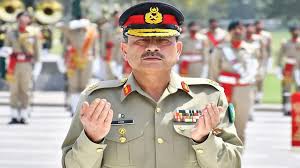
While Pakistan had earlier acknowledged that terrorism was unacceptable and the Line of Control should be respected, it is now clear that Pakistan’s present Army Chief, General Asim Munir, holds a different view. He appears to have little interest in stopping cross-border terrorism. This was starkly reflected in his response to the Pahalgam terror attack, which he reportedly welcomed. By all accounts, General Munir exhibits a Messianic zeal in treating terrorism not just as a tactical tool, but as a central pillar of his approach to India. He is also believed to be actively nurturing links with individuals and networks associated with the Khalistani movement, particularly in countries like Canada where such elements have gained political traction.
General Munir has bolstered his power by aligning himself with the hardline views of radical Islam in Pakistan. Unlike his predecessors such as General Musharraf or his own mentor General Qamar Javed Bajwa, Munir displays little of their strategic nuance or diplomatic pragmatism. His visceral hostility towards India is apparent, and his reaction to the Pahalgam terror attack, which he reportedly welcomed, underscored his aggressive posture. By all indications, he played a key role in orchestrating the atrocities through his loyal operatives. Lacking experience in global affairs and driven by an intense ideological fervour, Munir failed to anticipate or prepare for a forceful Indian response. What followed was a swift and punishing military retaliation by India–one that caught Pakistan’s establishment off guard in its scale and precision.
Rather than taking the usual and expected route of using air and military powers, the Modi Government resorted to a massive use of highly accurate missiles to target key Governmental institutions and even the centres housing well-known terrorists and terrorist organizations, apart from important military installations. This was the first instance when it achieved its military and diplomatic objectives in a matter of hours. Unlike the arduous mountain warfare seen during the Kargil conflict, where Indian infantry had to climb high mountains, the operations on April 22, 2025, were swift and precise, requiring no such physically demanding manoeuvres by Indian forces.
New Delhi’s diplomatic offensive in the aftermath of Operation Sindoor laid bare the full facts to the rest of the world. Pakistan did receive predictable support from its long-term friends like China and Turkey. But the delegations led by prominent members of Parliament from virtually every major political party who spread out across the world ensured that the military action taken by India was understood clearly. More importantly, there appears to be growing international understanding that while a democratic, secular India has moved ahead swiftly, Pakistan remains economically stagnant and persistently appealing for foreign aid to ensure that it does not become bankrupt.
There is little doubt that there are going to be no easy solutions to Pakistan’s economic problems. There is little reason to believe that Pakistan will become an economically self-reliant country in the foreseeable future. Its rate of savings is pitiable and unlikely to change soon. Pakistani workers in neighbouring Persian Gulf countries still send large remittances regularly. Despite this, Pakistan continues to be desperately short of foreign exchange resources. Ending support for terrorism and behaving like a good neighbour with India may provide some relief for ordinary Pakistanis. But the likes of General Munir are hardly likely to allow any Government in Pakistan to follow a sensible path.
(The author is a former Indian High Commissioner to Pakistan and was the spokesperson to former Prime Minister Rajiv Gandhi)


