



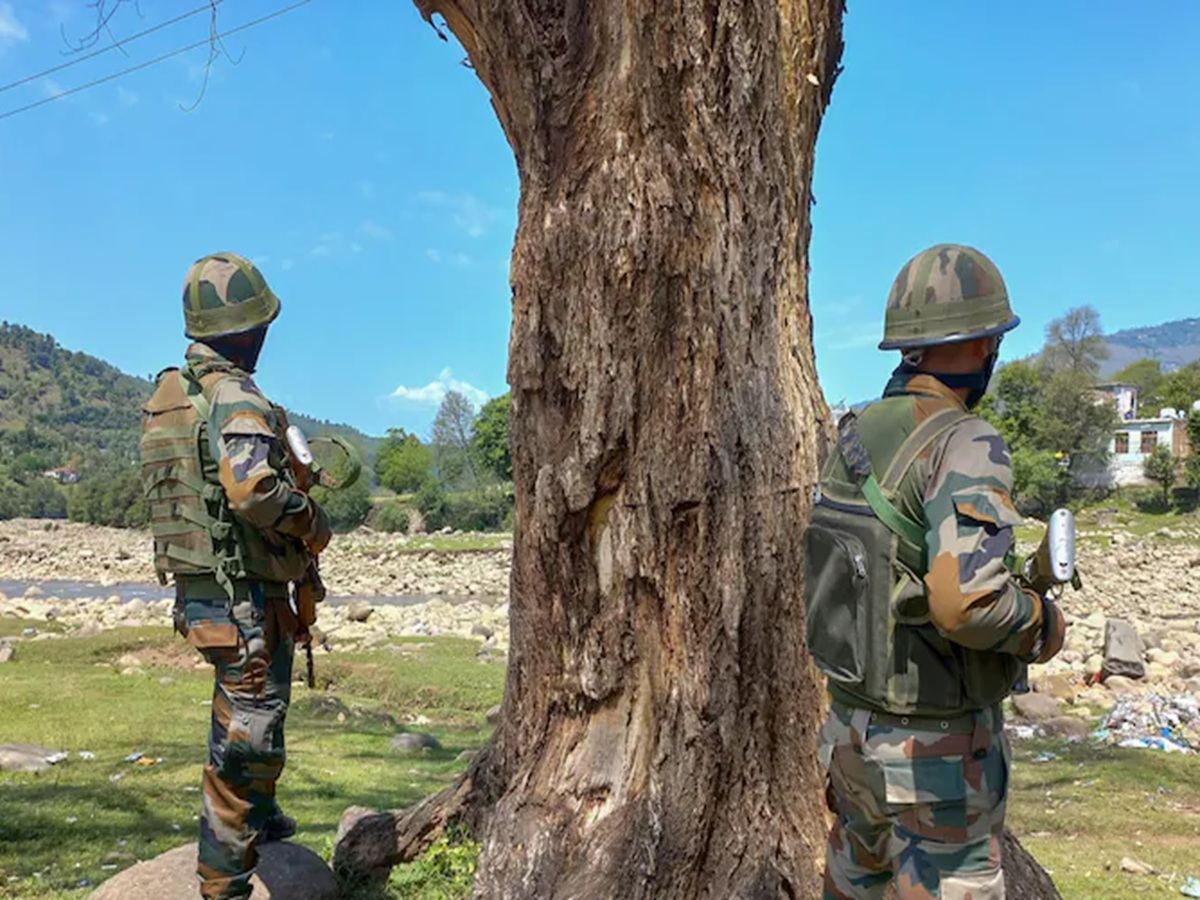
An encounter between security forces and terrorists in Kishtwar area has entered its second day, tragically resulting in the death of an Army soldier. Fierce gunfight continues as additional troops have been deployed to support the operation.
New Delhi: An intense encounter between security forces and terrorists in the Singhpora area of Chatroo, Jammu and Kashmir’s Kishtwar district, has entered its second day as of May 23, 2025, with the tragic loss of an Army soldier. The operation, aimed at neutralizing the terrorists, continues with heightened efforts following recent successes in the region.
Soldier’s Sacrifice Amid Ongoing Gunfight
The White Knight Corps shared on X, “During the ongoing operation, a fierce gunfight is continuing. One of our brave hearts sustained grievous injuries in the exchange of fire and has succumbed despite best medical efforts. Operation is in progress.” The soldier’s death marks a somber moment in the operation, which began early Thursday morning when security forces, including troops from two Para SF, Army’s 11RR, 7th Assam Rifles, and SOG Kishtwar, made contact with the terrorists. Initial reports suggest three to four terrorists, including a known operative named Saifullah, may be trapped in the Chattroo forests.
Escalated Operations and Sealed Perimeters
The Jammu and Kashmir Police confirmed the clash, stating, “Exchange of fire started between Security Forces and terrorists in the Singhpora area of Chhatru in Kishtwar.” Additional troops have been deployed, with all access routes to the encounter site sealed to prevent escape. This operation, dubbed “Operation Trashi” by the White Knight Corps, reflects a strategic push to dismantle terrorist networks in the region, especially after a recent spike in violence.
Recent Successes in Shopian and Tral
This encounter follows successful operations in Shopian and Tral, where six terrorists were neutralized in the past week. On May 13, three Lashkar-e-Taiba (LeT) terrorists, including top commander Shahid Kuttay, were killed in Shopian’s Zinpather Keller area during “Operation Keller.” Kuttay was linked to the April 22 Pahalgam terror attack that killed 26 civilians. A week later, on May 15, three Jaish-e-Mohammed (JeM) terrorists—Asif Ahmed Sheikh, Amir Nazir Wani, and Yawar Ahmad Bhat—were eliminated in Pulwama’s Tral area. Inspector General of Police for Kashmir Zone, VK Birdi, noted, “In the wake of heightened terror activities in Kashmir Valley, all security forces deployed here reviewed their strategies. We are committed to finishing the terror ecosystem in Kashmir Valley.”
Rising Terror Threats and Regional Impact
The counter-terror actions intensified after the Pahalgam attack, which claimed 26 lives, including a Nepali national, and was claimed by The Resistance Front (TRF), a proxy of LeT. A recent intelligence report highlighted 11 remaining active terrorists from a list of 14 identified post-Pahalgam, affiliated with LeT, JeM, and Hizbul Mujahideen, operating with support from Pakistan. Security forces have detained over 1,500 suspects and demolished residences of 10 alleged militants since the attack, aiming to disrupt terror networks. The Indian government also launched “Operation Sindoor” on May 7, targeting nine terror facilities in Pakistan and Pakistan-occupied Jammu and Kashmir (PoJK), eliminating nearly 100 operatives in retaliation.
Statements Reflecting National Resolve
Prime Minister Narendra Modi, addressing the nation earlier this month, emphasized a “new normal” in India’s fight against terrorism, stating, “We will strike precisely and decisively at terrorist hideouts, regardless of nuclear blackmail.” Meanwhile, local voices echo the urgency for peace. Mirwaiz Umar Farooq, in a sermon at Srinagar’s Jamia Masjid, declared, “Kashmiris stand shoulder to shoulder with the victims,” reflecting widespread condemnation of the violence across the Valley. The Jammu and Kashmir Assembly also passed a resolution on April 28, calling the Pahalgam attack an “assault on Kashmiriyat and the idea of India.”
Broader Context of Violence in J&K
The ongoing insurgency in Jammu and Kashmir, rooted in the late 1980s, has seen a resurgence of violence, with 2025 marking a deadly year. The Pahalgam attack, the deadliest since the 2008 Mumbai attacks, has heightened tensions between India and Pakistan, leading to diplomatic measures like the suspension of the Indus Waters Treaty and visa restrictions for Pakistani nationals. A 2024 study by the South Asia Terrorism Portal (SATP) noted a 30% rise in terror-related incidents in J&K over the past five years, underscoring the persistent challenge of cross-border terrorism.