



It was 10:30 at night when Rahul finally shut his laptop. His eyes were burning. He had been rubbing them throughout the evening, and the words on his phone screen had begun to appear slightly blurred. He blamed the air conditioner, then the long day at work, and finally decided he simply needed more sleep.
The next morning, the irritation was still there.
“Maybe I need new glasses,” he thought.
But Rahul’s problem wasn’t necessarily his eyesight. It could have been dry eye disease, a condition increasingly encountered among Indians of different ages and lifestyles.
And Rahul is not alone.
What exactly is dry eye?
Dry eye disease occurs when the eyes cannot maintain a healthy tear film. Tears are not simply water. They form a complex protective layer containing water, oils, mucus and other components that keep the surface of the eye smooth, comfortable and protected.
When tear production is inadequate, tears evaporate too quickly, or the tear film becomes unstable, symptoms can develop.
These may include:
- Burning or stinging
- Grittiness or a feeling that something is in the eye
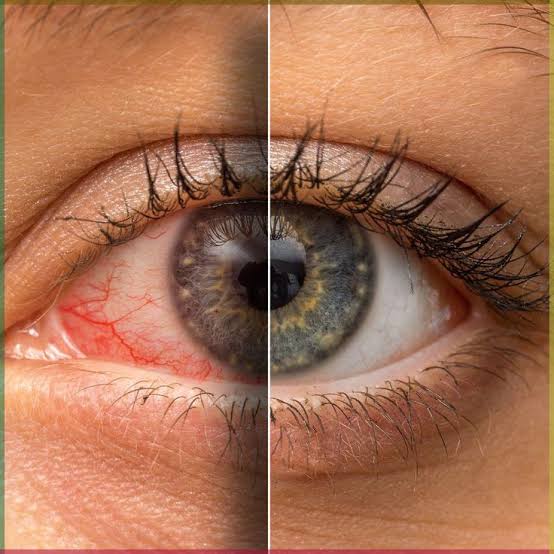
- Redness
- Excessive watering
- Itching
- Sensitivity to light
- Intermittent blurred vision
- Eye fatigue, particularly after reading or screen use
Interestingly, watering can also be a symptom of dry eye. When the ocular surface becomes irritated, the eye may produce reflex tears. These may temporarily wet the eye but may not provide the stable tear film needed for long-lasting comfort.
Is dry eye becoming an Indian problem?
There is no single prevalence figure that represents all of India because studies use different populations and diagnostic criteria.
A large North Indian hospital study reported dry eye disease in about 32% of patients evaluated, while a population-based study from urban Raipur found symptoms in approximately 6.8% of adults. Another recent Central Indian tertiary-care study estimated prevalence at 25%. These differences illustrate how strongly dry eye varies according to age, environment, occupation, lifestyle and diagnostic method.
India’s changing lifestyle may be adding to the problem. Smartphones, laptops, air-conditioned offices, traffic pollution, contact lenses, smoking and prolonged visual concentration can all contribute to ocular surface discomfort. In one Indian urban study, digital-device use and air-conditioned environments were significantly associated with dry-eye symptoms.
Not just an older person’s disease
Many people associate dry eyes with ageing. Age is certainly an important risk factor, because tear production and the function of the oil-producing glands of the eyelids can change with age.
But dry eye can affect young adults as well. A young professional spending eight to ten hours looking at a laptop and smartphone may experience symptoms despite having otherwise healthy eyes. During prolonged screen use, people tend to blink less frequently or incompletely. This increases evaporation from the eye surface.
Indian studies have reported dry-eye associations among desk workers and people with prolonged visual-display-terminal use.
At the other end of the age spectrum, older adults may have additional contributors such as age-related changes in the tear glands and eyelid oil glands, systemic diseases and multiple medications.
Are women more affected?
Overall, women are generally at greater risk of dry eye disease than men. Hormonal influences are thought to contribute to this difference. Indian studies have also reported higher prevalence or risk among women in several populations. However, dry eye is certainly not a women’s disease. Men, children, students, office workers, drivers, farmers, contact-lens users and older adults can all develop it.
The important question is not simply who you are, but what is happening to your eyes and what risk factors are present.
India’s environment matters
India presents a unique combination of environmental and lifestyle challenges.
Hot weather, dry conditions, dust, pollution, fans and air-conditioning can increase evaporation from the ocular surface. Spending long periods outdoors in wind or pollution may aggravate symptoms, while prolonged indoor screen use can add another layer of stress.
Contact lenses can also contribute to dryness in susceptible individuals.
Smoking is another avoidable risk factor associated with dry-eye symptoms.
What can you do?
The first step is not necessarily medication. It is identifying and reducing the factors that are making the problem worse.
1. Give your eyes regular breaks
During prolonged screen work, consciously look away from the screen at regular intervals and allow yourself to blink fully.
2. Don’t ignore blinking
When concentrating on a screen, blinking often becomes less frequent. Deliberate, complete blinking can help redistribute the tear film.
3. Optimise your environment
Avoid having air-conditioning or fans blowing directly towards your eyes. Sunglasses can provide useful protection outdoors, particularly in windy or dusty conditions.
4. Look after your eyelids
Warm compresses and appropriate eyelid hygiene can be useful, particularly when dysfunction of the eyelid oil glands contributes to dry eye.
5. Use lubricating eye drops appropriately
Artificial tears are commonly used to relieve symptoms. For people requiring frequent application, preservative-free formulations may be preferable because repeated exposure to preservatives can irritate the ocular surface.
However, not every red or irritated eye should simply be treated with an over-the-counter eye drop.
When should you see an eye specialist?
Persistent symptoms deserve an eye examination, particularly when they interfere with reading, driving, work or sleep.
Seek professional assessment if you have persistent redness, significant pain, marked light sensitivity, recurrent blurred vision, discharge, or symptoms that do not improve.
Dry eye can also be associated with conditions such as eyelid-gland dysfunction, allergies, diabetes, autoimmune disorders and previous eye surgery. Some medicines can contribute as well.
The treatment therefore needs to address the cause, not just temporarily suppress the symptom. Depending on severity and underlying mechanism, management may range from lifestyle modification and lubricants to prescription anti-inflammatory treatments, treatment of eyelid disease, tear-conservation measures and other specialist therapies.
The bottom line
Dry eyes are easy to dismiss. A burning sensation after a long day. A little redness. Watery eyes while using the phone. Blurred vision that improves after blinking. But when these symptoms become frequent, they are worth paying attention to.
For India’s increasingly digital population, eye health needs to become part of everyday health habits—just like exercise, sleep and nutrition.
So the next time your eyes feel tired after hours of screen use, don’t simply reach for your phone again.
Look away. Blink. And give your eyes a break. And if the problem keeps returning, get your eyes examined. Healthy eyes are not just about seeing clearly. They are about keeping the surface of the eye comfortable, protected and healthy throughout life.