






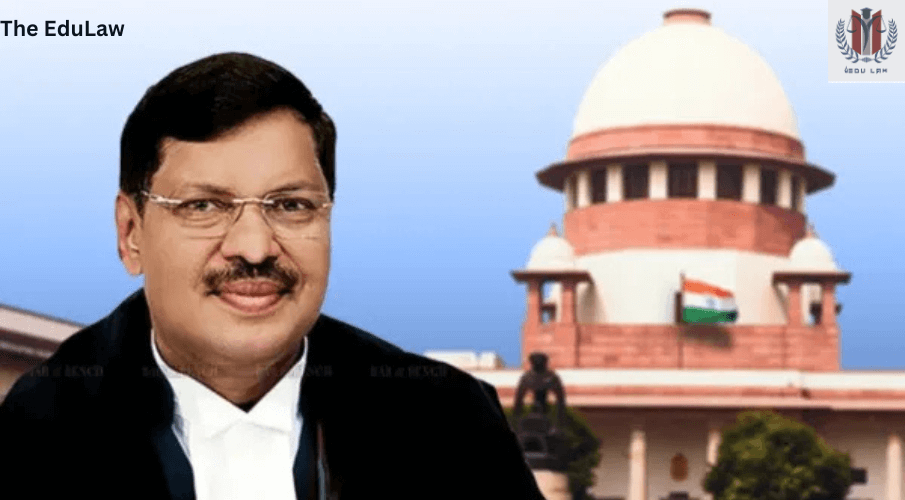
In November 2025, former Chief Justice of India B R Gavai delivered a judgment with far-reaching environmental and financial implications. He directed that a May 2025 judgment of a bench of the Supreme Court, which had scrapped an amnesty for all violators of the Environment Impact Assessment (EIA) notification, be recalled. The order was unusual and reopened a debate many believed had been decisively settled after May.
When former CJI blinked
In effect, ex-CJI Gavai asked his successor to reconsider review petitions filed by companies seeking the restoration of a controversial amnesty that allowed retrospective regularisation of projects implemented in violation of the EIA notification. The amnesty was introduced by the Union Ministry of Environment, Forests, and Climate Change in July 2021 and was stayed by the SC in 2024 before being struck down in May 2025.
The immediate effect of ex-CJI Gavai’s November judgment was that several public and private sector companies no longer faced imminent consequences for environmental violations. These consequences included demolition of illegally constructed facilities and heavy financial penalties under the EIA framework, which mandates prior environmental clearance to mitigate ecological harm from industrial projects.
In his judgment, ex-CJI Gavai noted that public sector investments worth approximately ₹20,000 crore were facing the risk of being demolished following the scrapping of the amnesty in May. He wrote that a demolition of such buildings would result in “throwing the valuable public resources in dustbin”. No precise estimate was, however, offered for private sector exposure. Previously unreported documents accessed by New Delhi Post reveal that a fresh investment of at least ₹800 crore in an iron and steel plant in Chhattisgarh, owned by London-headquartered global investment firm Nithia Capital, was effectively shielded from collapse by the November decision.
Before the May and November judgments, the Nithia Capital-owned plant, Crest Steel and Power Limited, was struggling to secure Environment Clearance (EC) from the environment ministry for two interlinked projects: expansion of its existing iron and steel operations and completion of a partially constructed building to manufacture iron pellets. The clearance was denied because the pellet plant building had been partially constructed without prior environmental approval. That was a serious violation of the EIA notification that also caused documented environmental damage.
The company failed to secure an EC because the building proposed for the iron-pellet manufacturing facility had been partially constructed without prior environmental clearance. This constituted a grave violation of the EIA notification, and official damage assessments provided details of the nature of harm caused to the local environment. The violation also made the company liable for a substantial financial penalty. Crest Steel had hoped that the government’s amnesty scheme, which allows certain EIA notification violations to be regularised, would safeguard its planned initiatives from being rendered unviable. However, the SC’s initial opposition to granting amnesty to violators placed the company’s prospects in jeopardy.
An internal company document assessing Crest Steel’s position after the May 2025 judgment reveals that it was concerned its ambitious revival plans could be derailed. The judgment left no scope for either of its two initiatives to receive an Environment Clearance.
That position shifted in November. Ex-CJI Gavai recalled the May judgment and admitted review petitions seeking reconsideration of the amnesty. Although the court did not directly mention Crest Steel or rule on its specific application, the decision revived the possibility of securing clearance and proceeding with future investments.
High-Stakes Revival
Crest Steel and Power Limited operates a relatively little-known but strategically valuable iron and steel plant in Chhattisgarh. In 2022, following insolvency proceedings, ownership of the company was taken over by Nithia Capital and Amalgam Steel Limited, with the global firm retaining majority control.
The plant’s value was evident during the insolvency process itself, when a Vedanta group company was among the bidders. Nithia Capital’s resolution plan ultimately prevailed.
After the takeover, the new management initiated an ambitious revival plan. In an application before the SC, Crest Steel stated that it had already invested ₹316 crore towards settling secured creditors’ claims and had committed an additional ₹500 crore for reviving operations.
To finance expansion, Crest Steel secured loans totalling ₹459.13 crore in September 2023 from five banks: Canara Bank, Bank of Baroda, Axis Bank, Yes Bank and IndusInd Bank. According to the term loan agreement, the funds were earmarked for large-scale capacity additions, including expanded sponge iron, steel billet and pellet production, a coal washery, a captive power plant and a producer gas plant under a backward integration plan at Rajnandgaon, Chhattisgarh.
Yet none of these plans could move forward without environmental clearance from the environment ministry.
“With great difficulty the new promoters have borrowed funds and invested in the company with the bona fide intention of reviving it,” Crest Steel told the SC. “As a result of the main judgment dated 16.5.2025, the applicant is unable to obtain necessary clearances for its expansion, which is essential for revival.”
The company warned that denial of clearance could push it back into financial stress.
This application was filed before the November judgment. While ex-CJI Gavai’s ruling did not expressly address Crest Steel’s plea, Mahesh Agarwal, a lawyer involved in the case, described the decision as a “big relief”, noting that “otherwise there was no scope” for the company to obtain environmental clearance.
As of early January 2026, Crest Steel has not received clearance from the environment ministry, nor any further relief from the SC. But the November judgment has reopened the possibility.
Environmental Costs
The financial stakes are high, but so are the environmental costs of Crest Steel’s violations.
An expert committee appointed by the environment ministry found that the company violated the EIA notification by partially constructing a 1.4-million-tonne-per-annum iron ore pellet plant without obtaining environmental clearance. The company had obtained approval only from the Chhattisgarh Environment Conservation Board. Construction took place between March 2012 and 2013 at a cost of ₹91 crore, though only about 60 per cent of the plant was completed.
A subsequent environmental damage assessment, commissioned by Crest Steel itself from a private consultant, documented seven categories of adverse impact, including air, noise, water and land pollution, generation of solid and hazardous waste, socio-economic impacts and increased energy consumption.
The monetary value of environmental damage was assessed at ₹184.27 lakh, while remediation costs were estimated at ₹359.55 lakh.
The report recorded dust and gaseous emissions from heavy machinery, vehicular movement, welding and construction activities. It also noted irreversible soil damage due to excavation, improper storage of topsoil, contamination from solid waste and choking of drains during monsoon runoff.
These findings indicate that the violation was not merely procedural. Crest Steel argued before the court that pellet plants did not require environmental clearance in 2012, but this claim has not been clearly adjudicated by either the environment ministry or the SC.
Legal and Policy Fallout
Ex-CJI Gavai’s November judgment did not reinstate the amnesty outright. It merely reopened the matter for reconsideration. However, environmental activists argue that the recall of the May judgment has already weakened enforcement and sent a troubling signal.
D Stalin, director of the non-profit Vanashakti, whose public interest litigation first challenged the amnesty, said the decision “effectively endorsed environmental degradation that was accelerating over the past decade”. “It completely opens up the scene for permanent irreversible environmental degradation,” he said, adding that he felt “let down and abused by the judiciary”.
Stalin expects the environment ministry to attempt another amnesty this year to legitimise past violations. If that happens, he said, it will be legally challenged again.
For companies like Crest Steel, the outcome of the reconsideration will determine whether hundreds of crores in investment are salvaged or whether environmental law finally draws an uncompromising line.
(The author is a Delhi-based environmental journalist)


